
Pest Control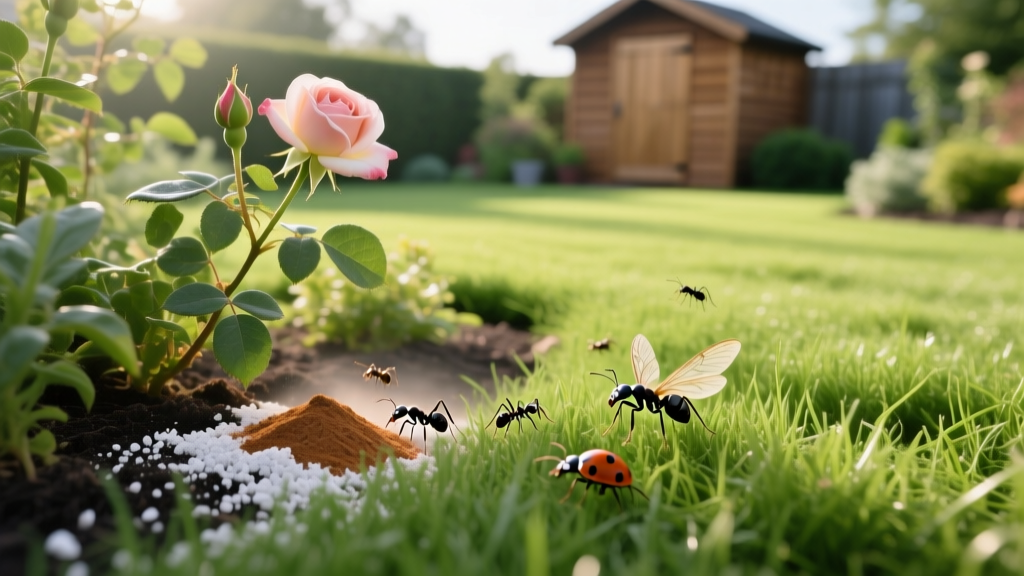
Effective Natural Ant Solutions for Lawns and Garden Beds
Managing ant populations in lawns and garden beds requires a shift from broad-spectrum chemical sprays to targeted, biology-based interventions. While ants play a crucial role in soil aeration and organic matter breakdown, species like fire ants, carpenter ants, and aggressive pavement ants can damage root systems, farm destructive aphids, and create hazardous mounds in high-traffic areas. Effective natural ant solutions rely on exploiting the colony's foraging behavior and physiological vulnerabilities rather than simply killing the visible workers.
Understanding Colony Biology: Why Contact Sprays Fail
The most common mistake homeowners make with organic pest control is treating the symptom rather than the colony. Ants operate via trophallaxis—the sharing of food and fluids among colony members. When you use a fast-acting contact spray (even an organic one like high-concentration vinegar), you only kill the 5% to 10% of the colony currently foraging. The queen simply accelerates egg production to replace them.
Successful natural ant solutions must either act as a slow-acting toxicant that workers carry back to the brood, or create an insurmountable physical barrier that disrupts their pheromone trails and desiccates their exoskeletons.
The Core Arsenal: 4 Proven Natural Ant Solutions
1. Boric Acid and Sucrose Baits (The Colony Eliminator)
Boric acid is a naturally occurring mineral that disrupts the ant's digestive system and metabolism. The critical factor for success is the concentration ratio. According to the University of California Agriculture and Natural Resources (UC ANR), a boric acid concentration higher than 1% to 5% will kill foraging workers before they can return to the nest to share the bait.
- Exact Recipe: Dissolve 1/2 teaspoon (approx. 1.5 grams) of boric acid powder into 1 cup of warm water. Stir in 2 tablespoons of white sugar or honey. For protein-feeding ants (often active in spring), substitute the sugar with a tablespoon of peanut butter.
- Application: Soak cotton balls in the solution and place them inside commercial plastic bait stations or punctured deli cups to prevent rain dilution and protect pets.
- Cost: Less than $0.10 per batch. A 16 oz box of boric acid costs around $8 and yields hundreds of applications.
2. Food-Grade Diatomaceous Earth (The Desiccant Barrier)
Diatomaceous earth (DE) consists of fossilized aquatic organisms with microscopic, razor-sharp silica edges. When ants crawl across it, the silica cuts their waxy exoskeleton, causing them to die from dehydration within 24 to 48 hours.
⚠️ Critical Safety & Purchasing Warning: You must purchase Food-Grade or OMRI-listed DE (amorphous silica). Never use pool-grade DE, which is heat-treated into crystalline silica and poses severe inhalation hazards to humans and pets.
- Application Technique: Use a bellows hand duster to apply a barely visible, micro-fine layer along garden bed borders, patio cracks, and the base of trees. Piling it thickly creates a physical obstacle that ants will simply walk around.
- Failure Mode: DE is entirely neutralized by moisture. Morning dew, irrigation, or rain will cause it to clump and lose its desiccating properties. Reapplication is mandatory after any wetting event.
- Cost: Approximately $15 to $22 for a 4 lb bag in 2026, covering roughly 2,000 linear feet of barrier.
3. Beneficial Nematodes: Steinernema feltiae (The Biological Treatment)
For lawn-dwelling species, particularly the aggressive red imported fire ant, beneficial nematodes offer a highly effective biological control. These microscopic, unsegmented roundworms actively seek out ant larvae in the soil, entering through natural body openings and releasing a symbiotic bacteria (Xenorhabdus) that kills the host within 48 hours.
Research from Texas A&M AgriLife Extension highlights that nematodes are most effective when applied to moist soil during the cooler parts of the day, as UV radiation and desiccation will kill them instantly upon surface exposure.
- Application Protocol: Apply at dusk or on a heavily overcast day. Pre-water the lawn to ensure soil temperatures are between 60°F and 85°F. Mix the nematode sponge in a watering can (avoid using hose-end sprayers with fine mesh screens that trap the organisms) and water them in immediately.
- Cost: $35 to $45 for a pack of 50 million nematodes, sufficient to treat up to 5,000 square feet of turf.
4. d-Limonene / Orange Oil Extracts (The Contact Eradicator)
Extracted from citrus peels, d-limonene is a potent solvent that destroys the waxy cuticle of an ant's respiratory system. While it acts as a fast-kill contact spray, it is best utilized for spot-treating isolated mounds in garden beds where you cannot wait for a slow-acting bait to work.
- Usage: Mix a 5% to 10% d-limonene solution with water and a few drops of castile soap (as an emulsifier). Drench the mound thoroughly.
- Phytotoxicity Warning: High concentrations of orange oil can burn the foliage of tender garden plants and strip the protective wax from grass blades. Use strictly as a targeted mound drench, not a broadcast lawn spray.
Comparative Treatment Matrix
| Solution | Primary Target | Speed of Action | Weather Vulnerability |
|---|---|---|---|
| Boric Acid Bait | Sugar & Carpenter Ants | 7 to 14 Days | High (Rain dilutes bait) |
| Diatomaceous Earth | All crawling species | 24 to 48 Hours | Extreme (Neutralized by moisture) |
| Beneficial Nematodes | Fire Ants & Turf Pests | 3 to 7 Days | High (UV light & dry soil) |
| d-Limonene Drench | Isolated Fire Ant Mounds | Immediate (Contact) | Low (Once absorbed into soil) |
Troubleshooting: Why Your Natural Treatment Failed
Organic pest control requires more precision than synthetic alternatives. If your natural ant solutions are not yielding results, audit your approach against these common failure modes:
- Bait Aversion (The 5% Rule): If you see dead ants immediately surrounding your boric acid bait station, your concentration is too high. The workers are dying before they can transport the poison to the queen. Dilute the mixture with more water and sugar.
- Disturbing the Mound: When treating fire ant mounds with nematodes or orange oil, never physically break the crust of the mound with a shovel beforehand. This triggers a defensive response, causing the colony to rapidly relocate the queen deeper into the soil profile, out of reach of your treatment.
- Ignoring Seasonal Diet Shifts: Ants shift their foraging preferences based on the colony's life cycle. In early spring, they prioritize proteins to feed developing larvae. In late summer, they seek carbohydrates (sugars) for energy. If your sugar-based boric acid bait is being ignored in May, switch to a protein-based bait (like boric acid mixed with wet cat food or peanut butter).
- Competing Food Sources: Baits will fail if the ants have access to easier, more attractive food sources. Remove fallen fruit, secure compost bins, and manage aphid populations on nearby ornamental plants, as aphids secrete honeydew which is highly attractive to sugar ants.
Pro-Tip for Garden Beds: To protect beneficial insects like pollinators and earthworms, never broadcast DE or orange oil across your entire garden. Restrict these natural ant solutions strictly to the perimeter of the beds, the base of infested plants, and visible hardscape cracks.
When to Escalate to Professional Intervention
While natural ant solutions are highly effective for 90% of residential lawn and garden infestations, certain edge cases require professional assessment. If you identify carpenter ants (Camponotus spp.) emerging from the base of your home's foundation or structural wood, natural baits may not penetrate deeply enough into the gallery system to save the timber. Similarly, if a fire ant colony has established beneath a concrete driveway or slab foundation where liquid drenches and nematodes cannot penetrate, a professional may be required to inject targeted treatments beneath the slab. Always prioritize colony elimination over surface-level worker suppression to maintain a healthy, balanced landscape ecosystem.

