
Pest Control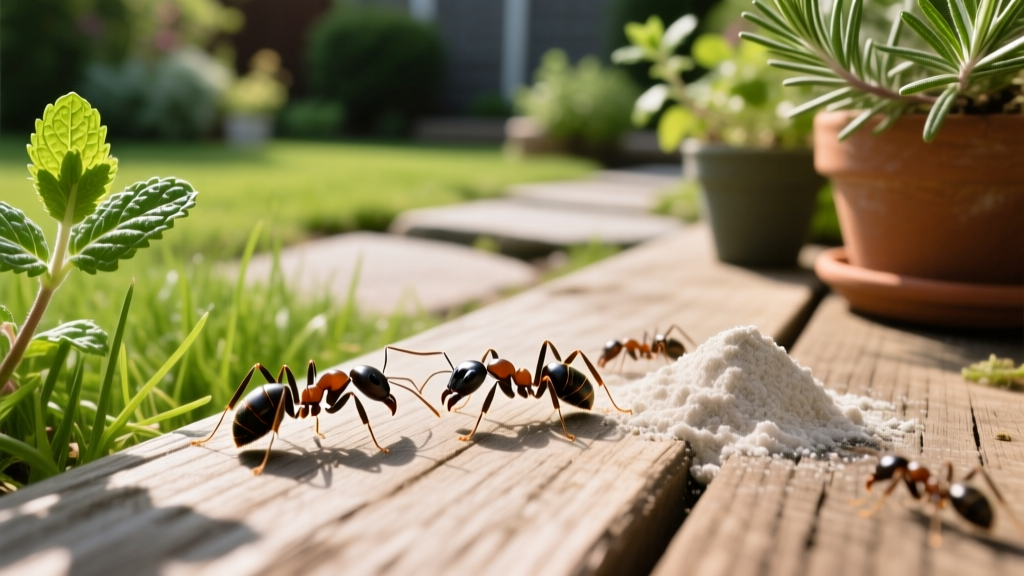
How to Get Rid of Big Ants Naturally: Organic Carpenter Ant Control
Identifying the 'Big Ant' Threat
When homeowners ask how to get rid of big ants naturally, they are almost always dealing with carpenter ants (Camponotus spp.). Ranging from 1/4 to 1/2 inch in length, these large black or red-and-black insects are a formidable nuisance. Unlike termites, carpenter ants do not consume wood for nutrition. Instead, they excavate it to build intricate nesting galleries, pushing out coarse sawdust-like debris known as frass. While a few foraging workers in your kitchen are annoying, the real threat lies in the satellite colonies nesting inside your structural timbers, window frames, or deck supports.
According to Penn State Extension, carpenter ants typically establish their primary colonies in moist, decaying wood outdoors before creating satellite nests in drier, sound wood inside your home. Eradicating them without synthetic pyrethroids or toxic sprays requires a strategic, biologically driven approach that targets the colony's reproductive cycle and foraging behavior.
| Feature | Carpenter Ants | Termites | Field Ants |
|---|---|---|---|
| Size | 1/4 to 1/2 inch | 1/8 to 3/8 inch | 1/8 to 1/4 inch |
| Waist | Narrow, pinched (1 node) | Broad, no distinct waist | Narrow, pinched (2 nodes) |
| Antennae | Elbowed (bent) | Straight, bead-like | Elbowed (bent) |
| Wood Damage | Smooth, clean galleries with frass | Mud-packed, rough galleries | Nests in soil, rarely in wood |
The 3-Phase Organic Eradication Protocol
Spraying visible worker ants with chemical repellents is a common failure point. It merely alerts the colony to danger, causing them to splinter into multiple satellite nests—a survival mechanism called budding. To successfully eliminate the infestation organically, you must deploy a three-phase protocol that disrupts trails, leverages lethal organic baits, and collapses outdoor mounds.
Phase 1: Trail Disruption and Perimeter Defense
Carpenter ants rely on pheromone trails to navigate between food sources and their nests. Before deploying baits, you must erase these invisible highways to force the ants to forage randomly, increasing the likelihood they will encounter your organic traps.
- Vinegar Eradication: Mix a 50/50 solution of distilled white vinegar and water. Spray and wipe down all baseboards, window sills, and countertops where ant activity has been observed. The acetic acid neutralizes the pheromone trail instantly.
- Cedarwood Oil Barrier: Carpenter ants are highly repelled by cedarwood oil due to its natural phenolic compounds. Mix 10 drops of pure cedarwood essential oil and 1 teaspoon of liquid castile soap into 16 ounces of water. Spray this along the exterior perimeter of your foundation, door frames, and weep holes. Reapply every 14 days or after heavy rainfall.
Phase 2: Lethal Organic Baiting (The Trophallaxis Method)
To kill the queen and the brood, you must exploit the ants' social feeding behavior, known as trophallaxis. Worker ants ingest food and regurgitate it to share with the rest of the colony. Borax (sodium tetraborate) is a naturally occurring mineral that is highly toxic to ants but has a low toxicity profile for humans and pets when used correctly. It acts as a slow-acting stomach poison, ensuring the foragers live long enough to share the lethal dose.
DIY Organic Carpenter Ant Bait Recipe:
- Heat 1/2 cup of water until warm (not boiling).
- Dissolve 1.5 tablespoons of pure Borax powder (e.g., 20 Mule Team) into the water.
- Stir in 1/2 cup of organic maple syrup or raw honey. Carpenter ants have fluctuating dietary needs; if they ignore the sweet bait, substitute the syrup with 1/2 cup of smooth organic peanut butter to target their protein-seeking phase.
- Soak organic cotton balls in the mixture and place them in small, punctured plastic condiment cups to prevent drying and protect pets.
- Place bait stations directly on active trails. Expect a temporary surge in ant activity for the first 48 hours as foragers swarm the bait, followed by a sharp decline over the next 7 to 14 days.
Phase 3: Outdoor Colony Collapse via Beneficial Nematodes
If you have located the primary colony in an outdoor tree stump, woodpile, or soil mound, beneficial nematodes are the most devastating organic weapon available. Specifically, the Steinernema carpocapsae (Hb strain) species actively seeks out and infects carpenter ant larvae and pupae.
Purchase live nematodes from a reputable biological control supplier. They are shipped in a dormant state on a sponge or in a clay powder. Application requires strict environmental adherence:
- Soil Temperature: The soil must be between 60°F and 85°F. Nematodes become inactive and die in cold soil.
- Moisture: Water the target area heavily before application. Nematodes swim through the water film in the soil pores to locate their hosts.
- Application Rate: Apply approximately 25,000 nematodes per 100 square feet around the base of infested trees, stumps, or foundation perimeters.
- UV Protection: Apply only at dusk or on heavily overcast days. Ultraviolet light kills nematodes on contact.
For indoor cracks and crevices where liquid baits cannot reach, apply Food-Grade Diatomaceous Earth (DE). DE consists of fossilized algae with microscopic, razor-sharp edges that lacerate the ants' exoskeletons, causing lethal dehydration. Use a flexible bulb duster to puff a barely visible layer of DE deep into wall voids and behind baseboards. Avoid heavy piles; ants will simply walk around them.
Warning: When to Abandon DIY Methods
While organic methods are highly effective for satellite nests and minor infestations, severe structural compromise requires professional intervention. If you notice sagging floors, doors that no longer close properly, or hear loud rustling noises inside your walls at night, the colony may have caused critical load-bearing damage. Consult a structural engineer or a licensed pest control professional immediately.
Habitat Modification: Starving the Colony
Eradication is temporary if your property continues to offer an ideal habitat. The University of Kentucky Entomology department emphasizes that moisture control is the single most effective long-term deterrent for carpenter ants. They require high humidity to rear their brood.
The Moisture and Wood Management Checklist
- Pinless Moisture Meter Testing: Purchase a pinless moisture meter (such as the General Tools MMD4E). Scan your window sills, door frames, and basement joists. Any wood registering a moisture content above 20% is a prime target for carpenter ant excavation. Repair roof leaks, fix condensation issues on HVAC lines, and improve crawlspace ventilation to drop wood moisture below 15%.
- The 10-Foot Canopy Rule: Trim all tree branches and shrubs so they maintain a minimum 10-foot clearance from your roofline and siding. Carpenter ants use these branches as aerial bridges to bypass your ground-level perimeter defenses.
- Firewood Storage: Never stack firewood directly against your home's exterior. Elevate logs on concrete blocks and maintain a 20-foot distance from the foundation to prevent logs from acting as a staging ground for indoor invasion.
- Stump Grinding: Remove dead tree stumps and rotting landscape timbers from your property. These are the most common sites for primary colony establishment.
Frequently Asked Questions
Will peppermint oil kill big ants?
No. Peppermint oil is a contact irritant and a repellent, not a lethal poison. It will temporarily deter foraging workers and mask pheromone trails, but it will not penetrate the nest or kill the queen. Rely on peppermint oil for perimeter defense, but use Borax baits or nematodes for actual colony eradication.
How long does it take for organic baits to work?
Patience is critical when using slow-acting organic baits like Borax. You should expect to see increased ant activity for the first 2 to 3 days as workers harvest the bait. Complete colony collapse typically takes 10 to 21 days, depending on the size of the colony and the distance between the bait stations and the central nest.
Are coffee grounds effective against carpenter ants?
Coffee grounds are a persistent internet myth. While the strong scent may slightly confuse ant pheromone trails temporarily, coffee grounds possess no insecticidal properties against carpenter ants. They will not deter, repel, or kill the colony, and leaving wet coffee grounds near your foundation can actually attract other pests and promote fungal growth.

