
Pest Control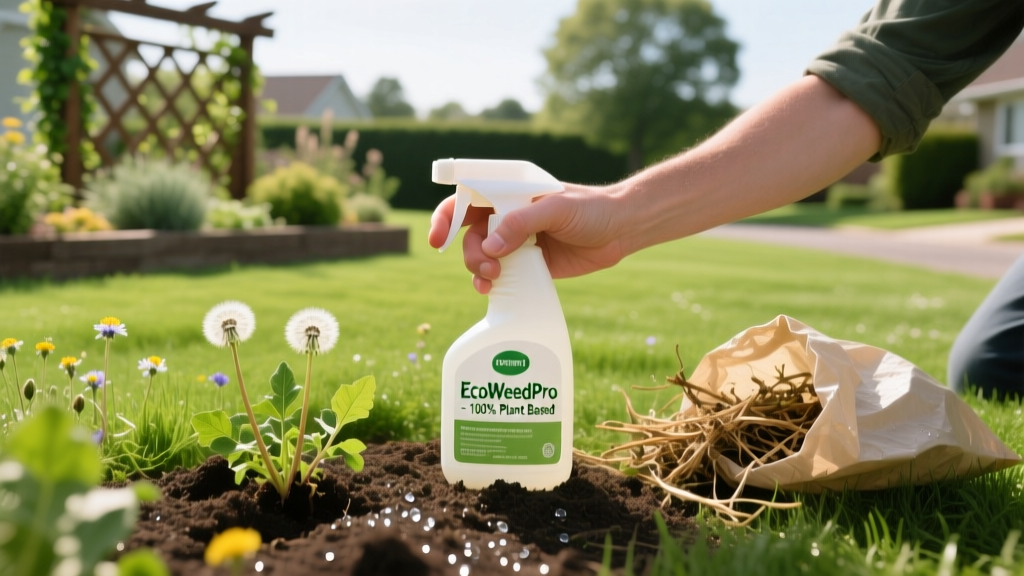
Best Natural Herbicides for Weeds: Organic Lawn Guide
The Reality of Organic Weed Control: Contact vs. Systemic
Transitioning to organic lawn care requires a fundamental shift in how you approach weed management. Unlike synthetic herbicides such as glyphosate or 2,4-D, which are systemic and translocate through the plant's vascular system to kill the roots, natural herbicides for weeds are almost exclusively contact herbicides. They destroy the cellular structure of the plant tissue they physically touch, resulting in rapid desiccation and 'burn-down' of the foliage.
Because they lack systemic action, natural herbicides are highly effective on annual weeds and young seedlings but require repeated applications or mechanical follow-up for established perennial weeds with deep taproots or rhizomes. Understanding this biological limitation is the first step in setting realistic expectations and formulating a successful organic weed control strategy.
Top Active Ingredients in Natural Herbicides
The efficacy of any organic weed killer relies entirely on its active ingredient. According to the EPA Minimum Risk Pesticides guidelines, several naturally derived compounds are exempt from federal registration due to their low toxicity profiles, yet they pack a powerful desiccating punch.
Pelargonic Acid (Nonanoic Acid)
Pelargonic acid is a fatty acid naturally found in plants like geraniums, but commercial formulations are typically synthesized from sunflower or safflower oils. It works by stripping the waxy cuticle from the leaf surface, causing rapid cell membrane collapse and severe water loss. Visible wilting and browning occur within 15 to 30 minutes of application on a sunny day. Commercial concentrates (typically 57% active ingredient) cost between $40 and $60 per gallon and are diluted at a rate of 3 to 6 ounces per gallon of water.
Horticultural Vinegar (20% to 30% Acetic Acid)
Acetic acid acts as a severe desiccant, rapidly drawing moisture out of plant cells. While household vinegar (5% acetic acid) is largely ineffective on anything beyond tiny, newly sprouted seedlings, horticultural-grade vinegar (20% to 30% concentration) is a potent burn-down agent. It is highly corrosive and requires strict personal protective equipment (PPE), including chemical splash goggles and neoprene gloves, as it can cause irreversible eye damage and severe skin burns.
d-Limonene and Clove Oil (Eugenol)
Citrus oil (d-Limonene) and clove oil (Eugenol) disrupt cellular membranes and dissolve the protective epicuticular wax on leaves. These essential oil-based herbicides are excellent for spot-treating weeds in ornamental beds or hardscape cracks. They leave a strong, lingering scent and are generally more expensive per square foot of coverage than fatty acids, making them better suited for precision targeting rather than broadacre lawn applications.
Warning: The DIY Vinegar Myth
Many online tutorials recommend mixing household white vinegar, table salt, and dish soap. This recipe is fundamentally flawed for lawn care. Table salt (sodium chloride) accumulates in the soil, destroying soil structure, increasing salinity, and causing long-term phytotoxicity that prevents desirable grass from growing back. Furthermore, dish soap is a detergent, not a true agricultural surfactant, and can strip the protective cuticle off your desirable turfgrass. Always use registered, salt-free organic herbicides and agricultural surfactants.
Active Ingredient Comparison Matrix
| Active Ingredient | Speed of Action | Best Target Weeds | Est. Cost per Gallon (Conc.) | PPE Required |
|---|---|---|---|---|
| Pelargonic Acid | 15 - 30 minutes | Broadleaves, young grasses | $40 - $60 | Gloves, Eyewear |
| Acetic Acid (20%) | 1 - 2 hours | Mature broadleaves, moss | $25 - $40 | Full face shield, acid gloves |
| d-Limonene (Citrus) | 2 - 4 hours | Hardscape weeds, ivy | $50 - $80 | Gloves, Eyewear |
| Clove Oil (Eugenol) | 1 - 3 hours | Spot treatment, small annuals | $70 - $100+ | Gloves |
Pre-Emergent Organic Defense: Corn Gluten Meal
While post-emergent natural herbicides for weeds burn down existing foliage, preventing weeds from germinating in the first place is far more efficient. Corn Gluten Meal (CGM) is the only widely recognized organic pre-emergent herbicide. A byproduct of corn milling, CGM inhibits root formation during the initial germination phase of seeds, effectively killing the seedling before it emerges from the soil.
According to research highlighted by ATTRA Sustainable Agriculture, CGM must be applied at a heavy rate of 20 pounds per 1,000 square feet to achieve adequate suppression. It also contains roughly 10% nitrogen by weight, acting as a slow-release organic fertilizer. Timing is critical: CGM must be applied when soil temperatures consistently reach 50°F to 55°F in the spring (typically when forsythia bushes bloom), and again in early autumn to prevent winter annuals like henbit and poa annua. Do not apply CGM if you are overseeding your lawn, as it cannot distinguish between weed seeds and desirable grass seeds.
The 4-Step Application Protocol for Maximum Burn-Down
Natural herbicides are notoriously unforgiving of poor application techniques. To maximize efficacy and ensure you do not waste expensive organic concentrates, follow this precise protocol:
- Time the Weather Perfectly: Contact herbicides require active plant transpiration and heat to work rapidly. Apply between 10:00 AM and 2:00 PM on a clear, sunny day when ambient temperatures are above 75°F. Spraying on cloudy, cool, or overcast days will reduce efficacy by up to 60%.
- Mandate a Surfactant: Weed leaves are coated in a hydrophobic waxy cuticle designed to repel water. You must add a non-ionic agricultural surfactant—such as methylated seed oil (MSO) or a yucca-based organosilicone extract—to your tank mix. Use 1 to 2 teaspoons of surfactant per gallon of spray solution. This reduces the surface tension of the liquid, allowing it to spread flat across the leaf rather than beading up and rolling off.
- Calibrate for Complete Coverage: Because these products do not translocate, any leaf tissue you miss will survive and regenerate. Use a flat-fan nozzle rather than a cone or jet nozzle to produce fine, overlapping droplets. Spray until the weed leaves are thoroughly wet and glistening, but avoid excessive runoff that wastes product and contaminates the soil.
- Execute a 7-Day Follow-Up: Expect a 70% to 85% kill rate on the first pass for mature weeds. Inspect the treated area 5 to 7 days later. Any surviving green tissue must be hit with a second application or manually extracted with a weeding tool to exhaust the root's carbohydrate reserves.
Managing Perennial Weeds Without Synthetics
Perennial weeds like Canada thistle, field bindweed, and mature dandelions store massive energy reserves in deep taproots or extensive rhizome networks. A single application of pelargonic acid or acetic acid will burn the top growth to the ground, but the root will simply push up new shoots within two weeks.
The University of Minnesota Extension emphasizes that organic management of perennials requires an 'exhaustion strategy.' You must repeatedly defoliate the plant using natural herbicides every time it reaches the 3- to 4-leaf stage. By continually destroying the photosynthetic factory before the plant can replenish its root reserves, you will eventually starve the root system. This process can take an entire growing season of vigilant, bi-weekly spot treatments. For large perennial infestations, combining natural herbicide burn-down with physical smothering (using heavy cardboard and 4 inches of wood chip mulch in garden beds) remains the most reliable non-chemical eradication method.

