
Pest Control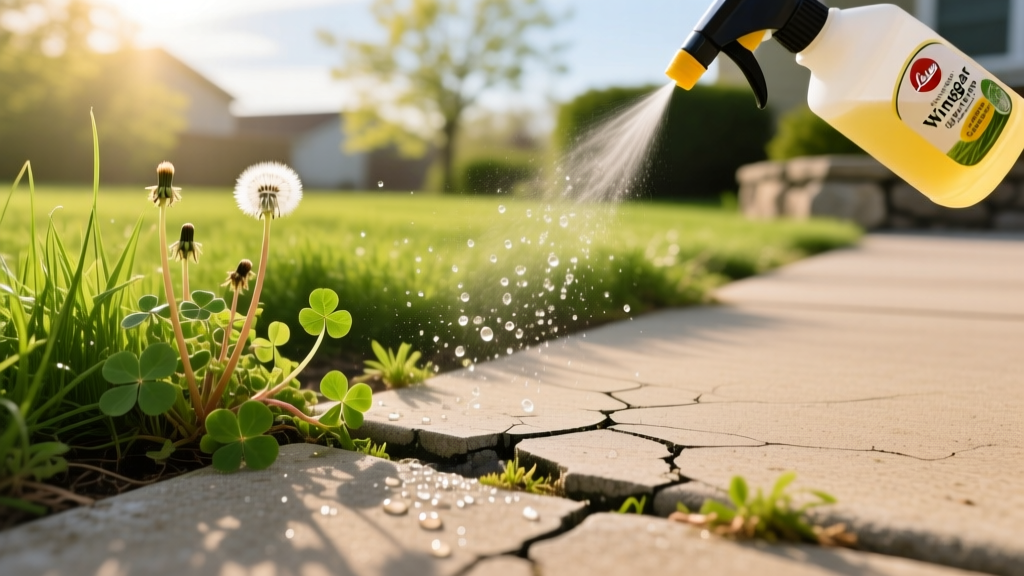
The Best Natural Vinegar Weed Killer Recipe for Hardscapes and Edges
The Science of Acetic Acid Desiccation
When transitioning away from synthetic systemic herbicides like glyphosate, homeowners often turn to acetic acid (vinegar) as a primary organic alternative. However, not all vinegar is created equal, and misunderstanding its mechanism of action is the leading cause of treatment failure. Acetic acid functions as a contact desiccant, not a systemic poison. It rapidly strips the waxy cuticle from plant leaves, causing cellular fluid leakage and immediate desiccation. Because it does not translocate to the root system, it is highly effective on annual weeds and seedlings, but requires specific adjuvants and environmental conditions to penetrate the thick foliage of mature perennial weeds.
According to research published by the University of Minnesota Extension, household vinegar (5% acetic acid) is largely ineffective on weeds past the 2-leaf stage. To achieve rapid, visible burn-down on established hardscape weeds, driveway invaders, and lawn edge encroachments, a formulation utilizing 20% to 30% horticultural-grade acetic acid paired with a non-ionic or anionic surfactant is mandatory.
The Advanced Natural Vinegar Weed Killer Recipe
This formulation is specifically engineered for hardscapes (driveways, patios, sidewalk cracks) and lawn borders where soil health preservation is secondary to total vegetation elimination. By combining high-concentration acetic acid with a terpene solvent and a surfactant, you create a synergistic effect that melts plant tissue within hours.
Required Ingredients and Equipment
- 1 Gallon 20% or 30% Horticultural Vinegar: The active desiccating agent. Do not substitute with grocery store vinegar.
- 2 oz Liquid Castile Soap: Acts as an anionic surfactant, reducing the surface tension of the water from ~72 mN/m to ~30 mN/m. This prevents the solution from beading up and rolling off hydrophobic weed leaves.
- 1 cup d-Limonene (Orange Oil): A natural terpene that acts as a secondary solvent, breaking down the waxy leaf cuticle to allow deeper acetic acid penetration.
- 2-Gallon Pump Sprayer: Must be dedicated to herbicide use. Ensure it has an adjustable brass nozzle capable of a fine mist.
⚠️ CRITICAL SAFETY WARNING: Horticultural vinegar (20-30% acetic acid) is a severe corrosive. It can cause irreversible corneal damage and chemical burns on contact with skin. You must wear ANSI-rated splash goggles, heavy-duty nitrile gloves, and long sleeves when mixing and applying this solution. Never mix this solution in enclosed spaces.
Step-by-Step Mixing Protocol
- Base Preparation: Fill your pump sprayer with 1 gallon of 20% or 30% horticultural vinegar.
- Surfactant Integration: Add 2 oz of liquid castile soap. Pump the sprayer to 10 PSI and gently agitate the tank to mix without creating excessive suds.
- Solvent Addition: Pour in 1 cup of d-Limonene (orange oil). Agitate again. The mixture will take on a cloudy, emulsified appearance.
- Pressurize: Pump the sprayer to 30-40 PSI for optimal atomization. A fine mist ensures maximum leaf surface coverage without excessive runoff.
Cost Analysis and Ingredient Sourcing
While organic formulations require higher upfront ingredient sourcing compared to synthetic concentrates, the long-term cost is competitive when factoring in soil remediation and environmental safety. Below is a breakdown of the material costs for this recipe based on 2026 agricultural supply pricing.
| Ingredient | Concentration / Type | Avg. Cost (2026) | Cost Per Gallon Batch |
|---|---|---|---|
| Horticultural Vinegar | 20% Acetic Acid | $28.00 / Gallon | $28.00 |
| Liquid Castile Soap | Pure, Unscented | $14.00 / 16oz | $1.75 |
| d-Limonene (Orange Oil) | 95% Cold-Pressed | $22.00 / 16oz | $11.00 |
| Total Batch Cost (1.2 Gallons Yield) | $40.75 | ||
Sourcing tips: Purchase 20% acetic acid from agricultural supply stores or specialized online organic garden retailers rather than big-box hardware stores, which often only stock diluted 10% cleaning vinegar. For d-Limonene, agricultural-grade citrus oil is significantly cheaper per ounce than essential oils marketed for aromatherapy.
Application Protocol and Environmental Variables
The efficacy of this natural vinegar weed killer recipe is heavily dependent on environmental conditions. Because acetic acid relies on rapid moisture evaporation to destroy plant cells, timing your application is critical.
Optimal Weather Thresholds
- Temperature: Apply only when ambient temperatures are above 75°F (24°C). Heat accelerates the volatilization of the d-Limonene and speeds up cellular desiccation. Applications made below 60°F will result in incomplete burn and rapid weed recovery.
- Sunlight: Spray between 11:00 AM and 2:00 PM when solar radiation is at its peak. The combination of UV intensity and the chemical burn maximizes foliage destruction.
- Humidity: Avoid application when relative humidity exceeds 80%. High moisture in the air slows the drying process, giving the plant time to repair minor cellular damage.
- Precipitation: Ensure a minimum 24-hour rain-free window post-application. The solution requires at least 4 hours of dry contact time to fully penetrate the leaf cuticle.
Spraying Technique
Adjust your brass nozzle to a medium-fine mist. You are not trying to drench the soil; you are trying to coat the surface area of the leaves. Spray until the foliage is visibly wet but not dripping. For hardscape cracks, use the pin-stream setting to inject the solution directly into the crown of the weed where the foliage meets the root zone.
Known Limitations and Soil Impact
While this recipe is highly effective for organic weed management, the National Center for Appropriate Technology (ATTRA) notes that contact herbicides have inherent limitations regarding perennial root systems.
The Taproot Problem
This recipe will completely defoliate mature dandelions, thistles, and bindweed within 48 hours. However, because acetic acid does not travel systemically through the phloem, the deep taproots of these perennials will survive and push up new growth within 10 to 14 days. Management Strategy: You must commit to a "spray-and-repeat" cycle. Defoliate the plant, wait for the root to expend stored carbohydrates to push new leaves, and spray again. Three to four consecutive treatments will eventually starve the root system.
Soil Acidification and Remediation
Heavy, repeated applications of 20% acetic acid will temporarily lower soil pH, potentially harming soil microbiology and making the area hostile to future turfgrass or ornamental planting. If you plan to convert a treated hardscape edge into a garden bed later, you must buffer the soil.
Soil Recovery Protocol: Two weeks after your final vinegar application, apply agricultural lime (calcium carbonate) at a rate of 1.5 lbs per 10 square feet. Water it in deeply. The calcium carbonate will neutralize the residual acetic acid and restore the soil pH to a neutral 6.5-7.0 range, paving the way for healthy microbial recolonization.
Frequently Asked Questions
Can I add salt (sodium chloride) to this recipe for better killing power?
No. While adding table salt will increase the desiccation rate and sterilize the soil, sodium chloride does not break down. It will permanently ruin the soil structure, prevent any future plant growth, and can leach into groundwater or adjacent lawn areas, killing your turf. Stick to d-Limonene and castile soap for safe, non-sterilizing adjuvants.
Is this recipe safe for the EPA's organic and biopesticide standards?
Yes. Acetic acid and d-Limonene are both recognized by the EPA as biopesticides and are generally permitted under USDA National Organic Program (NOP) guidelines for use in organic agriculture and landscaping, provided they are not synthesized from prohibited petrochemical precursors.
Will this kill moss growing between my patio pavers?
Yes, moss is highly susceptible to acetic acid. However, moss thrives in compacted, acidic, and shaded environments. While this recipe will burn the moss away, it will return unless you address the underlying conditions by sweeping in polymeric sand, improving drainage, and increasing sunlight exposure.

