
Pest Control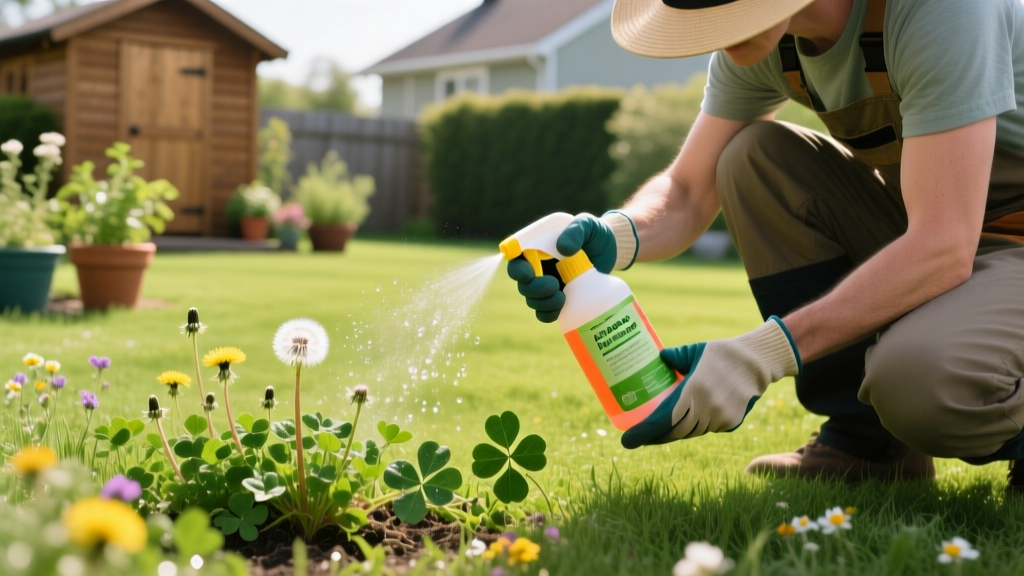
Effective Weed Killers: Natural & Organic Solutions for Lawns
The Mechanics of Organic Weed Desiccation
Transitioning to organic lawn care requires abandoning synthetic systemic herbicides like glyphosate and 2,4-D in favor of contact-based, naturally derived alternatives. Unlike synthetic chemicals that translocate through the plant's vascular system to kill the roots, natural weed killers operate strictly via contact desiccation. They destroy the waxy cuticle of the leaf, causing rapid cellular collapse and moisture loss. According to research from Penn State Extension, this rapid burn-down is highly effective on annual weeds and young seedlings, but requires a strategic approach for established perennials.
Understanding this biological limitation is the first step in successful organic weed management. Because natural formulations do not kill the root system of mature weeds, your application protocol must focus on repeated defoliation to starve the root of carbohydrates, or target weeds when they are in the vulnerable cotyledon or early true-leaf stage.
Top Commercial Organic Herbicides for 2026
The market for EPA-exempt minimum risk pesticides (under FIFRA Section 25(b)) has expanded significantly. When selecting a commercial natural weed killer, you must look beyond the 'organic' label and verify the active ingredient concentration. Household vinegar (5% acetic acid) is entirely ineffective for mature weeds. You need formulations containing 20% to 30% acetic acid, d-limonene (citrus oil), or pelargonic acid.
| Product | Active Ingredient | Avg. Price (Per Gallon) | Efficacy & Best Use Case |
|---|---|---|---|
| Green Gobbler 20% Vinegar | 20% Acetic Acid | $34.99 | Excellent for broadleaf annuals in driveways and lawn borders. Fast burn-down in high heat. |
| Doctor Kirchner Natural Weed Killer | Ocean Water, Vinegar, Soap | $45.00 | Pre-mixed with natural surfactants. Ideal for spot-treating lawn weeds without mixing your own solutions. |
| BurnOut II Weed & Grass Killer | Citric Acid & Clove Oil (Eugenol) | $55.00 | Superior for waxy-leafed weeds. Clove oil disrupts cell membranes more aggressively than vinegar alone. |
| A.D.I.O.S. Weed Control | Sodium Chloride & Citric Acid | $42.00 | Best for hardscapes and gravel. Avoid on lawn soil, as the salt content will degrade soil structure over time. |
Expert Insight: The EPA's Minimum Risk Pesticide exemption means these products do not require federal registration, but they are still highly caustic. A 20% acetic acid solution will cause severe, irreversible corneal damage upon eye contact. Always wear ANSI Z87.1-rated splash goggles and nitrile gloves when handling commercial-strength natural herbicides.
Formulating a High-Efficacy DIY Natural Weed Killer
If you prefer to mix your own solutions, you must incorporate a surfactant. Acetic acid and essential oils bead up and roll off the hydrophobic leaves of weeds like plantain and mallow. A surfactant lowers the surface tension of the liquid, allowing it to spread evenly and penetrate the leaf stomata.
The 20% Acetic Acid & d-Limonene Protocol
- 1 Gallon 20% Horticultural Vinegar (Do not use 30% unless heavily diluted; 30% poses extreme inhalation and skin hazards).
- 1 Cup d-Limonene (Orange Oil). This acts as a secondary solvent to strip the waxy cuticle.
- 1 Tablespoon Liquid Castile Soap or a dedicated non-ionic agricultural surfactant. Avoid heavy detergents that contain degreasers, which can harm surrounding soil microbiology.
Mix the ingredients in a polyethylene pump sprayer. Shake gently to integrate the soap without creating excessive foam. The orange oil will naturally separate; agitate the sprayer every 10 minutes during application.
Precision Application Tactics
Natural weed killers lack soil residual activity, meaning they will not prevent new seeds from germinating. Therefore, your application timing and technique must be flawless to maximize the burn-down of existing foliage.
- Temperature Thresholds: Acetic acid efficacy is directly correlated with ambient temperature. Apply only when temperatures are between 75°F and 85°F. Below 60°F, the desiccation process slows dramatically, allowing the weed to recover. Above 90°F, the liquid evaporates before it can fully penetrate the leaf tissue.
- Time of Day: Spray between 10:00 AM and 2:00 PM. Morning dew will dilute your solution, reducing the acid concentration below the effective threshold. Late afternoon applications do not provide enough UV and heat to accelerate the burn-down before nightfall.
- Nozzle Selection: Swap the standard fan nozzle on your pump sprayer for a poly-cone stream nozzle. This delivers a targeted, low-drift stream that allows you to paint the weed leaves without overspraying your desirable turfgrass.
- Saturation Level: Spray until the leaves are uniformly wet, but stop before the liquid drips onto the soil. Dripping acid temporarily lowers soil pH and can harm the shallow roots of your lawn.
Failure Modes: When Natural Killers Fall Short
Organic herbicides are not a silver bullet. They exhibit distinct failure modes when deployed against specific weed architectures. Understanding these edge cases will save you time and money.
Deep-Rooted Perennials (Bindweed, Canada Thistle, Nutsedge)
Weeds with extensive rhizome networks or deep taproots store massive carbohydrate reserves underground. A natural contact spray will top-kill the foliage in 24 hours, but the plant will simply push up new shoots from the root crown within 14 to 21 days. To manage these organically, you must commit to a defoliation schedule: spray every time the new shoots reach 2 inches in height. This forces the root to expend energy to rebuild foliage, eventually starving it. This process takes 12 to 18 months of strict vigilance.
Waxy or Hairy Leaf Surfaces
Weeds like common mallow or mature dandelions develop thick cuticles or trichomes (leaf hairs) that repel water-based sprays. If your DIY vinegar mix beads up and rolls off, you have a surfactant failure. Increase the castile soap to 2 tablespoons per gallon, or switch to a commercial product containing clove oil (eugenol), which acts as a powerful botanical solvent.
Post-Treatment Lawn Recovery and Pre-Emergent Strategy
Because natural weed killers leave the soil bare where the weed once stood, you must immediately fill that void to prevent new weed seeds from colonizing the exposed dirt.
Three days after your natural herbicide application (allowing the soil pH to buffer and neutralize), overseed the bare spots with a regionally appropriate grass seed. Top-dress with a 1/4 inch layer of compost to retain moisture and introduce beneficial microbes.
To stop future weeds from germinating organically, deploy Corn Gluten Meal (CGM) as a natural pre-emergent. CGM inhibits root formation in germinating seeds. Apply CGM at a rate of 20 lbs per 1,000 square feet in early spring, precisely when soil temperatures at a 2-inch depth consistently reach 55°F. This timing coincides with the germination of crabgrass and many broadleaf annuals, providing a chemical-free barrier that also delivers a slow-release nitrogen boost to your existing turf.

