
Pest Control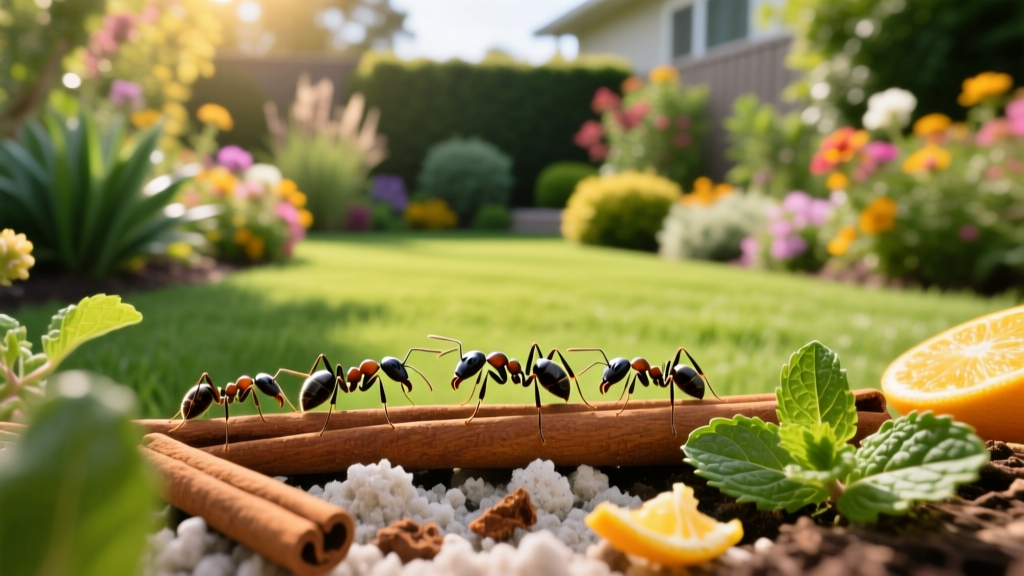
How to Naturally Repel Ants: Organic Lawn & Garden Barriers
The Biology of Ant Foraging and Pheromone Disruption
When figuring out how to naturally repel ants, most homeowners default to wiping down kitchen counters. However, lawn and garden invasions require a fundamentally different approach. Ants navigate using complex trail pheromones—specifically oleic acid and specialized hydrocarbons secreted from their poison glands. When a scout ant finds a food source or a suitable nesting site in your mulch beds, it lays down a chemical highway for the rest of the colony.
Chemical baits work by exploiting this trail, but organic repellents work by disrupting it. According to research from the University of Minnesota Extension, strong botanical volatiles and physical desiccants mask these pheromone trails and destroy the waxy exoskeleton of the insects, effectively blinding the colony and forcing them to reroute away from your property.
Organic Ant Repellent Comparison Matrix
Not all natural treatments are created equal. The efficacy of an organic barrier depends heavily on the ant species (e.g., pavement ants vs. carpenter ants) and the environmental conditions of your yard. Below is a decision matrix to help you select the right organic control method for your specific landscape.
| Organic Material | Mechanism of Action | Longevity (Outdoors) | Est. Cost (2026) | Best Application Scenario |
|---|---|---|---|---|
| Food-Grade Diatomaceous Earth (DE) | Desiccation (absorbs lipids from exoskeleton) | 7-14 days (fails when wet) | $18 / 4 lbs | Dry cracks, patio perimeters, foundation lines |
| Cedar Mulch (Aged) | Repellent (thujone and cedrol volatile oils) | 6-12 months | $45 / 2 cu ft | Garden beds, tree rings, moisture-prone zones |
| Beneficial Nematodes (S. carpocapsae) | Parasitic (infects and kills soil-dwelling larvae) | Single season (reapply annually) | $38 / 5 million | Active lawn mounds, deep soil drenching |
| Peppermint/Clove Oil Emulsion | Olfactory masking and nervous system irritant | 3-5 days (requires frequent reapplication) | $22 / 16 oz kit | Immediate trail erasure, window/door casings |
| Cinnamon & Cayenne Powder Blend | Irritant (cinnamaldehyde and capsaicin) | 5-7 days (blows away in wind) | $12 / 2 lbs | Temporary garden bed borders, potted plants |
Deep Dive: Deploying Diatomaceous Earth and Nematodes
Food-Grade Diatomaceous Earth (DE)
Diatomaceous earth is composed of fossilized diatoms with a 60% porosity rate, making it incredibly sharp at a microscopic level. Critical Rule: You must use Food-Grade DE (typically 0.5% to 2% crystalline silica). Never use pool-grade DE, which is chemically treated and poses severe respiratory hazards to humans and pets.
For lawn perimeters, apply DE using a bulb duster to ensure a microscopically thin layer. Ants will avoid thick piles of powder; they must walk through a light dusting for the desiccation process to occur. DE loses its efficacy the moment it absorbs ambient moisture, so reapplication is mandatory after 0.25 inches of rainfall or heavy morning dew.
Beneficial Nematodes (Steinernema carpocapsae)
For active mounds in the turf, surface repellents are insufficient because the queen resides up to 3 feet underground. Beneficial nematodes are microscopic, unsegmented worms that actively hunt ant larvae in the soil. Penn State Extension recommends nematodes as a premier biological control for soil-dwelling pests.
- Application Rate: 1 million nematodes per 2,000 square feet of lawn.
- Soil Temperature: Must be between 55°F and 85°F. Apply in the early evening to prevent UV degradation.
- Preparation: Mix the sponge containing the nematodes into a 5-gallon bucket of non-chlorinated water (let tap water sit for 24 hours to off-gas chlorine, which kills nematodes). Apply immediately using a watering can or hose-end sprayer with the filter removed.
Botanical Perimeter Sprays: The Emulsion Recipe
Essential oils repel ants by overwhelming their olfactory receptors, but oil and water do not mix. Spraying pure essential oil directly onto your lawn can cause phytotoxicity (leaf burn) due to localized concentration. You must create a stable emulsion.
The 2026 Botanical Emulsion Recipe:
1. Fill a 1-gallon pump sprayer with warm water.
2. Add 1 teaspoon of liquid Castile soap (acts as the emulsifier/surfactant).
3. Add 1.5 ounces of cold-pressed peppermint essential oil and 0.5 ounces of clove oil.
4. Shake vigorously for 30 seconds.
5. Spray along foundation lines, retaining walls, and patio edges at dusk. The soap helps the oil adhere to concrete and plant stems, extending the repellent effect from 24 hours to roughly 4 days.
1. Fill a 1-gallon pump sprayer with warm water.
2. Add 1 teaspoon of liquid Castile soap (acts as the emulsifier/surfactant).
3. Add 1.5 ounces of cold-pressed peppermint essential oil and 0.5 ounces of clove oil.
4. Shake vigorously for 30 seconds.
5. Spray along foundation lines, retaining walls, and patio edges at dusk. The soap helps the oil adhere to concrete and plant stems, extending the repellent effect from 24 hours to roughly 4 days.
Step-by-Step: Building a Chemical-Free Ant Barrier
To establish a long-term organic defense, follow this sequential protocol. Skipping the first step will render your physical barriers useless, as the ants will simply follow their existing pheromone trails over the new obstacles.
- Erase Existing Trails: Mix a 50/50 solution of white vinegar and water. Spray directly onto visible ant trails on hardscaping and grass edges. The acetic acid neutralizes the pheromones immediately.
- Deploy the Botanical Spray: Apply the peppermint/clove emulsion along the perimeter of your home and the outer edges of your lawn to create an olfactory 'no-go' zone.
- Lay Physical Desiccants: Once the botanical spray dries, apply a thin line of Food-Grade DE in dry, sheltered cracks where water will not wash it away.
- Fortify Mulch Beds: Replace standard hardwood mulch near your foundation with a 3-inch layer of aged cedar mulch. The natural thujone compounds act as a long-term deterrent for carpenter and pavement ants.
Warning: The Boiling Water Myth
Pouring boiling water onto an ant mound is a common internet remedy that causes severe damage to your lawn. While it may kill the top 30% of the worker ants, it rarely reaches the deep queen chamber. More importantly, the boiling water instantly destroys the soil microbiome and cooks the roots of your turfgrass, leaving a dead patch that will take months to recover. Stick to nematodes for deep-soil colony eradication.
Pouring boiling water onto an ant mound is a common internet remedy that causes severe damage to your lawn. While it may kill the top 30% of the worker ants, it rarely reaches the deep queen chamber. More importantly, the boiling water instantly destroys the soil microbiome and cooks the roots of your turfgrass, leaving a dead patch that will take months to recover. Stick to nematodes for deep-soil colony eradication.
Troubleshooting: When Natural Repellents Fail
If you have applied these organic methods and are still seeing heavy ant traffic, consider these edge cases:
1. Misidentifying the Ant Species
Carpenter ants do not eat wood; they excavate it to build galleries. If you see large, black/red ants near rotting stumps or wooden fences, surface repellents will not work. You must remove the moisture-damaged wood source, as cedar mulch and DE will not deter a colony already established inside a structural timber.
2. Aphid Farming
Many ant species 'farm' aphids on ornamental shrubs and fruit trees to harvest their honeydew. If ants are swarming your rose bushes or citrus trees, the ants are not the primary problem—the aphids are. Treat the plants with insecticidal soap or neem oil to eliminate the aphids, and the ants will abandon the area due to lack of food.
3. Soil Hydrophobia
If your lawn soil is highly compacted or hydrophobic, nematode soil drenches will run off the surface rather than penetrating down to the ant larvae. Core aerate your lawn before applying nematodes to ensure the biological agents reach the 2-to-4-inch soil depth where ant broods are typically kept.

