
Pest Control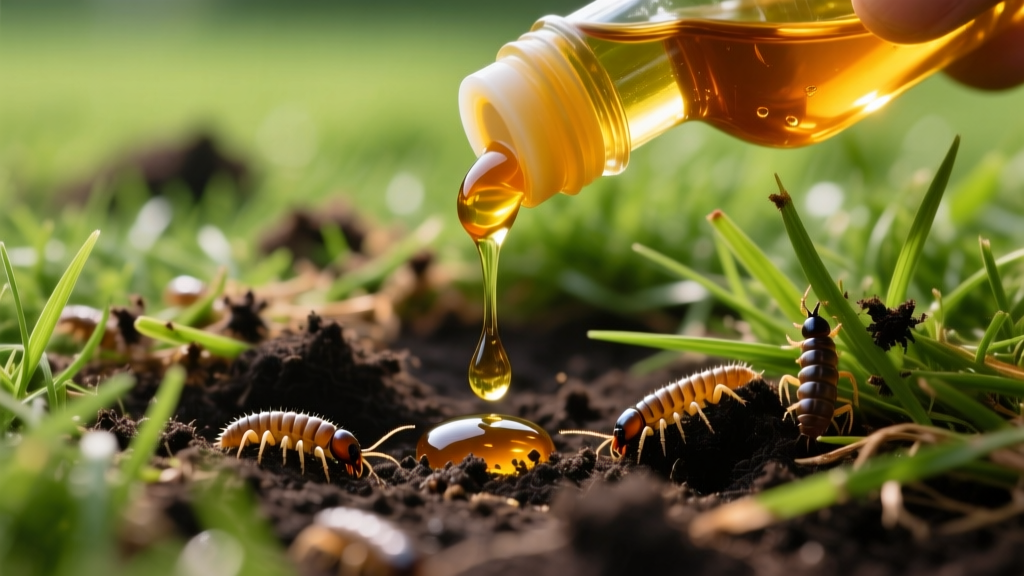
Neem Oil for Grubs: Does It Actually Kill Lawn Grubs?
The Short Answer: Does Neem Oil Kill Lawn Grubs?
Homeowners frequently search for natural, pet-safe pesticides when their turf begins to peel back from root-eating larvae. However, using neem oil for grubs is largely ineffective for established, soil-dwelling infestations. While neem oil is a powerhouse against foliar pests like aphids and spider mites, its active compounds struggle to penetrate the thatch layer and reach the deep soil zones where mature Japanese beetle, June bug, and European chafer grubs feed.
⚠️ The Lawnsguide Verdict: Neem oil will not cure a severe, active grub infestation in late summer or fall. It can only act as a mild growth disruptor for very young, shallow-feeding first-instar larvae in early summer. For actual eradication, you must use soil-penetrating biological controls like beneficial nematodes.
The Science: Azadirachtin vs. Clarified Neem Oil
To understand why neem oil fails against deep grubs, you must differentiate between the two types of neem products sold in garden centers. Not all neem oil is created equal, and buying the wrong one will guarantee failure against soil pests.
- Clarified Hydrophobic Extract (Standard Neem Oil): This is the most common, inexpensive product on shelves ($10–$15 for 32 oz). The azadirachtin has been removed. It works purely by smothering soft-bodied insects on contact. It has zero soil drench value and will not kill grubs.
- Cold-Pressed Neem Oil (Contains Azadirachtin): This unrefined oil retains azadirachtin (typically 0.2% to 0.5% concentration), a potent insect growth regulator (IGR) and antifeedant. When ingested by young grubs, it disrupts their molting process. As of 2026, high-quality cold-pressed neem costs roughly $25–$35 for a 32 oz concentrate.
Even with cold-pressed neem, the Penn State Extension notes that white grubs possess a tough, leathery exoskeleton and feed deep within the soil profile (2 to 6 inches down), making contact-based and ingestion-based organic oils highly unreliable compared to targeted biological agents.
Why Soil-Dwelling Grubs Evade Neem Oil
Applying a neem soil drench faces three major physical and biological barriers in a turf environment:
- The Thatch Barrier: Lawns with more than 0.5 inches of thatch will trap the oil in the organic layer. The azadirachtin binds to organic matter and fails to reach the mineral soil where the grubs reside.
- Rapid Soil Degradation: Azadirachtin breaks down rapidly in soil due to microbial activity and UV exposure. Its half-life in topsoil is typically less than 48 hours, meaning it cannot provide residual control.
- Grub Feeding Depth: Third-instar grubs (the stage that causes 90% of lawn damage in autumn) feed 4 to 6 inches below the surface. A standard neem drench rarely penetrates this deeply without massive water volumes that would cause runoff.
How to Formulate a Neem Soil Drench (Early Instar Strategy)
If you are committed to an organic approach and want to use neem oil as a preventative deterrent in mid-summer (when eggs are hatching into shallow first-instar grubs), you must use a high-azadirachtin cold-pressed product and apply it correctly.
Mixing and Application Protocol
Do not use a hose-end sprayer; the dilution rate is too imprecise. Use a pump sprayer or watering can for targeted drenching.
- Ratio: Mix 4 tablespoons (2 oz) of cold-pressed neem oil (minimum 0.2% azadirachtin) and 1 teaspoon of mild liquid castile soap (as an emulsifier) per 1 gallon of water.
- Coverage: This 1-gallon mixture will treat approximately 100 square feet of turf.
- Preparation: Mow the lawn short and perform a light core aeration or dethatching to ensure the solution reaches the soil surface.
- Watering In: Immediately after applying the drench, irrigate the zone with 0.25 inches of water to push the azadirachtin past the thatch layer into the top 2 inches of soil.
- Timing: Apply in the early evening. Soil temperatures must be between 60°F and 85°F. Applying neem in high heat will phototoxic-burn your turfgrass.
Proven Organic Alternatives for Deep Grub Eradication
Because neem oil is an unreliable primary defense, turfgrass managers and organic lawn care professionals rely on biological controls that actively hunt or infect grubs deep in the soil profile.
| Treatment | Active Agent | Target Grub Stage | 2026 Avg. Cost (per 1,000 sq ft) | Efficacy |
|---|---|---|---|---|
| Beneficial Nematodes | Heterorhabditis bacteriophora (Hb) | All active stages (best on 2nd/3rd instar) | $18.00 - $25.00 | High (80-95%) |
| Milky Spore | Paenibacillus popilliae | Japanese beetle grubs only | $8.00 - $12.00 | Moderate (takes 2-3 years to establish) |
| Cold-Pressed Neem | Azadirachtin (IGR) | 1st instar (shallow) | $10.00 - $15.00 | Low (20-40%) |
| Chemical Preventative | Chlorantraniliprole (Acelepryn) | Eggs and early instars | $12.00 - $18.00 | Very High (95%+) |
Deploying Hb Nematodes
According to turf entomology guidelines published by the UMass Extension Turf Program, Heterorhabditis bacteriophora (Hb) nematodes are the gold standard for organic grub control. Unlike neem oil, these microscopic worms actively swim through soil moisture films, enter the grub's body cavities, and release bacteria that kill the host within 48 hours. You must apply them when soil temperatures are consistently above 60°F, keep the soil moist for 10 days post-application, and avoid applying them during peak UV hours, as sunlight kills exposed nematodes instantly.
The Role of Milky Spore
Milky spore disease is highly specific to Japanese beetle larvae. It does not work on June bugs, European chafers, or Oriental beetles. While a single application can theoretically inoculate your soil for 10 to 15 years, it requires a high grub population to spread effectively and often takes 3 to 5 years to reach peak efficacy, making it a poor choice for immediate lawn rescue.
Seasonal Grub Defense Timeline
Timing dictates the success of any grub treatment. Applying the wrong product in the wrong season is the primary reason homeowners believe organic treatments fail.
- May – June (Preventative Window): Apply Chlorantraniliprole (conventional) or prepare the lawn for biological controls. Neem oil applied here is useless, as grubs are pupating deep in the soil and not feeding.
- July – August (Early Instar Window): Eggs hatch. Young grubs feed near the surface. This is the only window where a cold-pressed neem soil drench has a marginal chance of disrupting the population. Hb nematodes applied here will decimate the young population.
- September – October (Curative Window): Grubs are large, deep, and causing massive root destruction. Neem oil is completely ineffective here. You must use a fast-acting curative chemical (like Trichlorfon/Dylox) or a massive dose of Hb nematodes to stop the damage before winter dormancy.
- November – April: Grubs are dormant deep in the soil. No treatments should be applied.
Frequently Asked Questions
Can I spray neem oil on the grass to kill adult Japanese beetles before they lay eggs?
Yes. While neem oil fails as a soil drench for grubs, a foliar spray of clarified neem oil on ornamental shrubs and trees acts as a strong antifeedant for adult beetles. It will not kill the beetles outright, but it makes the foliage taste bitter, reducing mating and egg-laying activity in your immediate yard.
Is neem oil safe for earthworms and pollinators?
Azadirachtin is highly toxic to aquatic life and moderately toxic to bees if sprayed directly on them while wet. However, once a soil drench dries and degrades (within 48 hours), it poses minimal risk to earthworms. The University of Minnesota Extension recommends applying any oil-based drenches in the late evening to avoid contact with foraging pollinators.
Why did my lawn turn yellow after applying a neem soil drench?
Neem oil is phytotoxic to turfgrass if applied at high concentrations or during high heat. If you exceeded 2 oz per gallon, failed to emulsify the oil properly with soap, or applied it when ambient temperatures exceeded 85°F, the oil likely coated the grass blades and suffocated the stomata, causing chemical burn. Always water in neem drenches immediately and apply at dusk.

