
Pest Control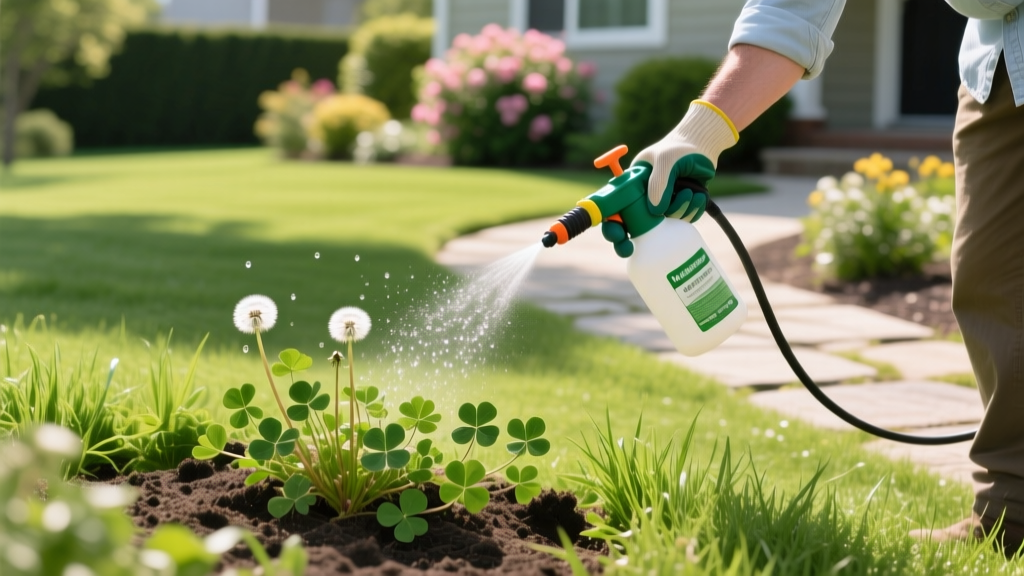
Non Herbicide Weed Killer: Spot Treatment Guide for Lawns
The Chemistry of Non-Herbicide Contact Killers
When managing weeds in lawns and garden beds without synthetic systemic chemicals like glyphosate or 2,4-D, homeowners must rely on contact-based burn-down agents. A non herbicide weed killer operates by destroying the waxy cuticle and cell membranes of plant foliage upon contact, causing rapid desiccation. Because these agents do not translocate through the plant's vascular system to the roots, they are strictly non-selective contact killers. Understanding the precise chemistry and application mechanics is critical to achieving effective spot-treatment without damaging surrounding desirable turf.
The three primary botanical and physical agents used in non-herbicide spot treatments are:
- Acetic Acid (Horticultural Vinegar): Concentrations of 20% to 30% acetic acid rapidly draw moisture out of plant cells. According to the National Pesticide Information Center (NPIC), acetic acid disrupts cell membrane integrity, leading to tissue collapse within hours.
- d-Limonene (Citrus Oil): Extracted from orange peels, d-limonene acts as a powerful solvent that strips the protective epicuticular wax from weed leaves. The NPIC d-limonene fact sheet notes its high efficacy as a contact bio-herbicide.
- Herbicidal Soaps (Fatty Acids): Potassium salts of fatty acids (pelargonic acid) penetrate leaf cuticles and disrupt cellular osmotic balance.
⚠️ PPE Warning for Horticultural Vinegar: While household vinegar (5% acetic acid) is relatively harmless, 20% to 30% agricultural vinegar is a severe corrosive. It can cause permanent corneal damage and chemical burns. Always wear ANSI Z87.1 rated splash goggles, long sleeves, and thick nitrile gloves when mixing or spraying high-concentration acetic acid.
Matching the Treatment to the Weed Species
Because non-herbicide weed killers only kill what they touch, the morphology of the target weed dictates your success rate. Broadleaf weeds with thin cuticles respond rapidly to acetic acid, while grassy weeds with thick, waxy, or rolled leaves require the addition of a surfactant or the use of citrus oils to penetrate the tissue.
| Weed Species | Best Non-Herbicide Agent | Application Strategy | Expected Burn-Down |
|---|---|---|---|
| Dandelion (Taraxacum officinale) | 20% Acetic Acid + Surfactant | Direct crown spray; expect 2-3 applications to exhaust taproot. | 12-24 hours |
| Crabgrass (Digitaria) | d-Limonene (Citrus Oil) | Thorough foliar coverage; citrus oil penetrates grassy cuticles better. | 2-4 hours |
| Creeping Charlie (Glechoma hederacea) | Herbicidal Soap (Pelargonic Acid) | Spray until runoff; repeat every 7 days to starve rhizomes. | 24-48 hours |
| Paver Crack Weeds | Thermal (Propane Flame) | Pass torch until leaves wilt (thumbprint test); no chemicals needed. | Instant |
The Exact Spot-Treatment Protocol
Applying a non herbicide weed killer is not as simple as spraying and walking away. Environmental conditions and mixture ratios dictate whether the weed dies or simply wilts temporarily and recovers.
Formulating the Solution
Commercial botanical weed killers (such as Green Gobbler 20% Vinegar or Captain Jack's Deadweed Brew) retail between $25 and $45 per gallon as of 2026. If mixing your own 20% acetic acid solution, you must include a surfactant. Water naturally beads up on the waxy cuticles of weeds. A non-ionic surfactant (like Southern Ag 90 Wetting Agent) breaks the surface tension, allowing the acid to spread evenly and penetrate the stomata.
- The Mix: 1 Gallon of 20% Acetic Acid + 1 oz Non-Ionic Surfactant + 1 cup of d-Limonene (optional, for added solvent power).
- Avoid Anionic Soaps: Do not use standard dish detergents (which are anionic) as they can bind with certain minerals in hard water, reducing the efficacy of the acetic acid.
Timing and Execution
- Check the Weather: Apply only when ambient temperatures are above 75°F and the sun is shining. UV radiation and heat accelerate the desiccation process. Avoid spraying if wind exceeds 5 mph to prevent drift onto desirable turfgrass.
- Use a Shielded Sprayer: For spot-treating weeds in a lawn, use a 1-gallon pump sprayer equipped with a physical spray shield or a cardboard baffle. This blocks micro-droplets from drifting onto your Bermuda or Fescue grass, which will also be killed on contact.
- Saturate the Foliage: Spray the weed until the leaves are thoroughly wet, but avoid drenching the soil. Acetic acid is rapidly broken down by soil microbes, so soil drenching is a waste of product and temporarily harms the soil microbiome.
- The Follow-Up: Because the root is untouched, monitor the spot. The weed will likely attempt to push new growth from its carbohydrate reserves within 7 to 10 days. Reapply the solution immediately when new shoots reach 1 inch in height. Three consecutive applications usually exhaust the root system.
Thermal Control: Flame Weeding Hardscape Cracks
For weeds growing in driveway cracks, sidewalk joints, and gravel paths, liquid non herbicide weed killers can run off into storm drains. In these scenarios, thermal weed control using a propane flame weeder (such as the Red Dragon VT 2-30C, which costs around $90) is the most ecologically sound method.
The goal of flame weeding is not to incinerate the weed. Burning a weed to ash leaves the root intact and creates a mess. The goal is to boil the water inside the plant's cells. Pass the blue cone of the flame over the weed for 1 to 2 seconds. The leaves will instantly lose their rigidity and turn a dull, matte green.
The Thumbprint Test: After passing the torch over a weed, wait 10 seconds and press your thumb firmly onto a leaf. If your thumb leaves a wet, dark fingerprint, the cell walls have successfully ruptured. The plant is dead and will dry out completely by the next afternoon.
Soil Health and Microbiome Impacts
A common concern with using high-strength acetic acid is its effect on soil pH. According to the EPA's guidelines on minimum risk pesticides, botanical acids break down rapidly in the environment. When 20% vinegar hits the soil, it is quickly neutralized by soil buffering capacity and microbial action. However, heavy, repeated drenching in a single spot can temporarily lower soil pH and harm beneficial mycorrhizal fungi.
To mitigate this, stick strictly to foliar spot-treatments. If you accidentally spill a large amount of horticultural vinegar on a garden bed, buffer the soil immediately by dusting the area with fast-acting calcitic lime and watering it in deeply.
Frequently Asked Questions
Will a non herbicide weed killer kill my lawn grass?
Yes. Acetic acid, d-limonene, and herbicidal soaps are non-selective. They cannot distinguish between a dandelion and your Kentucky Bluegrass. This is why physical spray shields and precise spot-treatment techniques are mandatory when working in turf areas.
Why did the weed grow back a week after spraying vinegar?
Non-herbicide contact killers only destroy the top growth. Mature weeds with deep taproots or extensive rhizome networks store enough energy to push out new leaves. You must re-spray the regrowth before it reaches 2 inches tall to deplete the root's energy reserves, eventually starving the plant.
Is horticultural vinegar safe for pollinators?
Once the acetic acid dries and breaks down (usually within a few hours), it leaves no toxic residue. It is considered highly pollinator-friendly compared to synthetic systemic herbicides, provided you do not spray it directly on blooming flowers where bees are actively foraging.

