
Pest Control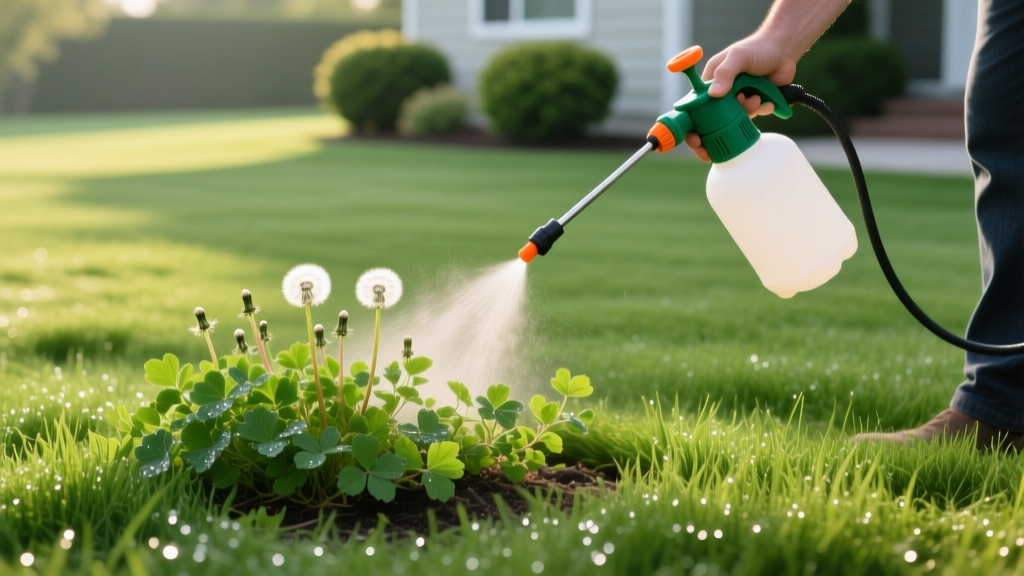
Finding a Weed Killer That Kills Everything: Spot-Treatment Guide
The Reality of Non-Selective Herbicides
When homeowners search for a 'weed killer that kills everything,' they are looking for a non-selective herbicide. In turf management, non-selective herbicides are powerful tools designed to destroy any green plant tissue they contact. While highly effective for clearing fence lines or driveway cracks, using them on an established lawn requires surgical precision. The paradox of spot-treatment is that the very chemical capable of eradicating a stubborn weed can instantly destroy the surrounding desirable turf if drift occurs.
Unlike selective herbicides (such as 2,4-D or dicamba) that target broadleaf weeds while sparing grasses, non-selective options disrupt fundamental biological processes common to all plants. Understanding the chemistry and translocation patterns of these products is the only way to execute a successful spot-treatment without leaving dead patches in your lawn.
The Chemistry of Total Vegetation Killers
Not all non-selective herbicides behave the same way. The three primary active ingredients available to consumers and professionals operate through entirely different modes of action, dictating how they should be applied for spot-treatments.
| Active Ingredient | Mode of Action | Translocation | Visible Results | 2026 Avg. Cost (Concentrate) |
|---|---|---|---|---|
| Glyphosate (e.g., Roundup Pro 50.2%) | EPSP Synthase Inhibitor (stops amino acid production) | Highly Systemic (moves to roots) | 7–14 days | $140 / 2.5 gal |
| Glufosinate (e.g., Finale 11.3%) | Glutamine Synthetase Inhibitor (causes ammonia toxicity) | Limited Systemic (mostly contact) | 3–5 days | $185 / 1 gal |
| Pelargonic Acid (e.g., Scythe) | Cell Membrane Disruptor (desiccation) | Contact Only (no root kill) | 2–24 hours | $95 / 1 gal |
According to the U.S. Environmental Protection Agency (EPA), glyphosate remains the most widely used non-selective herbicide due to its systemic nature. It travels through the phloem to the root system, making it ideal for perennial weeds with deep rhizomes. However, this same systemic action poses a risk if applied to weeds that share root zones or stolons with desirable grass.
Surgical Spot-Treatment Protocols
To use a weed killer that kills everything without harming your lawn, you must abandon broadcast spraying. Follow these exact protocols for targeted application:
⚠️ WARNING: Surfactant Drift
Never add a surfactant when spot-treating near desirable turf if wind speeds exceed 5 mph. Surfactants reduce surface tension, causing droplets to bounce and splatter onto adjacent grass blades, resulting in localized turf death.
Never add a surfactant when spot-treating near desirable turf if wind speeds exceed 5 mph. Surfactants reduce surface tension, causing droplets to bounce and splatter onto adjacent grass blades, resulting in localized turf death.
Step 1: Calibration and Mixing
For a standard 1-gallon pump sprayer, mix 2.5 fluid ounces of 41% to 50.2% glyphosate concentrate with water. If using glufosinate, increase the rate to 4 fluid ounces per gallon. Always add a non-ionic surfactant (NIS) at a rate of 0.25% v/v (roughly 1 teaspoon per gallon) to ensure the chemical adheres to waxy weed cuticles, unless the product label states it is pre-formulated with surfactants.
Step 2: Equipment Selection
- Wick Applicator: Best for tall weeds (like Dallisgrass) growing above a low-mowed lawn. The chemical wicks onto the weed via physical contact, eliminating airborne drift.
- Cone Nozzle with Shield: A plastic cone placed over the spray tip catches overspray. Keep the cone flush with the soil surface when treating rosette weeds like dandelions or plantain.
- Sponge Brush: Ideal for painting herbicide directly onto the leaves of invasive vines (like poison ivy or bindweed) wrapped around desirable shrubs.
Step 3: Environmental Timing
Apply only when temperatures are between 65°F and 85°F. Systemic herbicides like glyphosate require active plant growth to translocate to the roots. Applying during a summer drought or heatwave (above 90°F) will cause the weed to shut down its vascular system, trapping the chemical in the leaves and resulting in a failed treatment. Ensure no rainfall is expected for at least 6 hours post-application.
Species-Specific Spot Treatment Matrix
Different weeds require different non-selective strategies. The University of California Integrated Pest Management (UC IPM) program emphasizes that understanding weed morphology is critical for non-selective spot-treatment success.
| Weed Species | Growth Habit | Recommended Non-Selective | Application Technique |
|---|---|---|---|
| Yellow Nutsedge | Perennial sedge with underground tubers (nutlets) | Glyphosate (50.2%) | Wick applicator. Must translocate to tubers. Expect 2-3 applications spaced 14 days apart. |
| Dallisgrass | Clump-forming perennial grass with deep rhizomes | Glyphosate or Glufosinate | Paint or sponge brush directly onto the clump. Avoid spraying the soil to protect surrounding turf roots. |
| Creeping Charlie | Stoloniferous broadleaf (spreads via above-ground runners) | Glufosinate | Shielded spray. Glufosinate limits translocation, preventing the chemical from traveling down the stolon into the roots of adjacent desirable grass. |
| Poa Annua (Annual Bluegrass) | Shallow-rooted annual/biennial grass | Pelargonic Acid or Glufosinate | Contact burn-down is sufficient. No need for systemic root kill since it reproduces primarily by seed. |
Organic and Non-Toxic Burn-Down Alternatives
For homeowners seeking an organic 'weed killer that kills everything,' botanical oils and fatty acids are the standard. Products containing d-limonene (citrus oil) or pelargonic acid (herbicidal soap) strip the waxy cuticle from leaves, causing rapid desiccation.
'Organic burn-down herbicides are excellent for young, tender annual weeds in hardscape cracks, but they lack the systemic action required to kill mature perennial weeds with deep taproots or rhizomes.' — Turfgrass Agronomy Guidelines, 2025
If using a d-limonene product like Avenger Weed Killer, you must spray to the point of runoff. Because these chemicals only kill what they touch, any weed tissue left unsprayed will regenerate within 48 hours. Furthermore, organic non-selectives are highly sensitive to water hardness; always mix them with distilled or softened water to prevent the calcium and magnesium in hard tap water from neutralizing the fatty acids.
Post-Treatment Lawn Recovery and Overseeding
Once the targeted weed is eradicated, you must repair the void. The timeline for overseeding depends entirely on the active ingredient used:
- Glyphosate: Binds tightly to soil particles and is deactivated by soil microbes. You can safely overseed with fescue, ryegrass, or bermuda seed 7 to 14 days after application, provided the dead weed debris is raked away to ensure seed-to-soil contact.
- Glufosinate: Degrades rapidly in the soil. Overseeding can occur immediately or within 24 hours of application.
- Pelargonic Acid: No soil residual. Safe to seed immediately.
Before dropping seed, use a hand trowel to break up the soil crust left by the dead weed. Apply a starter fertilizer (e.g., 18-24-12) at a rate of 4 lbs per 1,000 sq ft to give the new turf a competitive advantage against incoming weed seeds.
Frequently Asked Questions
Will a non-selective herbicide kill my lawn if it blows in the wind?
Yes. Even micro-droplets of glyphosate or glufosinate will cause yellowing and necrosis in desirable turf. Always use a physical shield or a wick applicator when wind speeds are above 3 mph, and keep the spray pressure low (under 20 PSI) to generate large, heavy droplets rather than a fine mist.
Can I mix vinegar with commercial weed killers for a stronger effect?
No. Mixing high-concentration horticultural vinegar (20% to 30% acetic acid) with systemic herbicides like glyphosate actually reduces efficacy. The acid causes immediate contact burn on the leaf surface, destroying the vascular tissue before the systemic chemical has time to translocate to the roots, resulting in a weed that dies on top but resprouts from the roots weeks later.
Are there any pre-emergent herbicides that kill everything?
Pre-emergents do not 'kill everything' in the traditional sense; they inhibit cell division in germinating seeds. Products containing prodiamine or dithiopyr will stop most annual grassy and broadleaf weeds from sprouting, but they will also prevent your desirable lawn grass seed from germinating. They are not used for spot-treatment of existing visible weeds.

