
Pest Control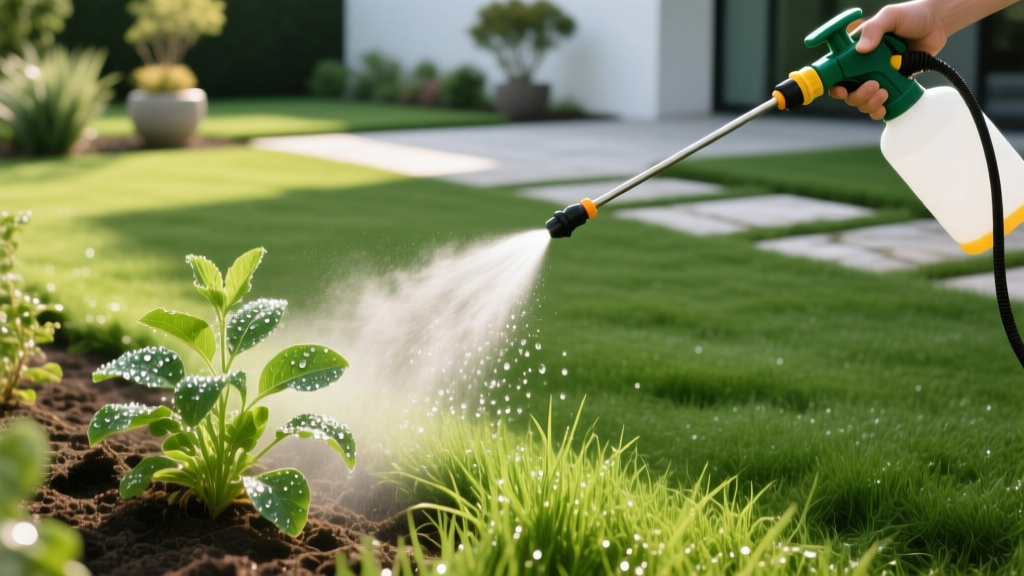
Why Add a Nonionic Surfactant for Herbicide Sprays?
The Hidden Thief in Your Soil Nutrition Plan
When you invest $85 in a 50-pound bag of 20-0-5 turf fertilizer, your goal is to feed your grass. However, if your lawn is compromised by broadleaf weeds like plantain (Plantago major) or dandelions (Taraxacum officinale), you are inadvertently funding a hostile takeover. Weeds are aggressive nutrient sinks; a mature dandelion taproot can pull phosphorus and potassium from deep soil profiles, while its broad rosette shades out turfgrass, halting photosynthesis.
To protect your soil nutrition investment, herbicide applications must be flawless. Yet, homeowners frequently experience herbicide failure not because the chemical was weak, but because the spray solution physically bounced off the weed. This is where a nonionic surfactant for herbicide applications becomes the most critical, yet overlooked, component in your lawn care arsenal.
The Chemistry of Leaf Cuticles and Surface Tension
Mature weeds develop a protective epicuticular wax layer on their leaves to prevent moisture loss. Plain water has a high surface tension of approximately 72 dynes per centimeter. When sprayed onto a waxy leaf, water forms tight, spherical beads that easily roll off, taking your expensive herbicide into the soil where it degrades without killing the target weed.
Nonionic surfactants (NIS) are surface-active agents that contain no electrical charge. They reduce the surface tension of the spray solution from 72 dynes/cm down to roughly 25–30 dynes/cm. This allows the liquid to collapse from a bead into a flat, uniform film, maximizing the contact area and forcing the herbicide active ingredient through the leaf stomata and cuticle.
"Applying a post-emergent herbicide without a surfactant on drought-stressed or mature weeds is essentially washing the leaf with expensive water. The NIS is the vehicle that drives the active ingredient into the plant tissue."
How Surfactants Compare: NIS vs. COC vs. MSO
Choosing the right adjuvant is vital. Using the wrong type can cause severe turf phytotoxicity (chemical burn) or fail to penetrate the weed. Below is a structural comparison of the three primary herbicide adjuvants.
| Adjuvant Type | Composition | Best Use Case | Turf Burn Risk |
|---|---|---|---|
| Nonionic Surfactant (NIS) | Alcohol or fatty acid ethoxylates | Standard broadleaf herbicides, grassy weed killers, and most foliar liquid fertilizers. | Low |
| Crop Oil Concentrate (COC) | 80-85% petroleum oil + 15-20% emulsifier | Stubborn weeds, cool weather applications, and specific systemic herbicides. | High (in heat) |
| Methylated Seed Oil (MSO) | Esterified plant seed oils | Herbicide-resistant weeds, extreme heat/drought conditions. | Moderate to High |
Exact Tank-Mix Rates and the W-A-L-E-S Sequence
The standard application rate for a nonionic surfactant for herbicide tank mixes is 0.25% to 0.5% volume/volume (v/v). For homeowners using 1-gallon or 2-gallon pump sprayers, this translates to precise, manageable measurements.
Homeowner Mixing Cheat Sheet (1 Gallon)
- 0.25% v/v Rate: 0.5 teaspoons (approx. 2.5 ml) per gallon of water.
- 0.50% v/v Rate: 1.0 teaspoon (approx. 5.0 ml) per gallon of water.
- Cost Efficiency: A $32 quart bottle of premium NIS yields roughly 192 teaspoons, enough to treat 192 to 384 gallons of spray solution.
The W-A-L-E-S Mixing Order
Adding chemicals in the wrong order causes "tie-up" (precipitation), where the chemicals bind together into a solid sludge at the bottom of your tank, ruining the spray and clogging your nozzles. Always follow the W-A-L-E-S protocol, adding the surfactant last:
- Wettable powders (WP) or dry flowables (DF)
- Agitate (stir the mixture)
- Liquid formulations (Flowables, Suspensions)
- Emulsifiable concentrates (EC)
- Surfactants, Solutions, and Soluble liquids (Add your NIS here)
⚠️ Warning: The Foaming Effect
Nonionic surfactants are essentially specialized soaps. If you add the NIS to the tank while the water is already agitating vigorously, or if you shake a closed pump sprayer violently after adding it, you will create a massive head of foam. This foam displaces liquid, making it impossible to measure your exact spray volume and leading to uneven herbicide distribution. Always add NIS last, and gently swirl the tank rather than shaking it.
Nonionic surfactants are essentially specialized soaps. If you add the NIS to the tank while the water is already agitating vigorously, or if you shake a closed pump sprayer violently after adding it, you will create a massive head of foam. This foam displaces liquid, making it impossible to measure your exact spray volume and leading to uneven herbicide distribution. Always add NIS last, and gently swirl the tank rather than shaking it.
Protecting Soil Nutrition: The Fertilizer Connection
From a soil nutrition perspective, herbicide efficacy directly dictates fertilizer ROI. Consider a scenario where you apply a pre-emergent crabgrass barrier in spring, followed by a 32-0-10 high-nitrogen fertilizer. If broadleaf weeds survive due to poor herbicide penetration (lack of surfactant), those weeds will rapidly metabolize the surface-applied nitrogen.
According to research published by University of Minnesota Extension, adjuvants like NIS can increase herbicide uptake by up to 40% on difficult-to-wet species. By ensuring 100% weed mortality, the nitrogen and phosphorus you apply remain available for the turfgrass root zone, rather than being sequestered in weed biomass. Furthermore, many liquid foliar fertilizers (like chelated iron or kelp extracts) also require a nonionic surfactant to penetrate the turfgrass leaf blade, making NIS a dual-purpose tool in your soil nutrition toolkit.
Top Nonionic Surfactant Products for 2026
Not all surfactants are created equal. Cheap, generic "spreader-stickers" found at big-box stores often contain low concentrations of active ethoxylates and high amounts of water or cheap fillers. For professional-grade results, source the following:
1. Induce (by Helena Agri-Enterprises)
- Active Ingredients: 90% Principal Functioning Agents (alkyl polyoxyethylene ether and free fatty acids).
- Price: $28 - $35 per quart.
- Pros: Extremely low foaming formula; highly stable in hard water; does not interfere with soil-applied pre-emergents.
- Cons: Primarily sold through agricultural or specialized turf suppliers, not standard retail nurseries.
2. Preference Nonionic Surfactant (by WinField United)
- Active Ingredients: 80% Alkyl polyoxyethylene ether and propionic acid.
- Price: $30 - $40 per quart.
- Pros: Excellent compatibility with 2,4-D and Triclopyr tank mixes; includes a built-in blue dye indicator to track spray overlap on the lawn.
- Cons: The blue dye can temporarily stain concrete driveways if spilled during mixing.
Troubleshooting Common Tank-Mix Errors
Even with the right nonionic surfactant for herbicide applications, environmental factors can derail your soil nutrition and weed control program. Use this troubleshooting matrix to diagnose field issues.
| Symptom in the Field | Probable Cause | Corrective Action |
|---|---|---|
| Weed leaves turn yellow but do not die. | Herbicide dose was too low, or weed was severely drought-stressed, closing its stomata. | Water the lawn deeply 24 hours before spraying to open stomata. Re-spray at the maximum label rate with 0.5% v/v NIS. |
| White, flaky sludge at the bottom of the sprayer. | Chemical tie-up caused by adding the NIS or liquid herbicide before dry wettable powders. | Empty and thoroughly clean the tank. Restart the mix using the strict W-A-L-E-S sequence. |
| Severe turfgrass burn (browning) after spraying. | Applying COC or MSO instead of NIS during high temperatures (above 85°F), or doubling the NIS rate. | Stick strictly to NIS during summer months. Never exceed 0.5% v/v. Spray in the early evening when temperatures drop. |
| Herbicide beads up on the leaf despite adding NIS. | Extremely hard spray water (high calcium/magnesium) or high alkaline pH (above 8.0) degrading the active ingredient. | NIS does not buffer water. Add Ammonium Sulfate (AMS) at 2.5 lbs per 100 gallons to condition hard water before adding herbicide and NIS. Consult NC State Extension guidelines on water conditioning. |
Final Thoughts on Integrated Lawn Care
A successful fertilization and soil nutrition program relies entirely on the turfgrass having exclusive access to the soil's nutrients. By integrating a high-quality nonionic surfactant into your herbicide tank mixes, you eliminate the nutrient-draining competition of broadleaf and grassy weeds. Measure your surfactant accurately, respect the W-A-L-E-S mixing order, and your fertilizer will finally reach the grass roots it was intended for.

