
Pest Control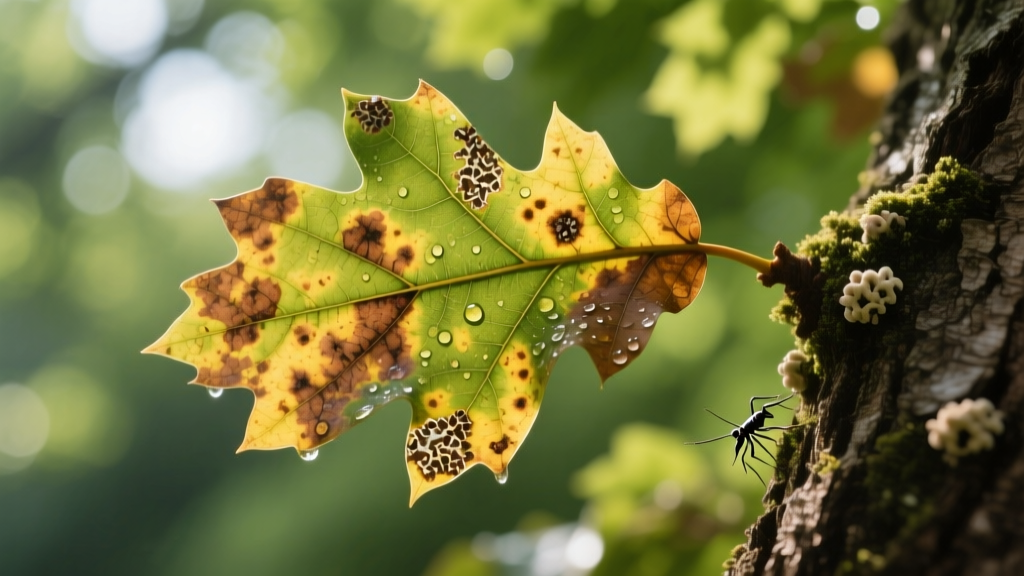
Diagnosing Oak Blight Disease: Symptoms and Rescue Fixes
The "Oak Blight" Misnomer: What is Actually Killing Your Leaves?
Homeowners frequently use the term oak blight disease as a catch-all for any rapid browning, necrosis, or defoliation in oak canopies. However, from a diagnostic pathology standpoint, true "blight" refers specifically to fungal leaf infections like Tubakia leaf spot or oak anthracnose. These are largely cosmetic and rarely fatal to established trees. The real danger lies in misdiagnosing fatal vascular diseases—such as Oak Wilt or Sudden Oak Death (SOD)—as a simple foliar blight, leading to delayed treatment and total tree loss.
To execute the correct rescue fix, you must first isolate the pathogen. Fungal leaf blights respond to contact and systemic foliar fungicides, while vascular pathogens require immediate trunk macro-infusions or complete removal to protect surrounding stands.
Symptom Diagnostic Matrix: Leaf Blight vs. Vascular Pathogens
Use this comparison matrix to cross-reference your tree's symptoms. Pay close attention to the progression speed and the specific pattern of necrosis on the leaves.
| Disease / Pathogen | Primary Symptoms | Progression Speed | Fatality Risk |
|---|---|---|---|
| Tubakia Leaf Blight (Tubakia dryina) |
Dark brown, irregular necrotic spots on mature leaves; prominent on red oaks in late summer. | Slow (Weeks) | Low (Cosmetic defoliation) |
| Oak Anthracnose (Apiognomonia quercina) |
Browning follows the leaf veins; distorted young leaves in spring; twig dieback. | Moderate (Weeks) | Low (Stunts growth) |
| Oak Wilt (Bretziella fagacearum) |
Rapid canopy bronzing starting at the top; leaves drop while still green or partially brown. | Rapid (Days) | Fatal (Red oaks die in 4-6 weeks) |
| Sudden Oak Death (Phytophthora ramorum) |
Dark, bleeding cankers on the lower trunk; sparse, yellowing canopy. | Moderate (Months) | Fatal (Endemic to West Coast) |
Rescue Protocol 1: Managing Fungal Oak Blights
If your diagnosis confirms Tubakia or Anthracnose, the tree's vascular system is intact. Your rescue strategy should focus on reducing the fungal inoculum load and protecting new flush growth. According to Penn State Extension, anthracnose fungi overwinter in infected twigs and fallen leaves, making sanitation just as critical as chemical intervention.
Step 1: Sanitation and Inoculum Reduction
- Leaf Removal: Rake and remove all fallen leaves from beneath the canopy. Do not compost them in standard backyard piles, as home compost rarely reaches the 140°F (60°C) required to kill Apiognomonia spores. Bag and dispose of them via municipal yard waste.
- Deadwood Pruning: Remove dead or heavily cankered twigs where the fungus overwinters. Critical Timing Rule: Only prune oaks during the dormant season (December 1 through February 15) to prevent exposing fresh wounds to Nitidulid beetles, which vector the fatal Oak Wilt pathogen.
Step 2: Targeted Fungicide Application
Fungicides will not cure already-browned leaves; they act as a protective barrier for emerging tissue. You must apply them at bud break (when buds show 1/2 inch of green tissue), typically early to mid-spring depending on your hardiness zone.
Recommended Fungicide Regimen
Option A (Contact): Chlorothalonil (e.g., Daconil Ultrex). Apply at a rate of 1.5 to 2.0 fl oz per 1,000 sq ft of canopy drip line. Requires thorough coverage of all emerging leaf surfaces. Reapply every 10–14 days during wet spring weather.
Option B (Systemic): Thiophanate-methyl (e.g., Cleary’s 3336 WP). Mix 1.5 teaspoons per gallon of water. This penetrates the leaf tissue, offering better protection against heavy rain wash-off. Limit to two applications per season to prevent fungal resistance.
Rescue Protocol 2: Emergency Vascular Interventions
If your tree exhibits the rapid top-down bronzing of Oak Wilt or the bleeding trunk cankers of Sudden Oak Death (SOD), foliar sprays are entirely useless. The pathogen is inside the xylem, blocking water transport.
Oak Wilt: Trenching and Macro-Infusion
For high-value red oaks showing less than 30% canopy decline, emergency trunk injection of Propiconazole (Alamo) can halt the fungus. This is not a DIY job; it requires specialized pressurized injection equipment to force the chemical into the sapwood.
- Cost Expectation: Professional macro-infusion typically costs $18 to $28 per inch of DBH (Diameter at Breast Height). A mature 24-inch red oak will cost roughly $450–$670 per treatment.
- Root Graft Severance: Because Oak Wilt spreads through interconnected root systems, you must mechanically sever root grafts to adjacent healthy oaks using a vibratory plow to a depth of 48 inches. The University of Minnesota Extension emphasizes that failing to trench will result in the infection spreading to the entire grove within 1 to 3 years.
Sudden Oak Death (SOD): Phosphonate Treatments
Endemic primarily to California and Oregon, SOD requires preventative action. If you are in a quarantine zone (check the USDA APHIS SOD tracker), apply Phosphorous acid (e.g., Agri-Fos) via trunk injection or bark spray in the late fall. This boosts the tree's natural chemical defenses (phytoalexins) against the Phytophthora water mold. Expect to pay $12–$15 per inch of DBH for professional bark-penetrant applications.
WARNING: When to Remove the Tree
If a red oak has lost more than 30% of its canopy to Oak Wilt, or if a coast live oak has a bleeding canker girdling more than 50% of its trunk circumference due to SOD, rescue treatments will fail. The tree must be felled and the wood chipped or kiln-dried immediately to prevent vector beetles from carrying the pathogens to neighboring properties.
Frequently Asked Questions (FAQ)
Will my oak drop all its leaves from Tubakia blight?
Severe Tubakia infections can cause up to 50% defoliation by late August, particularly in stressed trees experiencing drought. While alarming, the tree has already completed the majority of its annual photosynthetic cycle by this time. Ensure the tree receives 1 inch of supplemental water per week through autumn to support root carbohydrate storage for the following spring.
Can I use copper fungicide for oak blight?
Copper-based fungicides (like copper hydroxide) are generally ineffective against Tubakia and Apiognomonia. Furthermore, repeated use of copper on oak foliage can cause phytotoxicity (leaf burn) and accumulate to toxic levels in the soil beneath the drip line, damaging the fine feeder roots. Stick to Chlorothalonil or Thiophanate-methyl for foliar protection.
How do I accurately measure DBH for treatment estimates?
Diameter at Breast Height (DBH) is measured at exactly 4.5 feet above the ground. Use a flexible measuring tape to measure the circumference of the trunk at this height, then divide that number by 3.14 (Pi) to get the diameter. For multi-stemmed oaks, measure each stem at 4.5 feet, calculate the cross-sectional area of each, add them together, and convert back to a single equivalent diameter to ensure you receive an accurate chemical dosage quote from an arborist.

