
Pest Control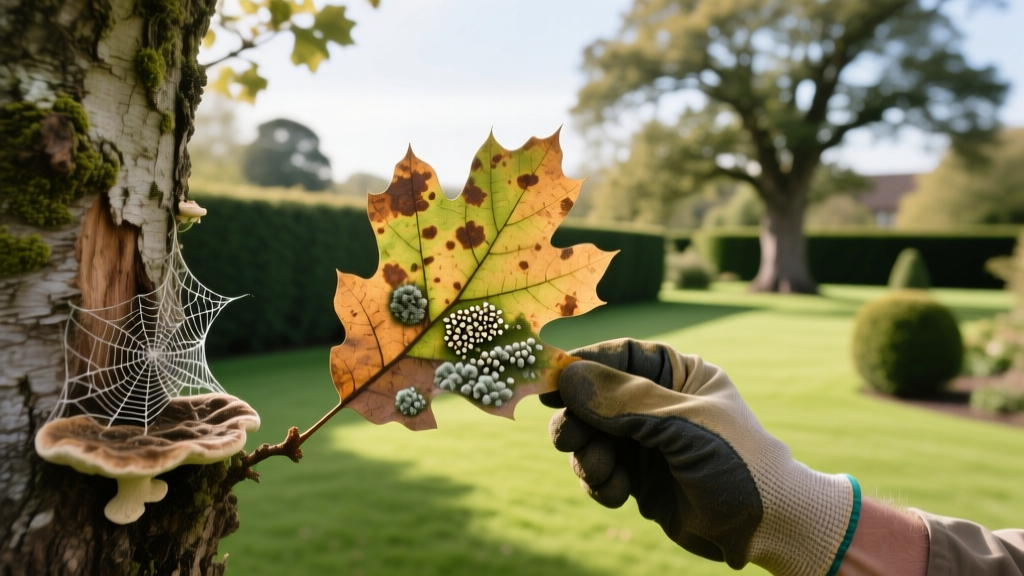
Oak Fungus Diagnosis: Symptom Identification and Rescue Fixes
The Critical Window for Oak Fungus Intervention
Oak trees (Quercus spp.) are highly susceptible to a spectrum of fungal pathogens that can rapidly degrade vascular tissue, compromise structural integrity, and ultimately kill the tree. Misdiagnosing an oak fungal infection often leads to wasted capital on ineffective foliar sprays or soil drenches. Accurate symptom identification at the canopy, bark, and root flare levels is the only way to deploy targeted rescue fixes. This guide provides a clinical framework for diagnosing the four most destructive oak fungi and outlines the exact mechanical and chemical protocols required to save infected specimens.
Diagnostic Matrix: The 4 Most Destructive Oak Fungi
Before purchasing fungicides or hiring an arborist, cross-reference your tree's symptoms against this diagnostic matrix. Treatment viability drops to zero once specific structural thresholds are crossed.
| Pathogen | Primary Symptoms | Speed of Decline | Treatment Viability |
|---|---|---|---|
| Oak Wilt (Bretziella fagacearum) |
Veinal necrosis, rapid leaf drop from top down, fungal mats under bark | Rapid (Red oaks die in 4-6 weeks; White oaks decline over years) | High if caught early (preventative); Low for symptomatic Red oaks |
| Hypoxylon Canker (Hypoxylon atropunctatum) |
Thinning canopy, sloughing bark revealing black/gray stroma, dieback | Moderate (Opportunistic; attacks stressed trees over 1-3 years) | Zero (Chemical cure does not exist; requires stress mitigation and deadwood removal) |
| Armillaria Root Rot (Armillaria mellea) |
White mycelial fans under root bark, black shoestring rhizomorphs, honey-colored mushrooms at base | Slow to Moderate (Years of internal decay before canopy failure) | Low (Focus on soil aeration and reducing root zone moisture; advanced cases require removal) |
| Anthracnose (Apiognomonia quercina) |
Marginal leaf browning, irregular necrotic spots along veins, twig dieback | Seasonal (Flares in cool, wet springs; rarely kills mature trees) | High (Cultural controls and targeted spring fungicide sprays) |
Deep Dive: Symptom Spotting by Canopy and Bark
Canopy and Foliar Indicators
The distinction between Oak Wilt and Anthracnose lies in the pattern of leaf necrosis. Anthracnose typically presents as marginal browning or irregular blotches that cross the veins. In contrast, Oak Wilt in Red oaks causes veinal necrosis—the tissue immediately surrounding the leaf veins turns brown or bronze while the interveinal tissue remains green longer, eventually leading to a crisp, curled leaf that drops while still partially green. According to the University of Minnesota Extension, Red oaks will drop nearly all their leaves within weeks of the first canopy browning, whereas White oaks exhibit a slower, branch-by-branch dieback.
Bark, Trunk, and Root Flare Indicators
If the canopy is ambiguous, inspect the trunk. For Oak Wilt, look for 'pressure pads' or fungal mats. These form beneath the bark in Red oaks during the spring and fall. You can detect them by making a shallow, 3-inch vertical slit in the bark on the lower trunk; a fruity odor and dark gray/black mats confirm Bretziella fagacearum. For Hypoxylon Canker, the outer bark sloughs off entirely, exposing a crusty, gray-to-black stromal layer that looks like charcoal. Armillaria requires inspecting the root collar; peel back the soil and bark at the base to find white, fan-shaped mycelial mats.
WARNING: Root Graft Transmission
Oak Wilt spreads underground through interconnected root systems. Red oaks growing within 100 feet of an infected tree are at extreme risk. Do not wait for canopy symptoms to appear on adjacent trees before initiating mechanical separation.
Oak Wilt spreads underground through interconnected root systems. Red oaks growing within 100 feet of an infected tree are at extreme risk. Do not wait for canopy symptoms to appear on adjacent trees before initiating mechanical separation.
Step-by-Step Rescue Fixes and Treatment Protocols
Once Oak Wilt or severe vascular fungus is confirmed, immediate intervention is required. Foliar sprays are entirely ineffective for systemic vascular diseases. You must deploy mechanical and trunk-injection protocols.
Step 1: Mechanical Trenching (Root Graft Disruption)
To stop the subterranean spread of Oak Wilt, you must sever root grafts between infected and healthy trees. Standard landscape trenchers only reach 36 inches, which is insufficient for mature oaks. You must use a vibratory plow or rock saw to cut a trench exactly 48 inches deep. The trench should encircle the infected tree or be placed midway between the infected and healthy trees. According to the Texas A&M Forest Service, trenching must be completed before the infected tree is removed to prevent the dying tree from pushing the fungus outward through the severed roots.
Step 2: Trunk Injection of Propiconazole
For high-value, uninfected (or very early-stage) oaks, systemic fungicide injection is the only proven chemical rescue. The industry standard is Propiconazole 41.8% (trade name: Alamo).
- Timing: Inject in early spring when sap flow is actively moving upward (typically when daytime temperatures consistently hit 65°F).
- Dosage: Calculate the Diameter at Breast Height (DBH) at 4.5 feet above ground. The standard preventative rate is 0.2 fluid ounces of Alamo per inch of DBH, diluted with water according to the manufacturer's macro-infusion chart.
- Application: Drill 5/16-inch holes at a 45-degree downward angle into the xylem at the root flare, spaced 4 to 6 inches apart around the circumference. Use a pressurized IV system (like the ArborJet QUIK-jet) to force the emulsion into the vascular tissue.
Step 3: Wound Sealing and Sanitation
Oak Wilt spores are vectored by Nitidulid beetles (sap beetles) attracted to fresh tree wounds. Any pruning cut, storm damage, or injection hole on an oak tree must be sealed within 15 minutes of creation. Use a commercial latex-based tree wound paint or spray paint. Do not use heavy asphalt-based sealants, which can trap moisture and promote secondary decay. Furthermore, never store unseasoned Red Oak firewood near healthy oaks; the fungal mats on the logs will attract beetles and bridge the infection.
Cost Breakdown: Professional Intervention vs. DIY
Understanding the financial commitment helps homeowners decide between saving a tree and funding a replacement. Below is the estimated 2026 pricing for professional arborist services versus DIY material costs for a single 24-inch DBH Red Oak.
| Intervention Type | Professional Service Cost | DIY Material Cost | Feasibility Notes |
|---|---|---|---|
| Propiconazole Injection (24" DBH) | $350 - $500 per tree | $120 - $180 (Fungicide + rental kit) | DIY is feasible but requires precise drilling and pressurized pumping equipment. |
| 48" Vibratory Trenching (100 linear ft) | $1,200 - $1,800 | N/A (Heavy machinery required) | Strictly professional. Hitting utility lines is a major risk without locates. |
| Infected Tree Removal & Stump Grinding | $1,500 - $3,500 | N/A | Required if canopy dieback exceeds 30% or if structural failure is imminent. |
Preventative Soil and Canopy Care
Fungi like Hypoxylon and Armillaria are opportunistic; they attack oaks experiencing environmental stress. Preventative care focuses on optimizing the root zone environment to maintain the tree's natural chemical defenses (tyloses and suberin).
- Radial Trenching and Soil Amendment: Compacted soil suffocates oak roots, inviting Armillaria. Use an air spade to excavate soil in a radial pattern from the trunk to the drip line. Backfill with a mix of 70% native soil and 30% coarse compost to restore macroporosity.
- Mulch Ring Expansion: Maintain a 3-inch layer of arborist wood chips extending to the drip line. Keep the mulch exactly 3 inches away from the root flare to prevent basal rot. Never pile mulch against the trunk ('volcano mulching').
- Dormant Season Pruning: Only prune oaks between November and February when Nitidulid beetles are inactive. Sterilize pruning saws with a 10% bleach solution or 70% isopropyl alcohol between every single cut to prevent mechanical pathogen transfer.
Expert Summary: Successful oak fungus management relies on rapid, accurate diagnosis. If you see veinal necrosis and rapid leaf drop, assume Oak Wilt and initiate trenching and propiconazole injections immediately. If you see sloughing bark and black stroma, recognize Hypoxylon as a symptom of severe underlying stress, and focus entirely on soil remediation and deadwood removal rather than futile chemical treatments.

