
Pest Control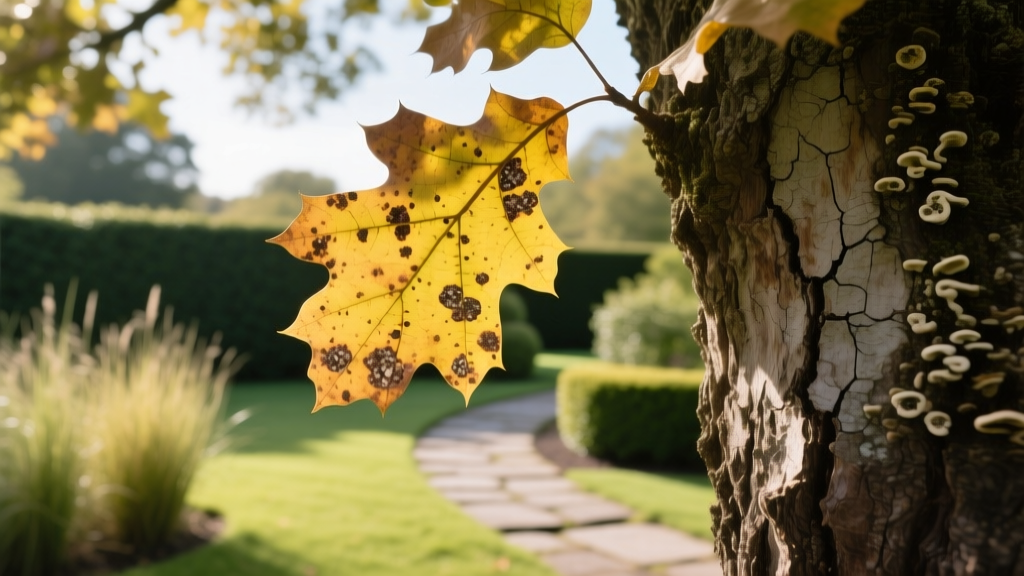
Oak Tree Diseases: Symptom Diagnosis and Rescue Fixes
The Diagnostic Triage: Vascular vs. Foliar Threats
When managing oak tree diseases, the first 48 hours dictate whether your tree survives or becomes a hazardous liability. Misdiagnosing a fatal vascular infection as a minor cosmetic blight is the most common failure mode among homeowners. Before purchasing any fungicide, you must determine if the pathogen is attacking the vascular system (xylem) or the foliar canopy.
⚠️ The 48-Hour Vascular Warning: If your oak (particularly a Red Oak) drops green or partially green leaves in late spring or summer, suspect a vascular disease immediately. Do not wait for total canopy browning to call an arborist.
Oak Wilt (Bretziella fagacearum): The Lethal Vascular Blockage
Oak wilt is caused by the fungus Bretziella fagacearum (formerly Ceratocystis fagacearum). It clogs the tree's water-conducting vessels, causing rapid wilting. According to the Texas A&M Forest Service, Red Oaks (Texas red, Shumard, blackjack) typically die within 4 to 6 weeks of initial infection, while White Oaks (bur, post, white) possess tyloses that slow the fungus, allowing them to survive for years with localized branch dieback.
Symptom Identification
- Red Oaks: Leaves turn pale green, then bronze, starting at the top of the canopy and moving downward. Veinal necrosis (browning along the leaf veins) is a hallmark sign.
- White Oaks: Isolated branches show wilting and browning, often mimicking drought stress.
Emergency Rescue Fixes
Once a Red Oak shows more than 30% canopy wilt, it is unsalvageable and must be removed to protect neighboring trees. For trees with less than 30% damage, or for high-value preventative treatment, you must deploy a two-pronged attack:
- Mechanical Root Severing (Trenching): Oak wilt spreads through interconnected root grafts. You must trench 48 inches deep using a vibratory plow, extending the trench at least 100 feet beyond the visibly infected tree margin.
- Trunk Injection of Propiconazole: The only scientifically proven curative chemical is Propiconazole 41.8% (commercial name: Alamo). The standard dosage is 0.2 fluid ounces per inch of Diameter at Breast Height (DBH). A 20-inch DBH oak requires 4 fluid ounces of formulation mixed with water to achieve the correct dilution for the ArborJet or QUIK-jet infusion system.
Oak Anthracnose (Apiognomonia quercina): The Foliar Opportunist
Unlike oak wilt, anthracnose is a cosmetic foliar disease that rarely kills established trees. It thrives in cool, wet spring conditions. The University of Minnesota Extension notes that anthracnose often causes premature leaf drop in early summer, but healthy oaks will simply push out a second flush of leaves by July.
Symptom Identification
Look for irregular, dead brown patches along the leaf margins and veins. Unlike oak wilt, anthracnose does not cause sudden, uniform canopy wilting. You may also notice small, black fruiting bodies (acervuli) on the undersides of infected leaves.
Rescue and Prevention Protocol
Chemical rescue is rarely needed for mature trees, but young oaks (under 10 years) can suffer severe stunting if repeatedly defoliated.
- Sanitation: Rake and destroy all fallen leaves in autumn to eliminate overwintering fungal spores.
- Chemical Control: Apply a preventive fungicide containing Chlorothalonil or Mancozeb at bud break (when buds swell and show 1/2 inch of green tissue). Repeat applications every 10 to 14 days if spring rainfall is heavy. Cost for professional spraying averages $15 to $25 per canopy inch.
Hypoxylon Canker & Sudden Oak Death
Hypoxylon is a secondary invader. It does not attack healthy tissue; it exploits oaks severely stressed by drought, construction damage, or soil compaction. As the inner bark dies, the outer bark sloughs off, exposing a gray, black, or reddish-brown crusty fungal mat (stroma). There is no chemical cure for Hypoxylon canker once the stroma is visible; the rescue fix is entirely cultural through deep-root aeration and vertical mulching.
For coastal regions, USDA APHIS warns of Sudden Oak Death (Phytophthora ramorum), which presents as dark bleeding cankers on the trunk and requires immediate phosphonate (Agri-Fos) application to suppress the pathogen.
"Accurate identification is the linchpin of oak preservation. Before committing hundreds of dollars to chemical treatments, cross-reference your symptoms with local agricultural extensions and consider submitting leaf and sapwood samples to a university plant diagnostic lab for definitive confirmation."
Quick Diagnostic Matrix: Oak Tree Diseases
| Disease | Primary Symptom | Canopy Impact | Rescue Window | Chemical Treatment |
|---|---|---|---|---|
| Oak Wilt | Veinal necrosis, rapid wilting | Fatal (Red Oaks) | < 30% wilt | Propiconazole 41.8% |
| Anthracnose | Brown marginal leaf spots | Cosmetic / Defoliation | Early Spring | Chlorothalonil / Mancozeb |
| Hypoxylon Canker | Bark sloughing, fungal stroma | Branch dieback / Fatal | Pre-infection only | None (Cultural only) |
| Sudden Oak Death | Trunk cankers, bleeding sap | Fatal | Early trunk bleeding | Phosphonate (Agri-Fos) |
Step-by-Step Trunk Injection Protocol for Oak Wilt
If you are managing a high-value oak and opt for DIY trunk injection (note: hiring an ISA Certified Arborist is highly recommended due to the precision required), follow these exact parameters to avoid girdling the tree with drill wounds.
- Calculate DBH: Measure the circumference of the trunk at 4.5 feet above ground. Divide by 3.14 to get the DBH in inches.
- Drill Spacing: Space injection sites every 4 to 6 inches around the base of the trunk, focusing on the root flare. Do not drill in a single horizontal line; stagger the holes vertically by 1 to 2 inches to prevent structural weakening.
- Drill Bit Specifications: Use a 5/32-inch brad-point bit. Drill at a slight upward angle to a depth of exactly 1.5 inches into the sapwood. Avoid the dark heartwood, as it will not conduct the fungicide.
- Infusion: Attach the injection tees and use a pressurized system to push the Propiconazole mix into the xylem. Uptake should occur within 30 to 60 minutes. If uptake stalls, the tree's vascular system is too degraded to save.
Cost Reality Check: Professional oak wilt trunk injection costs between $15 and $25 per inch of DBH. A mature 30-inch oak will cost $450 to $750 per treatment, and must be repeated every 2 years for ongoing protection. DIY chemical kits (like the ArborJet QUIK-jet Air) cost upwards of $1,200 for the equipment, making professional hiring more economical for single-tree treatments.
Critical Pruning Rules to Prevent Disease Vectors
Nitidulid beetles carry oak wilt spores from infected trees to fresh wounds. To prevent introducing oak tree diseases into your landscape, strictly adhere to seasonal pruning bans.
- High-Risk Window: Never prune between February 15 and June 15.
- Low-Risk Window: Prune during the hottest, driest days of summer (July/August) or during deep winter dormancy (December/January).
- Wound Sealing: If an oak sustains an accidental wound (from lawnmowers, storms, or necessary pruning) during the high-risk window, immediately paint the wound with a standard water-based latex paint. This physical barrier prevents beetles from accessing the sap flow. Do not use commercial pruning sealants containing asphalt, as they trap moisture and promote secondary rot.
Final Diagnostic Word
Accurate identification is the linchpin of oak preservation. Before committing hundreds of dollars to chemical treatments, cross-reference your symptoms with local agricultural extensions and consider submitting leaf and sapwood samples to a university plant diagnostic lab for definitive confirmation.

