
Pest Control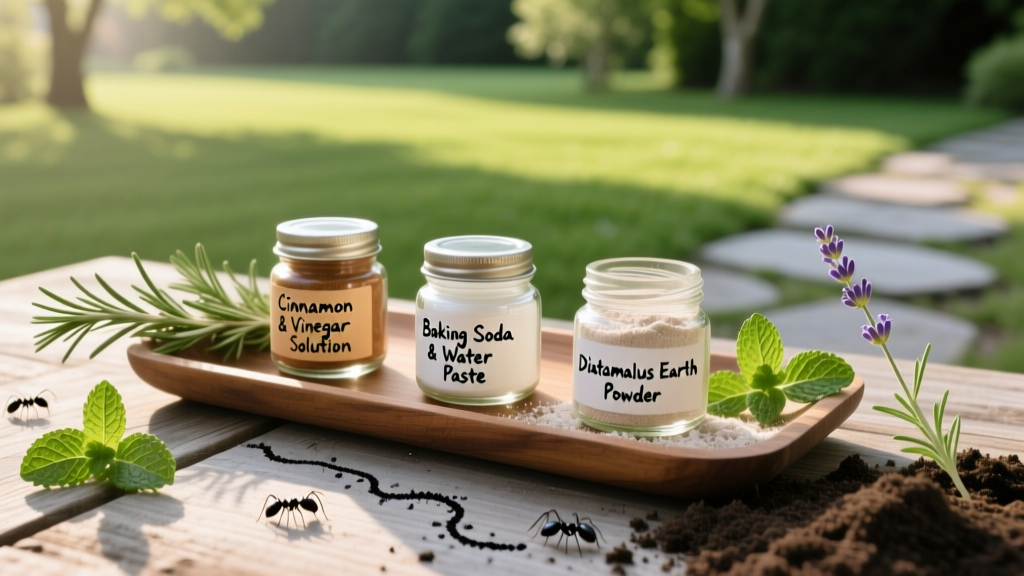
Effective Ant Poison Home Remedy Recipes for Organic Lawns
The Paradox of Organic Ant Eradication
When homeowners search for an "ant poison home remedy," they are usually looking for a fast-acting kitchen spray to wipe out a lawn mound. However, in organic pest management, fast-acting contact sprays are largely ineffective for long-term colony control. Ant colonies operate as a single superorganism; the visible foragers represent only 10% to 15% of the total population. Killing them on contact does nothing to stop the queen, who can lay up to 800 eggs per day.
True organic eradication requires a shift in strategy: utilizing slow-acting, naturally derived toxins that exploit the ants' biological need to share food (trophallaxis). By the time the foragers die, they have already carried the organic "poison" deep into the nest, effectively collapsing the colony from the inside out. Below are three highly specific, chemical-free home remedies engineered for lawn and garden environments, complete with exact measurements and deployment protocols.
The Biology of Trophallaxis and Slow-Kill Baits
Before mixing any remedy, it is critical to understand trophallaxis—the mutual exchange of regurgitated liquids among social insects. For a home remedy to act as a true colony-level poison, it must possess three traits:
- High Palatability: It must be attractive enough that foragers do not reject it after a single taste.
- Delayed Toxicity: The active ingredient must take 24 to 72 hours to kill, allowing the forager to return to the nest and feed the larvae and queen.
- Non-Repellent: It cannot contain strong masking odors (like undiluted vinegar or heavy citrus oils) that trigger the colony's alarm pheromones.
Recipe 1: The 1.5% Borax Sugar Matrix (Colony Elimination)
Boric acid (borax) is a naturally occurring mineral salt that disrupts the ant's digestive system and exoskeleton. The most common failure mode in DIY borax baits is using too high a concentration, which kills the forager before it reaches the nest. According to the National Pesticide Information Center, a concentration between 1% and 2% is optimal for sweet-feeding ants.
Exact Formulation and Deployment
- Ingredients: 1/2 cup granulated white sugar, 1.5 tablespoons of 20 Mule Team Borax (approx. $5 for a 76oz box), and 1 cup of warm distilled water.
- Mixing: Dissolve the sugar and borax completely in the warm water. Let it cool to room temperature. The final solution will have a borax concentration of roughly 1.4%.
- Deployment: Do not pour this directly onto the grass. Soak 3 to 4 cotton balls in the solution and place them inside shallow plastic bottle caps or folded index cards.
- Placement: Position the bait stations within 12 inches of active ant trails, preferably in shaded areas to prevent rapid evaporation.
Warning: Pet and Wildlife Safety
While borax is low-toxicity for mammals, ingestion of large amounts by small dogs or cats can cause gastrointestinal distress. Always place bait stations inside modified deli containers with 1/4-inch holes punched in the sides to allow ant entry while blocking larger animals.
While borax is low-toxicity for mammals, ingestion of large amounts by small dogs or cats can cause gastrointestinal distress. Always place bait stations inside modified deli containers with 1/4-inch holes punched in the sides to allow ant entry while blocking larger animals.
Recipe 2: Food-Grade Diatomaceous Earth & Peppermint Barrier
While borax handles the internal colony collapse, diatomaceous earth (DE) acts as a physical, chemical-free barrier. DE consists of fossilized diatoms with microscopic, razor-sharp edges that lacerate the ant's waxy exoskeleton, causing fatal dehydration. As of early 2026, a 4-pound bag of food-grade DE averages $18, making it highly cost-effective for perimeter defense.
Application Protocol for Lawn Borders
You must use food-grade DE, never pool-grade DE. Pool-grade DE is calcined (heat-treated), which alters its crystalline structure, rendering it useless against insects and highly toxic to mammalian lungs. Apply a continuous 1/8-inch thick, 2-inch wide band of food-grade DE along the concrete borders of your lawn, patio edges, and foundation lines. Use a bulb duster for an even, lightweight coating that ants cannot easily walk over without contacting the particles.
Organic Ant Remedy Comparison Matrix
Not all ant problems require colony elimination. Sometimes, immediate knockdown of a nuisance mound on a walking path is the priority. Use this matrix to select the correct organic intervention based on your specific scenario.
| Remedy | Kill Speed | Target | Cost per Treatment | Best Use Case |
|---|---|---|---|---|
| 1.5% Borax Matrix | 5 to 14 days | Entire Colony | < $0.50 | Large, established lawn mounds |
| Food-Grade DE | 12 to 48 hours | Foragers (Contact) | < $1.00 | Hardscape borders, foundation lines |
| Castile Soap Drench | Immediate | Surface Foragers | < $0.75 | Nuisance mounds on pathways/patios |
Recipe 3: Castile Soap Mound Drench (Immediate Knockdown)
If an ant mound has suddenly erupted in the middle of a high-traffic lawn area or directly under a child's playset, you may not have 14 days for a borax bait to work. A soapy water drench destroys the waxy coating on the ants' exoskeletons, causing them to suffocate and dehydrate within minutes. Research from the University of California Statewide IPM Program confirms that insecticidal soaps are highly effective for immediate, localized suppression without leaving toxic soil residues.
The Drench Recipe
- Mix 2 tablespoons of pure liquid castile soap (such as Dr. Bronner's Peppermint or Unscented) into 1 gallon of warm water.
- Do not use standard dish detergents containing degreasers, bleach, or synthetic fragrances, as these can severely burn turfgrass roots.
- Slowly pour 1 to 2 gallons of the solution directly into the center of the mound using a watering can with a rosette head to prevent runoff.
- Follow up 24 hours later with a deep watering of the surrounding grass to dilute any residual soap in the soil profile.
Critical Failure Modes in DIY Ant Control
Even with perfect recipes, organic ant control can fail if you ignore the behavioral ecology of the pests. Avoid these common pitfalls:
1. Ignoring Seasonal Diet Shifts
Ants do not always want sugar. In early spring, colonies are prioritizing brood rearing and actively seek out proteins and fats. If your sugar-borax bait is being ignored in April or May, switch the matrix. Replace the sugar with 2 tablespoons of creamy peanut butter and mix it with 1/2 teaspoon of dry borax powder. In late summer and fall, they shift back to carbohydrates to store winter energy, making the liquid sugar recipe highly effective again.
"The biggest mistake homeowners make with organic baits is assuming a single recipe works year-round. Matching the bait carrier to the colony's current macronutrient requirements is the difference between a failed remedy and total colony collapse."
2. Moisture Degradation of Physical Barriers
Diatomaceous earth is completely inert and safe, but it loses 100% of its efficacy when wet. The microscopic silica shells clump together, preventing the ants from contacting the sharp edges. If your lawn receives more than 0.25 inches of rain, or if you run your irrigation system, the DE barrier is neutralized. You must reapply food-grade DE after every rain event or irrigation cycle to maintain the perimeter defense.
Long-Term Cultural Lawn Defense
Chemical-free pest control extends beyond reactive remedies; it requires proactive cultural practices. Ants prefer to nest in dry, compacted soil with sparse turf cover. By maintaining a dense, vigorously growing lawn, you physically crowd out potential nesting sites. Core aerate your lawn annually to relieve soil compaction, and maintain a mowing height of at least 3 inches for cool-season grasses to shade the soil surface. A thick, healthy turf canopy naturally deters the initial scouting ants from establishing a new satellite colony in your yard.

