
Pest Control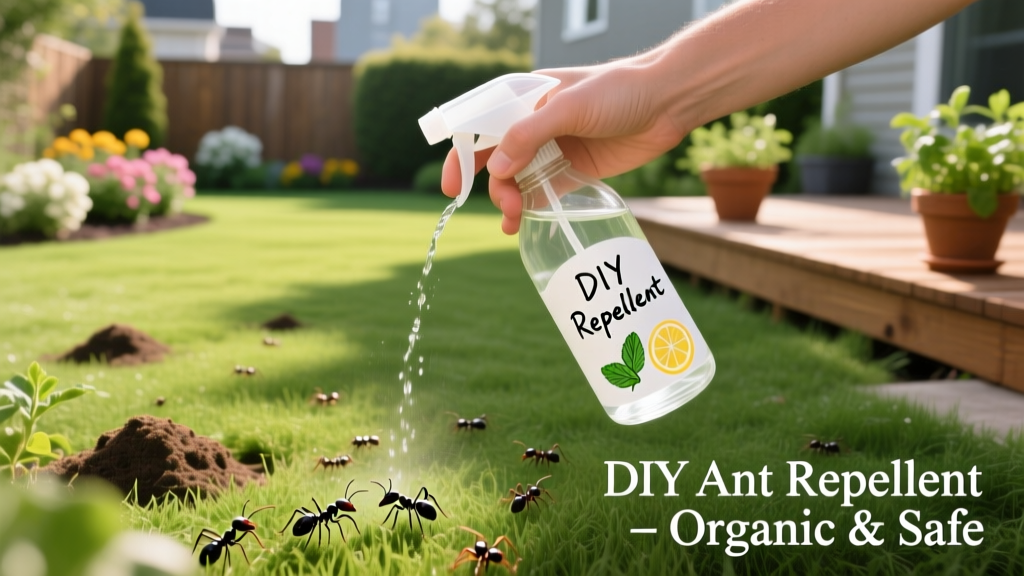
Effective DIY Ant Repellent Recipes for Organic Lawn Care
The Limitations of Chemical Baits in Outdoor Environments
Homeowners frequently reach for synthetic hydramethylnon or fipronil baits when ant mounds disrupt their turf. However, outdoor environments present unique variables that render many commercial baits ineffective. Heavy irrigation, unpredictable rainfall, and complex soil microbiomes can degrade chemical active ingredients before worker ants transport them back to the colony. Furthermore, broad-spectrum granular insecticides often decimate beneficial ground-dwelling predators, such as carabid beetles and parasitic nematodes, leading to secondary pest outbreaks.
Transitioning to an organic, chemical-free approach requires understanding ant biology. Ants rely heavily on pheromone trails for navigation and foraging. The most successful DIY ant repellent strategies do not merely attempt to kill individual workers; they disrupt these chemical communication highways and create physical or olfactory barriers that colonies instinctively avoid. According to the University of California Integrated Pest Management (UC IPM) program, modifying the habitat and utilizing physical barriers are foundational steps in long-term ant management.
Four High-Efficacy Organic Ant Repellent Recipes
Below are four field-tested, organic formulations designed specifically for lawn and garden bed perimeters. These recipes rely on mechanical disruption, desiccation, and olfactory masking rather than systemic toxicity.
1. Peppermint & Castile Soap Pheromone Disruptor
Peppermint essential oil contains high concentrations of menthol and pulegone, which overwhelm the olfactory receptors ants use to track pheromone trails. However, essential oils and water do not mix. Without a surfactant, the oil will float to the top, resulting in uneven application and potential phytotoxicity (leaf burn) to your grass.
- Ingredients: 16 oz distilled water, 1 teaspoon liquid castile soap (e.g., Dr. Bronner's Peppermint), 20 drops pure peppermint essential oil.
- Preparation: Mix the castile soap and essential oil in a small glass bowl first to create an emulsion. Once cloudy, whisk this mixture into the 16 oz of water.
- Application: Spray directly onto ant trails, patio seams, and the base of ornamental plants. Avoid spraying directly on grass blades during peak midday sun to prevent magnification burns.
- Cost Analysis: Approximately $0.45 per 16 oz batch, assuming current 2026 retail pricing for bulk organic castile soap.
2. Food-Grade Diatomaceous Earth & Cinnamon Dust Barrier
Diatomaceous earth (DE) consists of fossilized diatoms with microscopic, razor-sharp silica edges. When ants crawl over DE, the particles lacerate their waxy exoskeletons, leading to fatal desiccation. Cinnamon acts as a secondary olfactory deterrent.
⚠️ CRITICAL SAFETY WARNING: You must use Food-Grade DE, never Pool-Grade DE. Pool-grade DE is calcined (heat-treated), which converts the silica into crystalline form—a known respiratory carcinogen. Food-grade DE remains amorphous and is safe for mammals when used correctly. Always wear an N95 mask during application to avoid inhaling fine particulates.
- Ingredients: 4 cups food-grade DE, 1/2 cup ground cinnamon.
- Application: Using a dust applicator or a dry shaker, apply a 2-inch wide, unbroken ring around the perimeter of garden beds, tree trunks, or specific fire ant mounds.
- Limitation: DE loses its mechanical efficacy when wet. It must be reapplied after every rainfall or heavy irrigation cycle. For detailed safety data, refer to the National Pesticide Information Center (NPIC).
3. Agricultural D-Limonene Mound Drench
D-limonene, extracted from citrus peels, is a potent solvent that strips the protective waxy cuticle from insects, causing rapid dehydration. This is particularly effective against aggressive species like Red Imported Fire Ants (RIFA) that build deep, complex mounds in turfgrass.
- Ingredients: 1 gallon of water, 2 oz agricultural-grade d-limonene (90%+ concentration), 1 tablespoon yucca extract (acts as a natural sticker-spreader to help the liquid penetrate hydrophobic mound soil).
- Application: Slowly pour the mixture over the center of the fire ant mound, allowing it to percolate deeply into the queen's chamber. Do not disturb the mound with a stick prior to drenching, as this will trigger the colony to relocate the queen deeper into the soil profile.
4. Garlic & Capsaicin Foliar Deterrent
For ants that 'farm' aphids on your ornamental shrubs and vegetable crops, a spicy garlic spray disrupts their foraging behavior and makes the host plants highly unpalatable.
- Ingredients: 1 quart water, 4 cloves crushed garlic, 1 tablespoon crushed red pepper flakes, 1/2 teaspoon mild liquid dish soap.
- Preparation: Steep the garlic and pepper flakes in boiling water for 24 hours. Strain through a fine mesh sieve or cheesecloth to prevent clogging your spray nozzle, then add the soap.
- Application: Mist the foliage of affected plants in the early evening.
Decision Matrix: Choosing the Right Repellent
Selecting the correct formulation depends on your specific ant species, the treatment area, and local weather patterns. Use the comparison matrix below to optimize your approach.
| Recipe | Best Target Species | Rainfastness | Reapplication Frequency | Lawn Safety |
|---|---|---|---|---|
| Peppermint/Soap Spray | Argentine Ants, Pavement Ants | Low (Washes off easily) | Every 3-5 days | High (Safe for turf) |
| DE & Cinnamon Dust | Carpenter Ants, Field Ants | None (Ineffective when wet) | After every rain event | High (Apply to soil/hardscape) |
| D-Limonene Drench | Red Imported Fire Ants | N/A (Soil drench) | As needed per mound | Moderate (Can burn grass if over-applied) |
| Garlic/Capsaicin Spray | Aphid-tending Sugar Ants | Low | Weekly during growing season | High (Safe for ornamentals/veggies) |
Common Failure Modes and Troubleshooting
Even the best organic formulations will fail if applied incorrectly. Below are the most frequent reasons DIY ant repellents underperform in outdoor settings, along with actionable corrections.
Failure Mode 1: Ignoring the Supercolony Structure
Argentine ants (Linepithema humile) do not form distinct, isolated mounds. They create massive, interconnected supercolonies with multiple queens spanning entire neighborhoods. Treating a single visible trail with DE or peppermint oil will simply cause the colony to route around the barrier.
The Fix: You must establish a continuous, unbroken perimeter barrier around your entire property line using the Peppermint/Soap spray or a botanical oil granule. Spot-treating individual trails is a waste of time with this species. For comprehensive biological data on invasive ant structures, consult the Texas A&M AgriLife Extension resources on invasive ant management.
Failure Mode 2: Essential Oil Phytotoxicity
Applying undiluted or poorly emulsified essential oils directly to turfgrass will strip the waxy cuticle from the grass blades, resulting in severe desiccation and brown spotting. This is often mistaken for a fungal disease.
The Fix: Always use a surfactant (like castile soap or yucca extract) to ensure the oil is suspended in microscopic micelles within the water. Never exceed a 1% essential oil concentration by volume when spraying near sensitive turf species like St. Augustine or Kentucky Bluegrass.
Failure Mode 3: Pet Toxicity Oversights
🐾 Pet Safety Alert: Peppermint, tea tree, and citrus essential oils are highly toxic to cats and dogs if ingested or absorbed through the paws. Felines lack the liver enzyme (glucuronyl transferase) required to metabolize these compounds.
Alternative: If pets roam your lawn, substitute peppermint oil with Cedarwood Essential Oil (specifically Juniperus virginiana). Cedarwood contains cedrol, which is highly repellent to ants but generally recognized as safe for mammals when diluted properly.
Alternative: If pets roam your lawn, substitute peppermint oil with Cedarwood Essential Oil (specifically Juniperus virginiana). Cedarwood contains cedrol, which is highly repellent to ants but generally recognized as safe for mammals when diluted properly.
Long-Term Habitat Modification
Repellents are a temporary shield; habitat modification is the permanent cure. Ants are primarily driven into lawns and garden beds by the search for moisture and honeydew-producing insects.
- Manage Aphid Populations: Ants will fiercely defend aphids and scale insects from predators because they harvest their sugary excretions. Introduce green lacewings or apply insecticidal soap to aphid colonies to cut off the ants' food supply.
- Correct Irrigation Leaks: A dripping hose bib or a low spot in the lawn that holds water will attract moisture-seeking ants. Repair leaks and core-aerate compacted soil to improve drainage.
- Mulch Management: Keep organic mulch at least 12 inches away from the foundation of your home. Mulch retains moisture and provides ideal nesting sites for pavement ants looking to transition indoors during temperature extremes.
By combining targeted, scientifically sound DIY formulations with rigorous habitat management, you can maintain a pristine, chemical-free lawn that naturally resists ant colonization without harming the broader local ecosystem.

