
Pest Control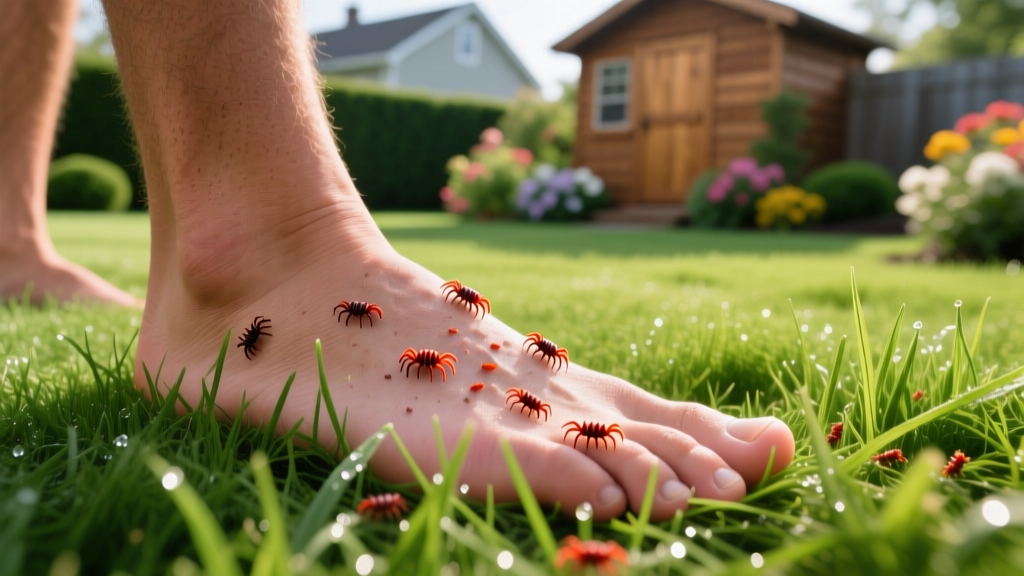
Best Home Remedy for Chiggers: Organic Yard Control & Bite Relief
The Biological Reality of Chigger Bites (And Why Most Home Remedies Fail)
Before deploying any home remedy for chiggers, it is critical to understand the biology of the Trombiculidae mite. The most pervasive myth in pest control is that chiggers burrow into the skin and remain there, which has led generations of homeowners to apply dangerous, ineffective treatments like nail polish, bleach, or turpentine to suffocate them.
⚠️ Myth Busting: Chiggers do not burrow into your skin. The larval mites attach to the surface, inject a digestive enzyme that liquefies skin cells, and form a hardened tube called a stylostome through which they feed. According to Texas A&M AgriLife Extension, the mite typically detaches and falls off within 48 to 72 hours, long before the intense itching (pruritus) peaks. Applying nail polish only traps the digestive enzymes against the skin, worsening the allergic reaction and risking chemical burns.
Because the mites are largely gone by the time you notice the intense, clustered red welts, effective home remedies must focus on two distinct phases: organic yard eradication to destroy the microclimate they require to breed, and chemical-free topical relief to neutralize the enzymatic reaction on your skin.
Organic Yard Treatments to Eradicate Chigger Populations
Chiggers require a highly specific microclimate to survive: ambient temperatures between 77°F and 86°F, and relative humidity above 70%. They congregate in shaded, overgrown areas, tall grass, and the transition zones between lawns and wooded areas. To eliminate them without synthetic pesticides like permethrin or bifenthrin, you must use desiccants and botanical repellents that disrupt their life cycle.
| Organic Remedy | Application Rate | 2026 Avg. Cost | Mechanism of Action | Drawbacks |
|---|---|---|---|---|
| Food-Grade Diatomaceous Earth (DE) | 5 lbs per 1,000 sq ft | $22 - $28 (4 lb bag) | Microscopic silica shards lacerate the mite's exoskeleton, causing fatal dehydration. | Must be reapplied after every rainfall or heavy irrigation. |
| Cedar Oil Concentrate (5%) | 2 oz per gallon of water | $38 - $45 (32 oz bottle) | Blocks octopamine receptors in the mite's nervous system, causing paralysis and death. | Strong woody odor lingers for 48 hours; can stain light-colored siding. |
| Elemental Sulfur Dust | 5 lbs per 1,000 sq ft | $15 - $19 (5 lb bag) | Alters soil surface pH temporarily and acts as a potent contact fungicide/acaricide. | Can harm beneficial soil nematodes and lower soil pH if over-applied. |
Step-by-Step Botanical Barrier Application Protocol
To achieve total organic control, you must combine physical lawn maintenance with targeted desiccant application. The University of Minnesota Extension notes that chiggers rarely travel far from their hatching sites, meaning localized treatment of 'hot spots' (fence lines, brush piles, and shaded tree perimeters) is highly effective.
- Lower the Canopy: Mow your lawn to a maximum height of 2.5 inches. Chiggers cannot survive the UV exposure and lower humidity found in closely cropped grass. Bag the clippings to remove thatch where mites harbor.
- Clear the Perimeter: Rake back leaf litter and mulch at least 18 inches away from the edges of your lawn, patios, and play areas. Replace organic mulch with inorganic gravel or cedar chips in these transition zones.
- Apply Diatomaceous Earth at Dusk: Using a hand-crank broadcast spreader or a bulb duster, apply food-grade DE to the shaded perimeter zones between 6:00 PM and 8:00 PM. Applying in the evening prevents the morning dew from immediately clumping the powder, allowing it to settle into the soil matrix.
- Seal with Cedar Oil: 48 hours after the DE application, spray a 5% cedar oil solution over the same perimeter zones. The oil acts as a liquid barrier that repels migrating mites from neighboring wooded properties.
Chemical-Free Bite Relief: Soothing the Itch Naturally
Once the stylostome is formed, the primary goal of a home remedy is to neutralize the localized histamine response and draw out the residual digestive enzymes. Avoid hot showers; while heat temporarily depletes histamine in the skin (providing 5 minutes of relief), it triggers a massive rebound histamine release once the skin cools, making the itch significantly worse.
The 3:1 Baking Soda Alkalizing Paste
Chigger digestive enzymes are highly acidic. Creating an alkaline environment on the skin's surface neutralizes the enzymes and reduces inflammation.
- Recipe: Mix 3 tablespoons of sodium bicarbonate (baking soda) with 1 tablespoon of filtered water.
- Application: Apply a thick layer directly over the clustered welts using a cotton swab. Leave on for 15 minutes until the paste dries and cracks, then rinse with cool water.
- Frequency: Repeat every 4 hours during peak itching cycles (usually days 2 and 3 post-bite).
Colloidal Oatmeal Immersion
For widespread infestations resulting in dozens of bites, localized pastes are inefficient. Colloidal oatmeal contains avenanthramides, which are potent anti-inflammatory compounds that inhibit the release of pro-inflammatory cytokines.
- Protocol: Grind 1 cup of unflavored, whole-grain oats into a fine powder using a blender. Dissolve in a lukewarm bath (water temperature strictly below 90°F).
- Duration: Soak for 20 minutes. Do not towel dry aggressively; pat the skin gently to leave a microscopic film of the oat lipids on the welts.
💡 Pro Tip: Witch Hazel & Aloe Matrix
For on-the-go relief, combine equal parts alcohol-free witch hazel (which contains natural tannins that act as an astringent to shrink the stylostome swelling) and pure aloe vera gel. Store the mixture in a 2 oz amber glass dropper bottle and apply 3 drops directly to the welts after outdoor exposure.
For on-the-go relief, combine equal parts alcohol-free witch hazel (which contains natural tannins that act as an astringent to shrink the stylostome swelling) and pure aloe vera gel. Store the mixture in a 2 oz amber glass dropper bottle and apply 3 drops directly to the welts after outdoor exposure.
Preventative Essential Oil Sprays for Clothing
If you are entering a known chigger habitat and prefer to avoid synthetic DEET, the most scientifically validated organic alternative is Oil of Lemon Eucalyptus (OLE), specifically its active synthesized component, PMD (para-menthane-3,8-diol). According to University of Kentucky Entomology, PMD provides a spatial repellency barrier that disrupts the mite's olfactory sensors, preventing them from climbing onto footwear and pant legs.
DIY Botanical Repellent Recipe:
- 4 oz Distilled Water
- 4 oz Witch Hazel (acts as an emulsifier)
- 40 drops Oil of Lemon Eucalyptus (minimum 20% PMD concentration)
- 15 drops Geranium Oil (contains geraniol, a proven acaricide)
Shake vigorously before each use. Spray heavily on socks, shoelaces, and the bottom 12 inches of your trousers. Tucking your pant legs into your socks remains the single most effective physical barrier, as chiggers cannot fly or jump; they only climb upward from grass blades.
Frequently Asked Questions
Can chiggers infest my house or bed?
No. Chiggers require high humidity and specific soil-dwelling hosts to complete their life cycle. If a chigger is accidentally brought indoors on clothing, it will rapidly desiccate and die within 24 to 48 hours due to the low humidity of indoor, climate-controlled environments. They do not breed in carpets or bedding like fleas or bedbugs.
Does planting garlic or marigolds repel chiggers?
While alliums and tagetes (marigolds) exude compounds that repel certain soil nematodes and above-ground aphids, there is no peer-reviewed entomological evidence suggesting they repel Trombiculidae mites. Relying on companion planting for chigger control will result in failure; stick to physical desiccants like DE and microclimate disruption.
How long do the welts last if left untreated?
Without topical anti-inflammatory treatment, the hardened stylostome tube can remain in the skin for 7 to 14 days. The body's immune system must slowly break down the foreign protein tube, which is why the itching can persist for up to two weeks even though the mite detached days prior. Using the baking soda paste and colloidal oatmeal protocols accelerates the breakdown of this tube.

