
Pest Control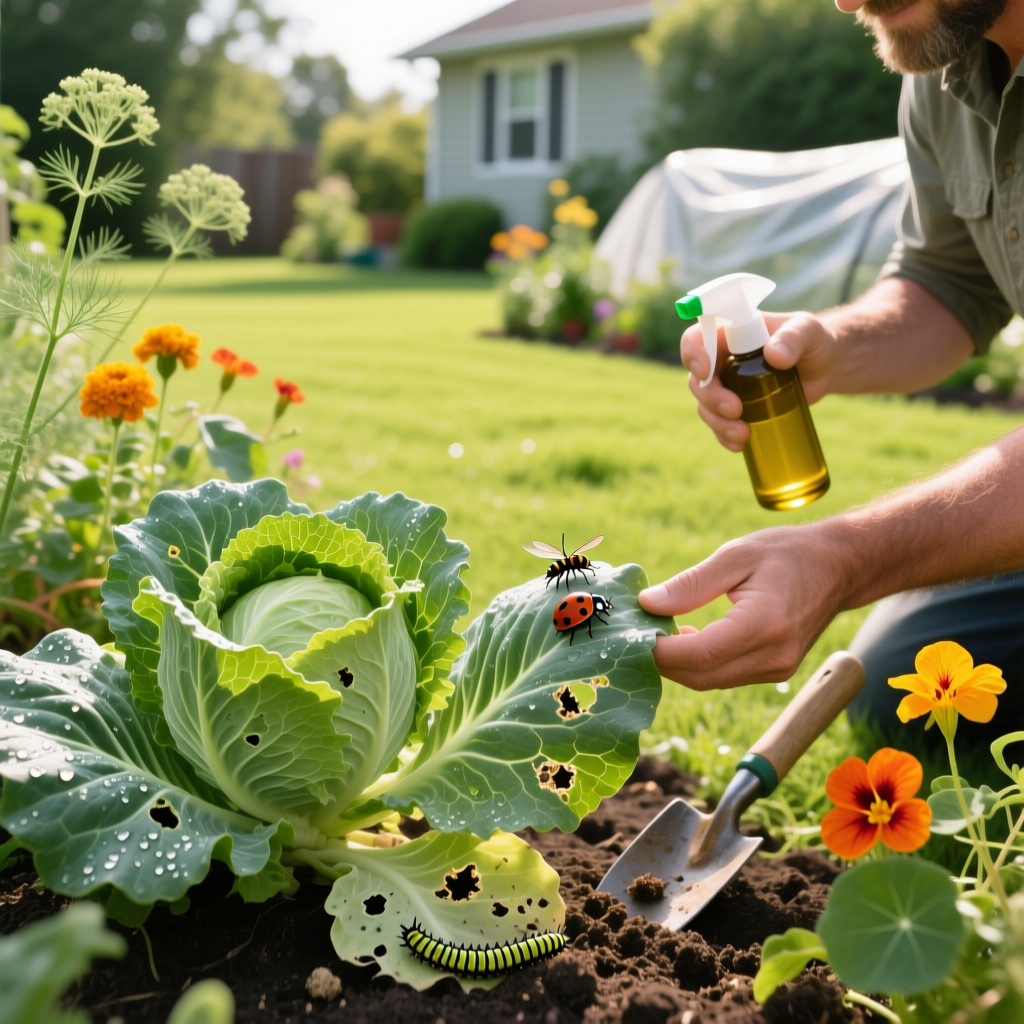
Organic Methods to Control Cabbage Loopers in Home Gardens
Sarah ChenPublished
Organic Methods to Control Cabbage Loopers in Home Gardens
If you have ever walked out to your garden only to find your prized cabbage, broccoli, or kale riddled with irregular holes, you have likely encountered the work of cabbage loopers. These voracious caterpillars are among the most common & destructive pests found in home vegetable gardens across North America. Despite their small size, cabbage loopers can devastate an entire crop in a matter of days if left unchecked.
The cabbage looper (Trichoplusia ni) gets its distinctive name from the looping motion it uses to move. Unlike many other caterpillars, it has no legs in the middle of its body, forcing it to arch its back & pull its rear end forward in a characteristic inchworm-like movement. This pest targets members of the brassica family — including cabbage, broccoli, cauliflower, kale, Brussels sprouts, collard greens, & turnips — though it will also feed on lettuce, spinach, tomatoes, & other garden crops.
Fortunately, you do not need to reach for harsh synthetic pesticides to manage these pests effectively. A wide range of organic methods can help you control cabbage loopers while keeping your garden safe for beneficial insects, pets, & your family. In this comprehensive guide, we will walk you through everything you need to know about identifying, preventing, & organically eliminating cabbage loopers from your home garden.
Identifying Cabbage Loopers & Recognizing the Damage They Cause
Before you can effectively control cabbage loopers, you need to know exactly what you are dealing with. Proper identification ensures you choose the right management strategy & avoid confusing these pests with other common garden caterpillars.
What Do Cabbage Loopers Look Like?
Adult cabbage loopers are moths with mottled grayish-brown wings, each bearing a distinctive small silver-white figure-eight or Y-shaped mark near the center of the forewing. The adult moth has a wingspan of approximately one to one-and-a-half inches. However, it is the larval stage — the caterpillar — that causes all the damage in your garden.
Cabbage looper caterpillars are pale green to medium green with thin white stripes running along their sides & back. They typically grow to about one to one-and-a-half inches long before pupating. Their most distinguishing feature is the lack of prolegs (small fleshy legs) in the middle of their body. They have three pairs of true legs near the head & three pairs of prolegs near the rear, with a smooth, legless section in between. This anatomy is what creates the signature looping gait.
Signs of Cabbage Looper Damage
Cabbage loopers chew large, irregular holes in the leaves of host plants. Unlike some pests that skeletonize leaves by eating between the veins, cabbage loopers tend to chew completely through the leaf tissue, leaving ragged, uneven edges. On cabbage & other heading brassicas, they often burrow into the developing heads, leaving behind not only holes but also wet, slimy frass (caterpillar droppings) that can make produce unmarketable & unappetizing.
You will most commonly find cabbage loopers feeding on the undersides of leaves, where they are somewhat sheltered from predators & direct sunlight. Check the undersides of leaves regularly, especially during warm growing seasons, to catch infestations early. You may also spot their eggs, which are small, dome-shaped, pale green or yellowish-white, & laid singly on the undersides of leaves.
Life Cycle of the Cabbage Looper
Understanding the life cycle of the cabbage looper helps you time your control efforts for maximum effectiveness. The female moth lays eggs singly or in small groups on the undersides of leaves. These eggs hatch in three to six days, depending on temperature. The caterpillar then passes through five larval stages (instars) over the course of two to four weeks, feeding voraciously throughout this period. Once fully grown, the caterpillar spins a loose, silky cocoon, often attached to the underside of a leaf, & pupates for one to two weeks before emerging as an adult moth.
In warmer climates, cabbage loopers can produce three to five generations per growing season, which means populations can escalate rapidly if not managed proactively. This is why consistent monitoring & early intervention are so critical for organic gardeners.
Prevention Strategies to Keep Cabbage Loopers Out of Your Garden
As any experienced gardener knows, the best pest management strategy is one that prevents problems before they start. By implementing several proactive measures, you can significantly reduce the likelihood of a cabbage looper infestation taking hold in your garden.
Use Floating Row Covers
One of the single most effective organic prevention methods is the use of floating row covers. These lightweight, permeable fabrics allow sunlight, water, & air to reach your plants while physically blocking adult moths from landing on your crops & laying eggs. Install row covers over your brassica beds immediately after planting or transplanting, & secure the edges tightly to the soil using landscape pins, rocks, or soil mounds. Remove the covers only when you need to weed, harvest, or inspect your plants.
Floating row covers are particularly valuable because they also protect against a range of other common pests, including aphids, flea beetles, & diamondback moths. For more tips on protecting your garden beds, check out our raised bed garden setup guide for advice on building healthy, pest-resistant growing spaces.
Practice Crop Rotation
Cabbage loopers & their pupae can overwinter in garden debris & soil. By rotating your brassica crops to different areas of the garden each season, you disrupt the life cycle of pests that may be lingering from the previous year. Avoid planting cabbage, broccoli, kale, or other brassicas in the same spot where they were grown the season before. A three-to-four-year rotation schedule is ideal for breaking pest cycles & maintaining soil health.
Encourage Beneficial Insects
A diverse garden ecosystem is your best natural defense against cabbage loopers. Many beneficial insects prey on or parasitize cabbage looper eggs & caterpillars. Parasitic wasps, such as Trichogramma species, lay their eggs inside cabbage looper eggs, preventing them from hatching. Ground beetles, spiders, & predatory bugs also feed on young caterpillars.
To attract these natural allies, plant a variety of flowering herbs & companion plants around your garden borders. Dill, cilantro, parsley, yarrow, sweet alyssum, & cosmos are excellent choices for attracting parasitic wasps & other beneficial insects. Maintaining a healthy, biodiverse garden also supports pollinators, which are essential for a productive vegetable garden. Learn more about creating a healthy outdoor ecosystem in our natural lawn care tips guide.
Keep Your Garden Clean
Sanitation plays a vital role in pest prevention. At the end of each growing season, remove & destroy all crop debris from brassica plants. Do not simply till infested plant material into the soil, as this can allow pupae to survive & emerge the following season. Instead, bag & dispose of heavily infested plant matter or hot-compost it at temperatures above 140°F to kill any remaining eggs, larvae, or pupae. Keep the area around your garden beds free of weeds, especially wild mustards & other brassica-family weeds that can serve as alternate hosts for cabbage loopers.
Time Your Plantings Strategically
Cabbage loopers tend to be most problematic during mid-to-late summer when multiple generations have had time to build up. If your climate allows, consider planting your brassica crops early in the spring or in the fall for a late harvest. These cooler windows often coincide with lower looper populations, giving your plants a chance to establish before pest pressure peaks.
Organic DIY Solutions to Control Cabbage Loopers
Even with the best prevention efforts, cabbage loopers may still find their way into your garden. When they do, there are numerous organic, do-it-yourself solutions that can bring populations under control without resorting to synthetic chemicals.
Handpicking Caterpillars
For small gardens or light infestations, handpicking is one of the simplest & most effective organic control methods. Inspect your plants every morning or evening, turning over leaves to find caterpillars hiding on the undersides. Drop any caterpillars you find into a bucket of soapy water, where they will drown quickly. You can also crush eggs between your fingers when you spot them on leaves.
While handpicking requires consistency & patience, it has the advantage of being completely free, chemical-free, & immediately effective. It also gives you a close-up view of your plants, helping you catch other potential pest or disease problems early.
Bacillus thuringiensis (Bt) Spray
Bacillus thuringiensis var. kurstaki (Bt) is a naturally occurring soil bacterium that is widely regarded as one of the most effective organic controls for cabbage loopers & other caterpillar pests. When caterpillars ingest leaves treated with Bt, the bacterium produces proteins that disrupt their digestive system, causing them to stop feeding within hours & die within two to three days.
Bt is considered safe for humans, pets, birds, & most beneficial insects because it specifically targets the alkaline digestive systems of caterpillars. To use Bt effectively, mix it according to the product label instructions & spray it thoroughly on all leaf surfaces, paying special attention to the undersides of leaves where caterpillars feed. Apply Bt in the late afternoon or early evening to minimize degradation by sunlight, & reapply after rain or overhead watering, as the product washes off easily.
For best results, apply Bt when caterpillars are still small (early instars), as larger caterpillars require higher doses & take longer to be affected. Bt products are widely available at garden centers & are approved for use in certified organic production by the Organic Materials Review Institute (OMRI).
Neem Oil Spray
Neem oil, extracted from the seeds of the neem tree (Azadirachta indica), is a versatile organic pesticide that works against cabbage loopers in several ways. The active compound, azadirachtin, acts as an antifeedant (discouraging caterpillars from eating), a growth disruptor (interfering with molting & development), & a mild repellent. Neem oil also has fungicidal properties, making it useful against powdery mildew & other common garden diseases.
To prepare a neem oil spray, mix one to two tablespoons of cold-pressed neem oil with one teaspoon of mild liquid soap (as an emulsifier) in one gallon of water. Shake well & spray all plant surfaces thoroughly, including the undersides of leaves. Apply neem oil in the early morning or late evening to avoid leaf burn from direct sunlight & to minimize impact on pollinators, which are less active at those times. Repeat applications every seven to fourteen days, or after heavy rainfall.
Homemade Insecticidal Soap Spray
Insecticidal soap sprays work by penetrating the soft outer cuticle of caterpillars, causing dehydration & death on contact. While commercial insecticidal soaps are readily available, you can make a simple version at home. Mix one to two tablespoons of pure castile soap (not detergent or dish soap with degreasers, which can damage plants) with one quart of water. Spray directly on any caterpillars you find, making sure to thoroughly coat their bodies.
Keep in mind that soap sprays only work on contact — they have no residual effect once they dry. This means you need to hit the caterpillars directly for the spray to be effective. Test the soap solution on a small area of the plant first & wait twenty-four hours to check for any leaf damage before treating the entire plant.
Spinosad-Based Organic Sprays
Spinosad is a natural substance derived from the soil bacterium Saccharopolyspora spinosa. It works both through contact & ingestion, making it particularly effective against chewing pests like cabbage loopers. Spinosad affects the insect nervous system, causing paralysis & death within one to two days.
Spinosad products are OMRI-listed & widely used by organic gardeners. However, spinosad can be toxic to bees when wet, so it is important to apply it in the late evening when bees are not actively foraging. Once the spray has dried (usually within a few hours), it poses minimal risk to pollinators. Reapply every seven to ten days as needed, following the product label for specific dilution rates & safety precautions.
Diatomaceous Earth
Food-grade diatomaceous earth (DE) is a fine, powdery substance made from the fossilized remains of diatoms — microscopic aquatic organisms. When caterpillars crawl across DE, the microscopic sharp edges of the particles scratch their waxy outer coating, leading to dehydration & death.
Dust a thin layer of food-grade DE around the base of your plants & lightly on the leaves where you suspect caterpillar activity. DE is most effective when dry, so reapply after rain or heavy dew. Wear a dust mask when applying DE to avoid inhaling the fine particles. While DE is a useful supplementary tool, it works best in combination with other methods, as it may not reach caterpillars that are already feeding on the undersides of inner leaves.
Companion Planting & Biological Controls for Long-Term Management
For gardeners who want to build a resilient, self-regulating garden ecosystem, companion planting & biological controls offer powerful long-term strategies for managing cabbage loopers.
Companion Plants That Repel Cabbage Loopers
Certain plants emit strong scents or contain natural compounds that deter cabbage looper moths from laying eggs nearby. Interplanting these companions among your brassicas can help reduce pest pressure:
- Thyme — The strong aroma of thyme is known to confuse & repel cabbage looper moths. Plant it as a low-growing border around your brassica beds.
- Sage — Sage produces volatile oils that mask the scent of brassica plants, making it harder for moths to locate their preferred hosts.
- Rosemary — Like sage & thyme, rosemary's potent fragrance can deter egg-laying moths.
- Marigolds — French marigolds (Tagetes patula) release compounds from their roots that suppress soil nematodes & may also deter some above-ground pests with their strong scent.
- Nasturtiums — Nasturtiums can serve as a trap crop, attracting cabbage loopers & aphids away from your main brassica plantings. Plant them a short distance from your vegetable beds & monitor them closely, destroying any pests that accumulate.
Companion planting not only helps with pest control but also improves biodiversity in your garden, which supports overall plant health. For more ideas on designing a healthy outdoor space, explore our companion planting basics guide.
Releasing Beneficial Insects
If your garden lacks a robust population of natural predators, you can purchase & release beneficial insects to help control cabbage loopers:
- Trichogramma wasps — These tiny, non-stinging parasitic wasps lay their eggs inside the eggs of cabbage loopers & other caterpillars. A single female can parasitize dozens of pest eggs. Release them early in the season when you first notice moth activity for the best results.
- Ladybugs — While primarily known for eating aphids, ladybugs will also consume small caterpillars & eggs.
- Lacewings — Green lacewing larvae are voracious predators that feed on a wide range of soft-bodied insects, including young caterpillars.
When releasing beneficial insects, avoid applying any pesticide sprays — even organic ones like Bt or neem oil — for at least a few days before & after the release, as these products can harm your newly introduced allies.
Maintaining Healthy Soil for Pest-Resistant Plants
Plants grown in rich, well-balanced soil are naturally more resistant to pest damage. Healthy plants produce higher levels of natural defense compounds & can tolerate & recover from feeding damage more quickly than stressed plants. Build your soil with generous applications of compost, use organic mulches to conserve moisture & support beneficial soil organisms, & test your soil periodically to ensure proper pH & nutrient levels. For more on building healthy garden soil, read our soil testing & amendments guide.
When to Call a Professional for Cabbage Looper Control
While most home gardeners can manage cabbage loopers effectively with the organic methods described above, there are situations where professional help may be warranted.
Signs You Need Professional Assistance
Consider reaching out to a licensed pest control professional or your local cooperative extension service if:
- Infestations are severe & recurring — If you have tried multiple organic methods over several seasons & cabbage loopers continue to devastate your crops, a professional can conduct a thorough assessment & develop a customized integrated pest management (IPM) plan.
- You are growing on a large scale — Market gardeners & small-scale farmers with significant acreage may benefit from professional guidance on timing, product selection, & application methods that go beyond what is practical for a home gardener.
- Multiple pests are present simultaneously — If your garden is being attacked by cabbage loopers along with aphids, flea beetles, & other pests at the same time, a professional can help you prioritize treatments & avoid interactions between different control methods.
- You suspect pesticide resistance — In some regions, cabbage loopers have developed resistance to certain Bt strains. A professional can identify resistance issues & recommend alternative biological controls or rotation strategies.
What to Expect from a Professional Organic Pest Control Service
When you hire a professional who specializes in organic or IPM-based pest control, you can expect a comprehensive approach that goes beyond simply spraying a product. A qualified professional will inspect your garden, identify all pests present, assess the severity of damage, review your current management practices, & develop a tailored plan that may include a combination of biological controls, targeted organic sprays, habitat modifications, & cultural practices. They can also provide ongoing monitoring & treatment throughout the growing season.
Before hiring any pest control service, ask about their experience with organic methods, the specific products they use, & whether they are licensed & insured. Your local cooperative extension office can also be an invaluable free resource for pest identification & management recommendations tailored to your specific region.
For additional guidance on managing other common garden pests organically, visit our pest control resource center for articles on dealing with everything from aphids to squash vine borers.
Frequently Asked Questions About Cabbage Loopers
Are cabbage loopers harmful to humans or pets?
No, cabbage loopers are not harmful to humans or pets. They do not bite, sting, or carry diseases that affect people or animals. However, you should always wash garden produce thoroughly before eating it, especially if you have noticed caterpillar activity. Accidentally ingesting a small caterpillar or its frass is not dangerous, but it is certainly unappetizing. If you are using any pest control products — even organic ones — follow the label instructions regarding harvest intervals to ensure food safety.
Will cabbage loopers kill my plants?
Small numbers of cabbage loopers typically cause cosmetic damage that healthy plants can tolerate without significant impact on yield. However, heavy infestations can defoliate plants rapidly, stunting growth & reducing harvests. Seedlings & young transplants are particularly vulnerable & can be killed outright if enough caterpillars are feeding on them. On heading brassicas like cabbage & cauliflower, even moderate damage can render the crop unmarketable or unfit for storage, as caterpillars & their frass become trapped inside the developing heads. Early detection & consistent control measures are key to preventing serious losses.
How do I tell the difference between cabbage loopers & imported cabbageworms?
Both cabbage loopers & imported cabbageworms (Pieris rapae) are common green caterpillars found on brassica plants, & they cause very similar damage. The easiest way to tell them apart is by their movement & body structure. Cabbage loopers move with a distinctive inchworm-like looping motion because they lack prolegs in the middle of their body. Imported cabbageworms, on the other hand, have prolegs along the full length of their body & move in a smooth, gliding caterpillar fashion. Imported cabbageworms also tend to be a slightly more velvety green with a faint yellow stripe along the back, while cabbage loopers are brighter green with more prominent white lateral stripes. The good news is that the organic control methods described in this article — including Bt, neem oil, handpicking, & row covers — are effective against both species.
Can I use Bt spray on all my garden vegetables?
Yes, Bt var. kurstaki is safe to use on virtually all garden vegetables, fruits, & ornamental plants. Because it specifically targets caterpillars, it will not harm beneficial insects like bees, ladybugs, or earthworms. However, keep in mind that Bt will kill the caterpillars of butterflies & moths that you may want in your garden, such as swallowtail butterflies or monarchs. To protect these beneficial pollinators, apply Bt only to plants that are actively being damaged by pest caterpillars, & avoid spraying it on known butterfly host plants like milkweed, dill, or parsley. Always follow the product label for application rates, timing, & any pre-harvest intervals.
Do cabbage loopers come back every year?
In regions with mild winters, cabbage loopers can survive year-round, continuously producing new generations. In colder climates, they typically cannot survive freezing winter temperatures, but adult moths are strong fliers & can migrate northward each spring from warmer southern regions. This means that even if you successfully eliminated every last cabbage looper from your garden last season, new moths can arrive each spring & start the cycle again. This is why annual prevention measures — such as installing row covers early, practicing crop rotation, & encouraging beneficial insect populations — are so important. Consistent monitoring throughout the growing season allows you to catch new infestations early, when they are easiest to manage with organic methods.
By combining vigilant monitoring, smart prevention strategies, & targeted organic treatments, you can keep cabbage loopers under control & enjoy a thriving, productive vegetable garden season after season. For more organic gardening tips & pest management strategies, explore our full collection of lawn & garden care guides at Lawns Guide.

