
Pest Control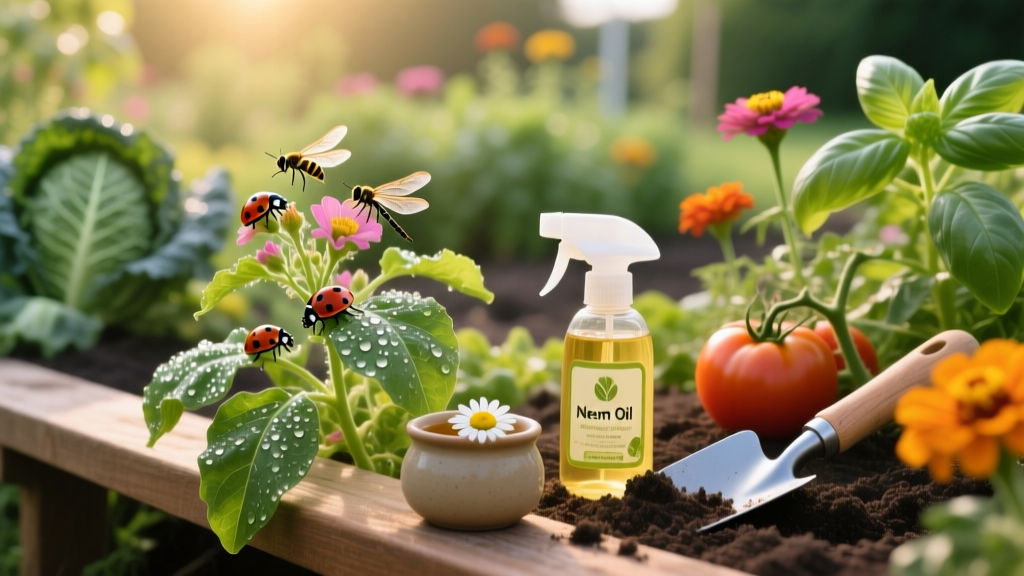
Top Organic Pesticides for Garden Vegetables and Flowers
The Reality of OMRI-Listed Pest Control
Transitioning from synthetic pyrethroids to organic pesticides for garden use requires a fundamental shift in pest management strategy. Synthetic chemicals often provide broad-spectrum, immediate knockdown, but they devastate beneficial insect populations and leave persistent soil residues. Organic alternatives, specifically those certified by the Organic Materials Review Institute (OMRI), rely on botanical extracts, mineral compounds, and microbial agents. These solutions are highly effective but demand precise timing, accurate pest identification, and strict adherence to water chemistry parameters to prevent rapid degradation.
Warning: 'Organic' does not mean 'non-toxic.' Botanical insecticides like Pyrethrins and Spinosad are highly toxic to aquatic invertebrates and pollinators when wet. Always apply during dusk or dawn when bees are inactive, and never spray near storm drains or water features.
Decision Matrix: Matching the Pest to the Active Ingredient
Selecting the correct organic compound prevents wasted product and phytotoxicity. Use this matrix to identify the optimal active ingredient for your specific garden infestation.
| Target Pest | Primary Active Ingredient | Mode of Action | Re-Entry Interval (REI) |
|---|---|---|---|
| Caterpillars, Hornworms, Bagworms | Bacillus thuringiensis var. kurstaki (Bt) | Stomach poison; disrupts gut lining | 4 Hours |
| Aphids, Whiteflies, Spider Mites | Insecticidal Soaps (Potassium Salts) | Contact; dissolves cell membranes | 12 Hours |
| Thrips, Leafminers, Fruit Flies | Spinosad | Ingestion/Contact; neurotoxin | 4 Hours |
| Beetles, Squash Bugs, Fungal Gnats | Azadirachtin (Cold-Pressed Neem) | Insect Growth Regulator (IGR); anti-feedant | 12 Hours |
Deep Dive: Top Active Ingredients in Organic Pesticides
1. Spinosad: The Neurotoxic Heavy Hitter
Derived from the soil bacterium Saccharopolyspora spinosa, Spinosad is arguably the most powerful organic pesticide for garden use against chewing insects. According to the National Pesticide Information Center (NPIC), Spinosad causes involuntary muscle contractions and paralysis in target insects.
- Top Product: Monterey Garden Insect Spray (0.5% Spinosad).
- Cost & Mix Rate: Approximately $18 for a 16 oz bottle. Mix at 2 oz per gallon of water.
- Edge Case & Failure Mode: Spinosad is highly toxic to bees while wet. However, once the spray dries (typically 3 hours), it becomes practically non-toxic to pollinators. Furthermore, UV light degrades Spinosad on leaf surfaces within 16 days, requiring reapplication for persistent pests like thrips.
2. Neem Oil: Clarified Extract vs. Cold-Pressed
Gardeners frequently misunderstand Neem oil. Commercial 'Neem Oil' products found in big-box stores are usually 70% clarified hydrophobic extracts. The active insecticidal compound, Azadirachtin, has been removed to increase shelf life. Clarified neem works strictly as a contact smothering agent and fungicide. To achieve hormonal disruption (preventing molting and egg-laying), you must purchase cold-pressed neem containing Azadirachtin.
- Top Product: Dyna-Gro Pure Cold-Pressed Neem Oil (contains minimum 1500 ppm Azadirachtin).
- Cost & Mix Rate: ~$25 for 16 oz. Mix 1 oz per gallon with a non-ionic surfactant.
- Pro Tip: Cold-pressed neem solidifies at room temperature. Submerge the bottle in warm water for 10 minutes before measuring to ensure accurate dosing.
3. Bacillus thuringiensis (Bt): The Caterpillar Specialist
Bt is a naturally occurring soil bacterium that produces crystalline proteins toxic only to specific insect larvae. The kurstaki strain targets Lepidoptera (caterpillars), while the israelensis strain targets Diptera (mosquito larvae). Because it must be ingested to work, thorough coverage of the underside of leaves is mandatory.
- Top Product: Bonide Thuricide Bt Concentrate.
- Cost & Mix Rate: ~$14 for 16 oz. Mix 1.5 oz per 3 gallons of water.
- Failure Mode: Alkaline hydrolysis. Bt proteins break down rapidly in water with a pH above 7.0. Always buffer your spray water (see Water Chemistry section below).
4. Insecticidal Soaps: Potassium Salts of Fatty Acids
Insecticidal soaps strip the protective waxy cuticle from soft-bodied insects like aphids and spider mites, causing rapid desiccation. They possess zero residual activity, meaning you must physically coat the pest with the spray to kill it.
- Top Product: Safer Brand Insect Killing Soap Concentrate.
- Cost & Mix Rate: ~$16 for 32 oz. Mix 2.5 oz per gallon.
- Crucial Warning: Never mix insecticidal soap with hard tap water. Calcium and magnesium ions bind with the fatty acids, creating an insoluble scum that renders the pesticide useless and causes severe phytotoxicity (leaf burn). Use distilled or reverse-osmosis water.
Water Chemistry: The Hidden Variable in Organic Efficacy
The most common reason organic pesticides for garden applications fail is poor water chemistry. Municipal tap water often has a pH between 7.5 and 8.5. In alkaline water, botanical extracts and microbial agents undergo rapid alkaline hydrolysis, losing up to 50% of their efficacy within 30 minutes of mixing.
The pH Buffering Protocol: Before adding any organic pesticide to your sprayer, test your water pH using a standard pool test kit. If the pH is above 7.0, add 1 tablespoon of white vinegar or a commercial spray buffer (like Capsil) per gallon of water to drop the pH to the optimal 5.5–6.5 range. Add the buffer before adding the pesticide.
Application Protocol: Maximizing Coverage and Safety
Follow this exact sequence to ensure maximum pest mortality while protecting your plant tissue from chemical burn.
- Hydrate the Plants: Never apply organic sprays to drought-stressed plants. Water your garden deeply 12 hours before application. Turgid plant cells are far less susceptible to phytotoxicity from oils and soaps.
- Check the Weather: Ensure temperatures are between 55°F and 85°F. Applying neem oil or soaps above 85°F causes the liquid to evaporate too quickly, concentrating the salts and oils on the leaf surface and causing severe burn.
- Mix in Correct Order: Fill the sprayer halfway with pH-adjusted water. Add wettable powders (like Bt) first, agitate, then add liquid concentrates (like Spinosad), and finally add emulsifiable concentrates (like Neem oil). Top off with remaining water.
- Target the Underside: Over 80% of garden pests feed and lay eggs on the abaxial (lower) leaf surface. Use a sprayer with an adjustable nozzle to spray upward into the canopy.
- Clean the Equipment: Organic residues, particularly neem and soaps, will clog sprayer filters and degrade rubber O-rings. Flush the sprayer with warm water and a drop of dish soap immediately after use.
Troubleshooting Common Organic Treatment Failures
| Symptom | Probable Cause | Corrective Action |
|---|---|---|
| Leaves develop brown, crispy margins 24 hours after spraying neem or soap. | Phytotoxicity due to high heat, drought stress, or mixing with sulfur-based fungicides. | Never mix oils/soaps with sulfur. Wait 30 days between sulfur and oil applications. Spray only in early morning. |
| Caterpillars continue feeding 48 hours after Bt application. | UV degradation or alkaline hydrolysis destroyed the protein crystals before ingestion. | Buffer spray water to pH 6.0. Apply Bt in the late evening to maximize overnight feeding before UV exposure. |
| Aphid population rebounds 5 days after insecticidal soap treatment. | Soap only kills on contact; surviving nymphs hatched from untreated eggs or migrated from nearby weeds. | Implement a 3-spray rotation: Day 1 (Soap), Day 4 (Soap), Day 7 (Azadirachtin) to break the reproductive cycle. |
Mastering organic pesticides for garden environments requires patience and precision. By matching the specific active ingredient to the pest's biology, buffering your water chemistry, and respecting the environmental limitations of botanical compounds, you can maintain a highly productive garden without resorting to persistent synthetic chemicals. For further reading on the environmental safety profiles of these compounds, consult the NPIC Neem Oil Fact Sheet and your local university extension office.

