
Pest Control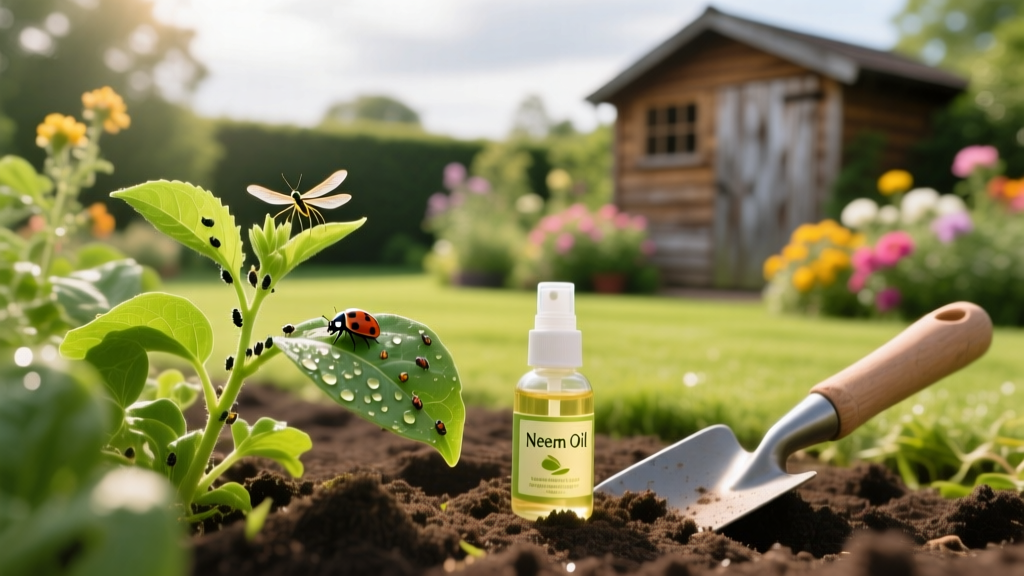
Effective Organic Pesticides for Plants & Usage Guide
When selecting organic pesticides for plants, the presence of the OMRI (Organic Materials Review Institute) seal is your baseline requirement. However, simply buying an organic label does not guarantee efficacy. The success of chemical-free pest management relies entirely on matching the specific active ingredient to the pest's biological lifecycle, understanding UV degradation rates, and adjusting water chemistry for optimal suspension.
According to the Environmental Protection Agency (EPA), biopesticides and naturally occurring substances break down faster than synthetics, which is an environmental benefit but a logistical challenge for homeowners. This guide details the exact formulations, mixing ratios, and failure modes of the most reliable organic pesticides for plants available today.
The Core Arsenal: Active Ingredients and Formulations
Not all organic sprays are created equal. The following four active ingredients form the foundation of a professional-grade organic pest control strategy.1. Cold-Pressed Neem Oil (Azadirachtin)
Neem oil is frequently misunderstood. Commercial "clarified" neem oil (hydrophobic extract) acts only as a suffocant and fungicide. To achieve insect growth regulation and anti-feedant properties, you must use 100% cold-pressed neem oil containing naturally occurring azadirachtin. Azadirachtin disrupts the hormonal systems of insects, preventing molting and reproduction.
- Target Pests: Aphids, whiteflies, mealybugs, spider mites.
- Recommended Product: Bonide Neem Oil (Cold-Pressed variant) or Dyna-Gro Pure Neem Oil.
- Cost: Approximately $18 to $24 for a 16 oz bottle.
- Mixing Ratio: 1 to 2 tablespoons per gallon of water, plus 1 teaspoon of non-toxic liquid silica or insecticidal soap as an emulsifier.
2. Bacillus thuringiensis var. kurstaki (Btk)
Bt is a naturally occurring soil bacterium that produces crystalline proteins toxic to the alkaline digestive tracts of specific insect larvae. The kurstaki strain specifically targets caterpillars (Lepidoptera). When ingested, the crystals dissolve, paralyzing the gut and causing the larvae to stop feeding within hours, eventually leading to death.
- Target Pests: Tomato hornworms, cabbage loopers, tent caterpillars, corn earworms.
- Recommended Product: Monterey B.t. or Bonide Thuricide.
- Cost: $12 to $16 for an 8 oz liquid concentrate.
- Mixing Ratio: 1.5 tablespoons per gallon of water.
3. Spinosad
Derived from the fermentation of the soil actinomycete Saccharopolyspora spinosa, Spinosad is a powerhouse for chewing and sucking insects that have developed resistance to other organics. It causes rapid nervous system excitation in insects. As noted by the National Pesticide Information Center (NPIC), while highly effective, Spinosad is highly toxic to bees when wet, but safe once it dries (usually within 3 hours).
- Target Pests: Thrips, leafminers, spider mites, codling moths.
- Recommended Product: Captain Jack's Deadbug Brew Concentrate.
- Cost: $20 to $25 for a 16 oz bottle.
- Mixing Ratio: 2 tablespoons per gallon of water.
Target-Specific Decision Matrix
Choosing the wrong organic pesticide is the primary reason gardeners abandon chemical-free methods. Use this matrix to select the correct active ingredient based on your specific pest pressure.| Pest Category | Primary Organic Active | Secondary / Tank-Mix Option | Application Interval |
|---|---|---|---|
| Sucking Insects (Aphids, Whiteflies) | Cold-Pressed Neem Oil | Insecticidal Soap (Potassium salts) | Every 5-7 days for 3 cycles |
| Chewing Larvae (Caterpillars) | Bt var. kurstaki (Btk) | Spinosad | Every 7-10 days; reapply after rain |
| Rasping/Sucking (Thrips, Mites) | Spinosad | Neem Oil (for egg suppression) | Every 7 days; max 6 applications/season |
| Hard-Shelled Beetles (Colorado Potato) | Spinosad | Pyrethrin (for immediate knockdown) | Every 5 days during peak emergence |
| Soil-Dwelling Larvae (Fungus Gnats) | Bt var. israelensis (Bti) | Beneficial Nematodes (Hb strain) | Drench soil every 14 days |
Critical Application Protocols and Water Chemistry
Organic pesticides are highly sensitive to environmental variables. A $25 bottle of Spinosad will be rendered useless if mixed and applied incorrectly.
⚠️ WARNING: Phytotoxicity and Heat
Never apply neem oil or horticultural soaps when ambient temperatures exceed 85°F (29°C) or in direct, midday sunlight. The oil amplifies UV radiation and traps heat, causing severe leaf scorch and defoliation within 24 hours. Always spray at dusk.
Never apply neem oil or horticultural soaps when ambient temperatures exceed 85°F (29°C) or in direct, midday sunlight. The oil amplifies UV radiation and traps heat, causing severe leaf scorch and defoliation within 24 hours. Always spray at dusk.
The pH Factor for Bt Efficacy
Bt spores are highly susceptible to alkaline hydrolysis. If your municipal tap water has a pH above 7.5, the active proteins in Bt will degrade in the spray tank before you even pull the trigger. Test your water pH using a standard digital meter. If the pH is above 7.0, add a commercial spray buffer or 1 tablespoon of white vinegar per gallon of water to drop the pH to an optimal 6.0–6.5 range before adding the Bt concentrate.
Emulsification and Surfactants
Oil and water do not mix. When using cold-pressed neem oil, you must use a non-phytotoxic surfactant to create a stable emulsion. Avoid dish soaps containing degreasers or antibacterial agents, which can strip the plant's natural cuticle. Use a dedicated horticultural spray adjuvant or pure liquid silica at a rate of 1 teaspoon per gallon. Shake the tank continuously during application to prevent the oil from separating and clogging the spray nozzle.
Troubleshooting Common Organic Application Failures
If your organic pesticides for plants are failing to control the infestation, the issue is almost always tied to one of the following biological or mechanical edge cases:- UV Degradation of Spinosad and Pyrethrin: Both compounds break down rapidly under ultraviolet light. Spinosad retains efficacy for roughly 3 to 5 days on the leaf surface, while Pyrethrin degrades within 12 to 24 hours. If you are spraying in the morning, the active ingredient is neutralized by noon. Fix: Strictly apply these compounds between 6:00 PM and 8:00 PM.
- Poor Underside Coverage: Pests like whiteflies, spider mites, and aphids feed exclusively on the abaxial (underside) surface of leaves where stomata are dense and the cuticle is thinnest. Spraying only the top of the canopy yields less than 15% pest mortality. Fix: Use a spray wand with an adjustable nozzle bent at a 45-degree upward angle to coat the leaf undersides until dripping.
- Ignoring the Lifecycle Gap: Neem oil does not kill adult insects on contact; it stops them from reproducing and feeding. If you spray once and expect dead bugs the next morning, you will be disappointed. Fix: Commit to a minimum 21-day protocol, spraying every 5 to 7 days to intercept newly hatched nymphs before they reach reproductive maturity.
Cost Analysis: Organic vs. Synthetic Long-Term
A common misconception is that organic pest control is prohibitively expensive. When calculating the cost per 1,000 square feet of garden space, the gap narrows significantly, especially when factoring in the hidden costs of synthetic resistance.
Cost Per 1,000 Sq. Ft. Treatment:
• Synthetic Systemic (e.g., Imidacloprid): ~$4.50 per application (2-3 apps/year) = $9.00 - $13.50 annually.
• Organic Contact (e.g., Spinosad/Neem): ~$2.80 per application (6 apps/year) = $16.80 annually.
Insight: While organics cost roughly 20% more per season in raw materials, they prevent the development of pest resistance, avoiding the massive financial loss of total crop failure that often occurs in year 3 or 4 of heavy synthetic use.
• Synthetic Systemic (e.g., Imidacloprid): ~$4.50 per application (2-3 apps/year) = $9.00 - $13.50 annually.
• Organic Contact (e.g., Spinosad/Neem): ~$2.80 per application (6 apps/year) = $16.80 annually.
Insight: While organics cost roughly 20% more per season in raw materials, they prevent the development of pest resistance, avoiding the massive financial loss of total crop failure that often occurs in year 3 or 4 of heavy synthetic use.

