
Pest Control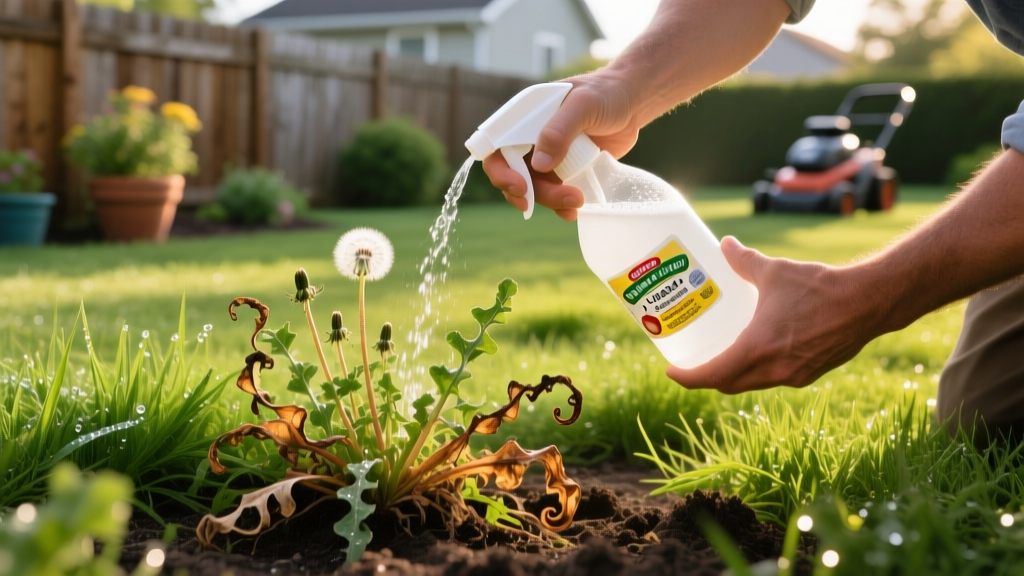
What Is the Best Vinegar Weed Killer Ratio for Tough Weeds?
Acetic acid is the active ingredient in vinegar, and when used correctly, it acts as a potent, non-selective contact herbicide. However, searching for the perfect vinegar weed killer ratio often leads to conflicting recipes that either fail to kill mature weeds or unnecessarily damage your soil microbiome. The efficacy of an organic acetic acid spray depends entirely on the concentration of the acid, the inclusion of a surfactant to break plant surface tension, and the precise environmental conditions during application.
This guide breaks down the biochemical mechanics of acetic acid, provides exact mixing ratios for specific weed categories, and outlines the critical safety protocols required when handling high-concentration horticultural vinegar.
The Science of Acetic Acid: Why Concentration Dictates Success
Vinegar kills weeds by rapidly drawing moisture out of the plant's leaf cells, causing the cell membranes to rupture and the foliage to desiccate. The speed and permanence of this process are directly tied to the pH and acetic acid percentage.
- 5% Household Vinegar (pH ~2.4): Effective only on very young, tender annual weeds with thin cuticles. It rarely kills the root system of established plants.
- 20% Horticultural Vinegar (pH ~1.5): The standard for organic lawn care. It burns through the waxy cuticle of most broadleaf weeds and young grasses within hours.
- 30% Industrial Vinegar (pH ~1.2): Reserved for severe infestations in non-planting zones like gravel driveways. It causes immediate tissue necrosis but poses severe handling risks.
Cost-Per-Ounce Analysis: While 5% grocery store vinegar costs roughly $0.02 per ounce, 20% horticultural vinegar averages $0.25 per ounce, and 30% solutions cost around $0.35 per ounce. Diluting 30% vinegar down to 20% with distilled water is a highly cost-effective strategy for large properties.
The Ultimate Vinegar Weed Killer Ratio Recipes
The right recipe depends entirely on the target weed's life cycle and leaf structure. Use the matrix below to select the appropriate formulation.
| Target Weed Type | Vinegar Concentration | Surfactant Additive | Booster (Optional) |
|---|---|---|---|
| Young Annuals (Chickweed, Henbit) |
1 Gallon of 5% White Vinegar | 1 tbsp Liquid Castile Soap | None |
| Established Perennials (Dandelion, Plantain) |
1 Gallon of 20% Horticultural Vinegar | 1 oz Non-Ionic Surfactant | 1 cup Orange Oil (d-limonene) |
| Driveway & Gravel Weeds (Crabgrass, Thistle) |
1 Gallon of 30% Industrial Vinegar | 2 oz Non-Ionic Surfactant | 2 cups Citrus Oil Solvent |
Mixing Protocol for 20% and 30% Solutions
- Always add the vinegar to the sprayer tank before adding the surfactant to prevent excessive foaming.
- If using citrus oil (d-limonene) as a booster to dissolve waxy leaf cuticles, add it last and agitate the tank vigorously for 60 seconds.
- Never store mixed solutions in metal tanks; acetic acid will corrode brass and steel fittings within 48 hours. Use HDPE plastic or polypropylene sprayers.
The Surfactant Secret: Why Vinegar Alone Fails
The most common reason organic weed killers fail is the omission of a surfactant. Many weeds, particularly broadleaf plantain and purslane, have evolved a thick, waxy epicuticular layer that repels water-based liquids. If you spray pure vinegar on these leaves, it will bead up and roll off onto the soil before the acetic acid can penetrate the tissue.
Adding a non-ionic surfactant (or a high-quality liquid castile soap in a pinch) reduces the surface tension of the water molecules. This allows the solution to spread into a microscopically thin film that maximizes contact area and forces the acid through the stomata. According to University of Minnesota Extension research, adding a surfactant can increase the burn-down efficacy of acetic acid by up to 40% on waxy-leafed species.
CRITICAL WARNING: The Salt Myth
Do not add Epsom salt, table salt, or rock salt to your vinegar mixture. While sodium chloride does dehydrate plants, it does not break down in the soil. It accumulates, causing severe osmotic stress that prevents future grass or desirable plants from absorbing water, effectively sterilizing your topsoil. Stick to acetic acid and essential oil boosters for soil-safe organic control.
Do not add Epsom salt, table salt, or rock salt to your vinegar mixture. While sodium chloride does dehydrate plants, it does not break down in the soil. It accumulates, causing severe osmotic stress that prevents future grass or desirable plants from absorbing water, effectively sterilizing your topsoil. Stick to acetic acid and essential oil boosters for soil-safe organic control.
Step-by-Step Application Protocol for Maximum Efficacy
Acetic acid is a contact herbicide, meaning it only kills the tissue it physically touches. It does not translocate down to the roots like systemic synthetic herbicides (e.g., glyphosate). Therefore, application timing is non-negotiable.
- Time of Day: Spray between 10:00 AM and 2:00 PM. The sun's UV radiation and peak heat accelerate the desiccation process. Spraying in the evening allows the plant time to recover and push moisture back into the leaves overnight.
- Temperature Threshold: Ensure ambient temperatures are above 65°F (18°C). Acetic acid reactions slow down significantly in cool weather.
- Wind Speed: Only spray when winds are below 5 mph. High-concentration vinegar drift will instantly necrose the foliage of your desirable turfgrass and ornamental shrubs.
- Moisture Status: Never spray if rain is forecast within 24 hours, and do not spray weeds that are currently wet from morning dew. Water dilutes the acid on contact.
Limitations and Edge Cases: When Vinegar Won't Work
Understanding the limitations of the vinegar weed killer ratio prevents frustration and wasted materials. Acetic acid struggles in the following scenarios:
Mature Taproot Perennials
Weeds like mature dandelions, dock, and wild lettuce store massive energy reserves in deep taproots. A 20% vinegar spray will completely burn off the top growth, but the root will often push out new shoots within 10 to 14 days. The Fix: You must re-spray the new growth immediately as it emerges. Depleting the root's energy reserves through repeated top-growth defoliation usually takes 3 to 4 applications spaced two weeks apart.
Vine-like Creeping Weeds
Bindweed and ground ivy (creeping charlie) spread via underground rhizomes and nodes. Contact herbicides only burn the surface nodes. For these species, organic control requires physical smothering (solarization with black plastic) or repeated, targeted hand-pulling combined with spot-treatment of the remaining crown.
Safety Gear and Handling 30% Acetic Acid
While 5% kitchen vinegar is harmless, 20% and 30% horticultural acetic acid are classified as corrosive hazards. The CDC NIOSH Pocket Guide to Chemical Hazards notes that concentrated acetic acid vapor can cause severe respiratory tract irritation, and liquid contact can cause irreversible corneal damage and deep tissue chemical burns.
When mixing or spraying concentrations above 10%, you must wear:
- Chemical-splash safety goggles (standard glasses are insufficient).
- Thick nitrile or neoprene gloves (latex degrades rapidly upon contact).
- Long sleeves and closed-toe shoes.
- A half-face respirator with organic vapor/acid gas cartridges if spraying in an enclosed or poorly ventilated area.
Frequently Asked Questions
Can I use apple cider vinegar instead of white vinegar?
Yes, but it is economically inefficient. Apple cider vinegar contains the same 5% acetic acid concentration as cheap distilled white vinegar, but it costs three to four times more per gallon. The extra minerals and 'mother' in apple cider vinegar provide zero additional herbicidal benefit.
Will this mixture lower my soil pH permanently?
No. Acetic acid breaks down rapidly in the soil, typically metabolizing into water and carbon dioxide within 48 to 72 hours via microbial action. It does not have a lasting residual effect on soil pH, making it safe for use in garden beds once the acid has degraded.
How soon can I reseed bare spots after spraying?
Because acetic acid leaves no toxic soil residue, you can safely overseed or transplant desirable grasses and flowers just 3 to 5 days after your final vinegar application, provided the dead weed debris has been raked away to ensure seed-to-soil contact.

