
Pest Control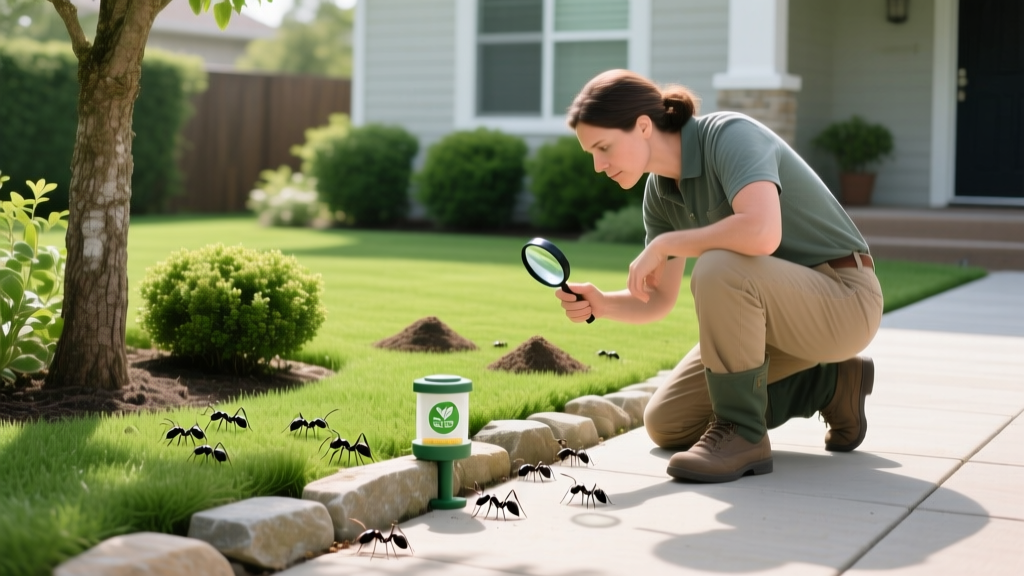
How to Get Rid of Ants Outdoors: Perimeter Defense & Baiting
The Reality of Outdoor Ant Infestations
Treating an outdoor ant infestation with a quick blast of over-the-counter repellent spray is a tactical error. When you spray a foraging trail with contact insecticides like bifenthrin or permethrin, you kill the visible workers but trigger a survival response in the colony. The queen simply accelerates reproduction, and the colony often splinters into multiple satellite nests—a phenomenon known as budding. To successfully learn how to get rid of ants outdoors, you must abandon the 'spray and pray' method and adopt a two-pronged strategy: slow-acting toxic baits that exploit colony biology, and rigorous perimeter habitat modification.
Identify Your Outdoor Ant Adversary
Ant species dictate your baiting strategy. A protein-based bait that works on carpenter ants will be ignored by sweet-seeking odorous house ants. Before deploying any treatment, identify the species and their primary food source.
| Species | Nesting Habits | Primary Diet | Recommended Bait Type |
|---|---|---|---|
| Carpenter Ants | Moist, decaying wood; structural timber | Proteins and fats | Granular (e.g., Advance 375A) |
| Fire Ants | Sun-exposed soil mounds; aggressive | Oils and proteins | IGR Granular (e.g., Extinguish Plus) |
| Pavement Ants | Under concrete slabs, driveway cracks | Sweets, grease, seeds | Gel or Granular (e.g., Maxforce Fleet) |
| Odorous House | Shallow soil, under mulch/debris | Honeydew, sweets | Liquid/Gel (e.g., Optigard Ant Gel) |
The Science of Trophallaxis: Why Slow-Acting is Mandatory
According to the University of California Agriculture and Natural Resources (UC ANR), the key to colony elimination is trophallaxis—the social sharing of food among nest members. Foraging ants consume the bait and carry it back to the nest, regurgitating it to feed the larvae, the queen, and other workers. If the active ingredient kills the forager within minutes (like pyrethroids do), the bait never reaches the queen. You must use slow-acting active ingredients like Indoxacarb, Thiamethoxam, or Fipronil, which take 24 to 72 hours to induce mortality, allowing ample time for the toxin to permeate the entire colony.
⚠️ WARNING: The Spray Trap
Never apply liquid repellent sprays (like Raid or Ortho Home Defense) in the same area where you have placed ant baits. Repellents contain pyrethroids that will deter foragers from approaching the bait station, rendering your baiting strategy completely useless.
Step-by-Step Outdoor Baiting Protocol
Follow this precise protocol to dismantle outdoor colonies without driving them indoors.
- Map the Foraging Trails: Spend 15 minutes at dusk observing ant traffic. Look for trails leading from your foundation, patio, or trees toward the yard. Do not disturb the trails.
- Pre-Baiting (Optional but Recommended): Place a few drops of honey and a dab of peanut butter near the trails. See which one attracts more ants within an hour. This tells you whether to deploy a sweet-based or protein-based bait.
- Deploy the Bait:
- For Gel Baits (Optigard, Maxforce): Apply 3 to 5 bead-sized drops (about the size of a pea) every 10 feet along the foundation and near trail entry points. Shield the drops from direct sunlight and rain using a small piece of cardboard or a commercial bait station.
- For Granular Baits (Advance 375A): Broadcast lightly around the base of trees, shrubs, and perimeter fences at a rate of 1.5 ounces per 100 linear feet.
- Monitor and Replenish: Check the bait stations every 48 hours. If the bait is gone, the colony is actively feeding. Replenish it immediately. A massive outdoor colony may consume several tubes of gel bait over a 10-day period before collapsing.
Common Baiting Mistakes That Guarantee Failure
- Using the wrong formulation: Applying granular bait on a smooth concrete patio where pavement ants are trailing. Granules are for soil and mulch; use gels for hard surfaces.
- Cleaning the trails: Wiping away ant pheromone trails with bleach or soapy water before baiting. Ants rely on these chemical highways to find the bait. Leave the trails intact until the colony is dead.
- Ignoring moisture: Gel baits dry out quickly in outdoor heat, becoming unpalatable. Always place gel baits in shaded, protected crevices or inside specialized plastic bait stations.
Perimeter Sealing and Habitat Modification
Baiting kills the existing colony, but habitat modification prevents the next one from establishing. The Clemson University Home & Garden Information Center emphasizes that altering the microclimate around your foundation is the most effective long-term deterrent.
The 18-Inch Vegetation-Free Zone
Establish an 18-inch gap between your foundation and any organic material. Ants thrive in the humid, protected environment created by thick mulch and dense shrubbery. Replace wood mulch adjacent to the house with inorganic materials like crushed gravel, river rock, or pea stone. If you must use mulch, keep it strictly under 2 inches deep and rake it monthly to disrupt nesting sites.
Eliminating the 'Ant Highways'
Ants frequently bypass ground-level perimeter defenses by traveling through the canopy. Trim all tree branches, shrubs, and climbing vines so they are at least 12 inches away from your roofline, siding, and gutters. This forces ants to descend to the ground, where they must cross your treated perimeter or encounter your bait stations.
Structural Exclusion
Seal foundation cracks, utility penetrations, and weep holes. Do not use cheap acrylic caulk for exterior masonry; it will crack and peel within a season. Use a high-quality, paintable polyurethane sealant (like Sikaflex or Loctite PL) for gaps larger than 1/4 inch, and stuff copper mesh into weep holes and pipe penetrations before sealing to prevent rodents and insects from chewing through.
DIY vs. Professional Treatment: Cost & Efficacy Matrix
| Factor | DIY Baiting & Perimeter Defense | Professional Pest Control Service |
|---|---|---|
| Initial Cost | $35 - $80 (Baits, sealants, gravel) | $250 - $450 (Perimeter spray + baiting) |
| Active Ingredients | Thiamethoxam, Indoxacarb, Abamectin | Fipronil (Termidor SC), Dinotefuran |
| Time to Colony Death | 7 to 14 days | 3 to 7 days (Transfer effect) |
| Best For | Standard pavement, odorous, and fire ants | Severe carpenter ant damage, massive fire ant super-colonies |
For 90% of homeowners dealing with standard pavement or sweet ants, a $50 investment in high-quality commercial gel baits and a weekend of yard cleanup will yield the same results as a $300 professional visit. Reserve professional services for structural threats like carpenter ants or aggressive, multi-mound fire ant infestations that require specialized Insect Growth Regulators (IGRs).
Frequently Asked Questions
Will outdoor ant baits attract more ants to my yard?
Yes, initially. Baits are designed to be highly attractive. You will see a massive surge in ant activity around the bait stations for the first 24 to 48 hours. This is a positive indicator that the foragers have found the food source and are beginning the trophallaxis process. Do not kill these ants; let them feed and return to the nest.
How do I get rid of ants in my raised garden beds without harming my vegetables?
Avoid using chemical baits or sprays directly in edible garden beds. Instead, use food-grade Diatomaceous Earth (DE) around the base of the bed legs, or deploy bait stations containing Spinosad (an organic-approved active ingredient derived from soil bacteria) on the outside perimeter of the garden bed, not in the soil itself.
Why do ants keep coming back every spring?
Spring swarms are often reproductive flights (alates) or the result of surviving satellite colonies expanding as temperatures rise. If ants return annually, your perimeter habitat modification is failing. Re-evaluate your mulch depth, check for hidden moisture leaks near your foundation, and apply a preventive granular bait like Maxforce Complete in early March before the spring foraging surge begins.

