
Pest Control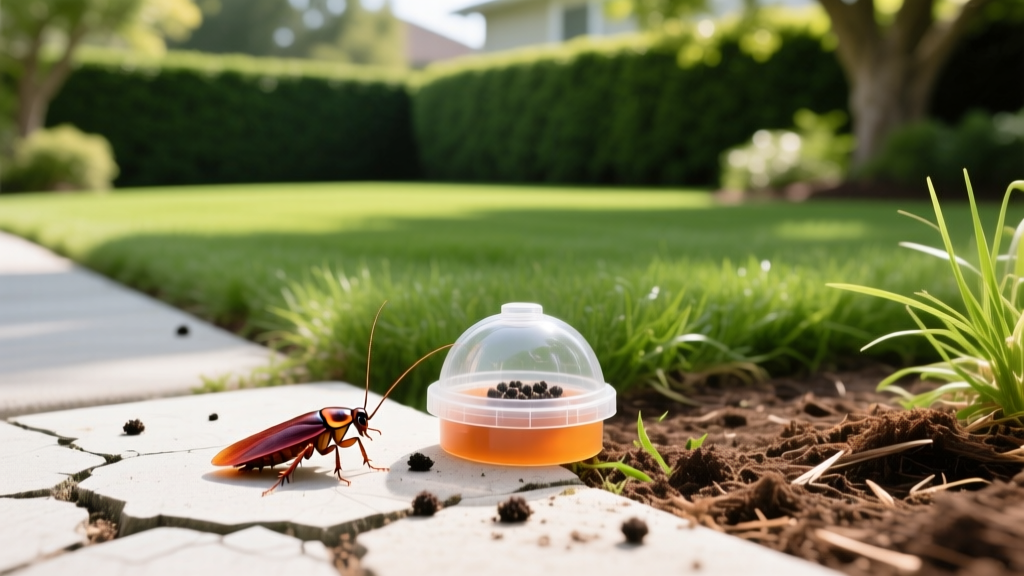
Outdoor Cockroach Yard Defense: Identification and Baiting Guide
Peridomestic cockroaches—commonly known as outdoor cockroaches—thrive in the damp, shaded microclimates of residential yards. Unlike their indoor counterparts (such as the German cockroach), these species breed in mulch beds, sewer lines, and tree canopies, only invading homes when outdoor populations explode or weather conditions shift. Effective yard defense requires moving beyond generic bug sprays and implementing a targeted strategy combining moisture management, exclusion, and modern non-repellent chemistry.
Species Profiling: Which Outdoor Cockroach is Invading?
Correct identification dictates your treatment protocol. The four most common outdoor species in North America have distinct habitat preferences and behavioral patterns that determine where you should place baits and sprays.
| Species | Size & Color | Primary Yard Habitat | Flight Capability | Key Vulnerability |
|---|---|---|---|---|
| American (Periplaneta americana) | 1.5–2.0 in, Reddish-brown with yellow halo | Sewer grates, damp mulch, crawl spaces | Strong gliders in warm weather | Susceptible to granular baits in sewer perimeters |
| Oriental (Blatta orientalis) | 1.0–1.25 in, Glossy dark brown to black | Soil under concrete pads, leaf litter, foundation gaps | Cannot fly | Highly vulnerable to perimeter liquid barriers |
| Smokybrown (Periplaneta fuliginosa) | 1.25–1.5 in, Uniform dark mahogany | Tree canopies, gutters, woodpiles, attics | Strong, active fliers at night | Attracted to elevated gel baits and tree banding |
| Wood Roach (Parcoblatta spp.) | 0.75–1.0 in, Light to medium brown | Forest edges, firewood stacks, loose bark | Males fly (often to porch lights) | Exclusion and lighting modification (rarely need chemical control) |
The 18-Inch Perimeter Defense Protocol
Chemical treatments fail if the yard environment remains a perfect breeding ground. According to NC State Extension, modifying the immediate perimeter of the home is the most critical step in reducing peridomestic populations. Implement this three-step physical defense protocol before applying any pesticides.
Step 1: The Vegetation-Free Zone
Maintain an 18-inch gap between the foundation and any dense plantings. Trim shrubs so the bottom 12 inches are exposed to sunlight and airflow. Cockroaches avoid dry, sunlit soil. Remove ivy and creeping groundcovers touching the siding, as these act as protected highways for Smokybrown and American roaches.
Step 2: Mulch Depth and Material Calibration
Limit organic mulch to a maximum depth of 2 inches. Deep mulch retains the subsurface moisture that Oriental and American roaches require for egg case (ootheca) incubation. If roach pressure is severe, replace organic wood chips within 3 feet of the foundation with inorganic options like crushed stone or rubber mulch, which do not retain moisture or provide a food source.
Step 3: Structural Exclusion
Seal foundation cracks wider than 1/16 inch using a high-quality silicone or polyurethane caulk. For weep holes in brick veneer and gaps around utility penetrations (HVAC lines, plumbing), stuff copper mesh (Stuf-Fit) before sealing. Unlike steel wool, copper mesh will not rust and stain your masonry when exposed to outdoor moisture.
Chemical and Organic Baiting Matrices
When physical exclusion is not enough, targeted chemical intervention is required. The modern standard for outdoor cockroach control relies on non-repellent active ingredients and Insect Growth Regulators (IGRs). Avoid repellent pyrethroids (like Bifenthrin or Cypermethrin) for outdoor perimeter spraying; they kill on contact but cause surviving roaches to scatter deeper into your yard or push them inside your home.
| Product Category | Recommended Product & Active Ingredient | Approx. Cost (2026) | Application Strategy & Placement |
|---|---|---|---|
| Gel Bait | Advion Cockroach Gel Bait (0.6% Indoxacarb) | $28 - $32 / 30g tube | Apply pea-sized drops every 12 inches in foundation cracks, behind downspouts, and under deck joists. Indoxacarb allows for secondary kill via coprophagy (feces consumption). |
| Non-Repellent Spray | Alpine WSG (40% Dinotefuran) | $45 - $50 / 200g box | Mix 10g per gallon of water. Spray a 3-foot band up the foundation and 3 feet out into the soil. Roaches cannot detect it, walking through the residue and spreading it to the colony. |
| Granular Bait | Maxforce Complete (2% Hydramethylnon) | $35 - $40 / 4lb bucket | Broadcast at 0.5 lbs per 1,000 sq ft in heavy mulch beds and leaf litter where gel baits would be washed away by rain or absorbed by dry soil. |
| IGR (Growth Regulator) | NyGuard IGR (10% Pyriproxyfen) | $75 - $85 / 4oz bottle | Mix 4-8ml per gallon. Tank-mix with Alpine WSG. Disrupts molting and renders adults sterile, breaking the breeding cycle for up to 6 months outdoors. |
Troubleshooting Common Baiting Failures
Even professional-grade products fail if applied incorrectly. If you are still seeing heavy outdoor cockroach activity after 14 days of treatment, diagnose the issue using these common failure modes.
⚠️ Failure Mode 1: Bait Desiccation and UV Degradation
The Problem: Gel baits applied directly to exposed outdoor concrete or dry wood dry out into a hard, unpalatable crust within 48 hours, rendering them useless.
The Fix: Use plastic bait stations or apply gel to small squares of cardboard tucked under mulch, inside weep holes, or beneath deck boards where humidity is higher and direct sunlight is blocked.
⚠️ Failure Mode 2: Repellent Cross-Contamination
The Problem: You applied a non-repellent spray (Alpine WSG) but previously treated the area with a repellent bug spray (like Ortho Home Defense containing Bifenthrin). The residual repellent acts as an invisible wall, preventing roaches from reaching the non-repellent zone or the bait.
The Fix: Wash down the treated surfaces with a trisodium phosphate (TSP) solution or a strong detergent to break down the old repellent residue before reapplying your non-repellent or bait.
Expert FAQ on Yard Roach Management
Do outdoor cockroaches carry the same diseases as indoor German roaches?
While peridomestic species like the American and Oriental cockroaches are not as intimately associated with indoor food preparation surfaces as German roaches, they still vector pathogens. Because they breed in sewer lines, compost piles, and animal feces, they carry Salmonella, E. coli, and various parasitic worms on their tarsi. Preventing them from migrating indoors is a critical health and sanitation priority, as noted by the Environmental Protection Agency (EPA).
Will changing my yard lighting really reduce roach activity?
Yes, specifically for male Wood Roaches and Smokybrown roaches, which are highly attracted to light sources during mating flights. Replace standard white LED or incandescent porch lights with yellow sodium vapor bulbs or LEDs specifically tuned to the 570-590 nanometer wavelength range. These wavelengths are largely invisible to the insect visual spectrum, significantly reducing the number of flying males drawn to your home's exterior at night.
How often should I reapply granular bait in heavy rain climates?
Granular baits like Maxforce Complete are formulated with a moisture-resistant coating, but heavy, sustained rainfall will eventually cause the bait to mold or wash away. In regions with frequent summer storms, inspect bait placements every 14 days. If the granules appear swollen, fuzzy, or have been physically displaced by water runoff, reapply at half the standard label rate to maintain continuous colony pressure.
Can I use diatomaceous earth (DE) outdoors for organic control?
Diatomaceous earth works by desiccating the insect's waxy exoskeleton, but it is only effective when completely dry. In an outdoor yard environment where dew, rain, and irrigation are constant, DE quickly loses its efficacy. If you require an organic contact killer, consider baits containing Spinosad or botanical oils (like rosemary and peppermint oil blends), though these will lack the secondary-kill colony eradication power of synthetic baits like Indoxacarb.

