
Pest Control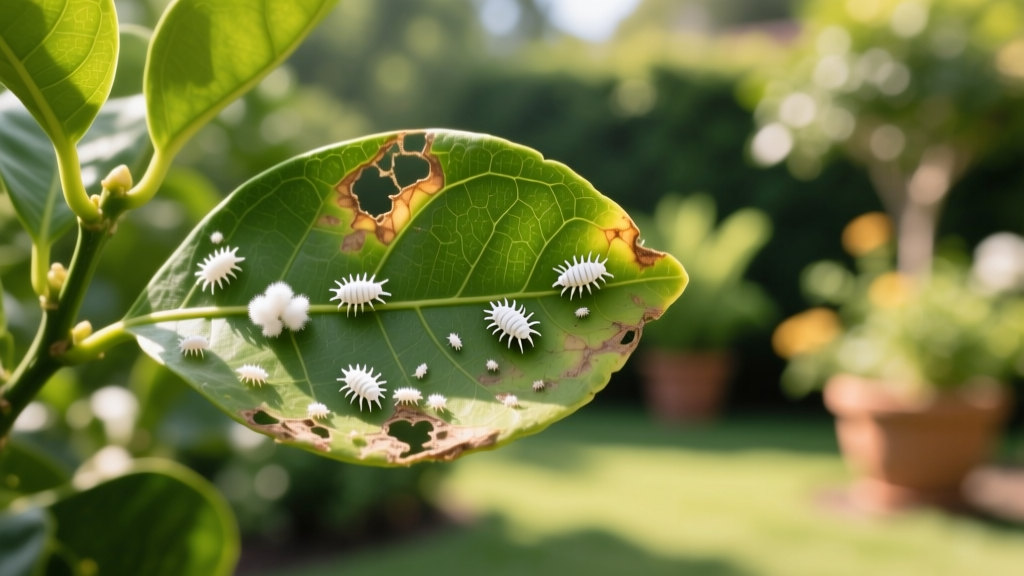
Effective Mealy Bug Treatment for Citrus and Ornamentals
The Hidden Threat in Your Yard: Understanding Mealybug Biology
Mealybugs (Pseudococcidae) are unarmored scale insects that devastate outdoor ornamentals, citrus trees, and tropical shrubs. Unlike aphids or spider mites, mealybugs secrete a dense, hydrophobic wax filament over their bodies. This waxy exoskeleton acts as a biological raincoat, repelling standard water-based insecticides and making superficial spraying largely ineffective. For homeowners managing yard defense, understanding this physical barrier is the first step toward successful eradication.
According to Clemson University Home & Garden Information Center, mealybugs pierce plant phloem tissue with their stylets, draining vital sap and injecting toxic saliva. This results in chlorotic (yellowing) foliage, stunted terminal growth, and premature fruit drop in citrus. A single female citrus mealybug (Planococcus citri) can lay up to 600 eggs in a cottony ovisac, meaning localized infestations can explode into colony-level threats within a single 21-day reproductive cycle.
⚠️ Yard Defense Warning: The Ant Symbiosis
You cannot execute a successful mealy bug treatment if you ignore ants. Mealybugs excrete a sugar-rich waste called honeydew. Native yard ants (such as Argentine or Carpenter ants) actively farm mealybugs, protecting them from natural predators in exchange for the honeydew harvest. If you see ants marching up your citrus trunks, deploy Terro T300B liquid borax ant baits at the base of the tree concurrently with your mealybug protocol. Break the ant alliance, or the mealybugs will return.
Step-by-Step Mealy Bug Treatment Protocol
Eradicating mealybugs requires a phased approach that targets both the waxy adults and the vulnerable crawler (nymph) stage. Follow this sequential protocol for outdoor ornamentals and fruit-bearing trees.
Phase 1: Mechanical Disruption and Isolation
- High-Pressure Water Blasting: For sturdy plants like hibiscus, citrus, and bougainvillea, use a hose-end sprayer nozzle set to a sharp jet. Blast the undersides of leaves and branch crotches. This physically dislodges up to 60% of the adult colony and washes away the protective honeydew, making subsequent chemical treatments more effective.
- Spot Treatment with Solvents: For isolated clusters on delicate ornamentals, dip a cotton swab in 70% isopropyl alcohol and dab the mealybugs directly. The alcohol instantly dissolves their waxy coating, causing rapid desiccation. Do not use this method on the entire plant, as it will cause severe phytotoxicity.
Phase 2: Contact Sprays (Organic and Conventional)
Because mealybugs hide in leaf axils and under calyxes, contact sprays must be applied with a surfactant to break the surface tension of the wax.
- Neem Oil (70% Clarified Hydrophobic Extract): Products like Bonide Neem Oil concentrate ($18–$22 per 16 oz bottle) act as both a suffocant and an insect growth regulator (IGR). Mix 2.5 tablespoons per gallon of water. Add 1 teaspoon of non-detergent liquid dish soap as a surfactant. Apply at dusk to prevent leaf burn from UV interaction.
- Insecticidal Soaps: Natria Insecticidal Soap (Potassium salts of fatty acids 1.4%) strips the waxy cuticle on contact. Priced around $12 for a 32 oz ready-to-use bottle, it is highly effective on first-instar crawlers but has zero residual activity. You must reapply every 5 to 7 days for three consecutive weeks to intercept newly hatched nymphs.
Phase 3: Systemic Eradication for Heavy Infestations
When contact sprays fail to penetrate dense canopies, or when dealing with root mealybugs (which live entirely in the soil profile), systemic insecticides are mandatory. The plant absorbs the active ingredient through its roots and translocates it to the leaves, poisoning any insect that feeds on the sap.
"Systemic soil drenches provide the longest residual control for woody ornamentals, but timing is critical to avoid harming foraging pollinators. Never apply systemic neonicotinoids to plants that are actively blooming."
— NC State Extension Entomology Department
Recommended Systemic Product: Bayer Advanced 12 Month Tree and Shrub Protect & Feed (Imidacloprid 0.15%). Cost is approximately $25–$30 for a 32 oz concentrate.
Dosage: Mix 1 ounce of concentrate per inch of trunk diameter (measured at breast height) in 1 gallon of water. Pour the drench directly onto the soil at the drip line of the tree, not against the trunk.
Treatment Matrix: Comparing Active Ingredients
| Active Ingredient | Mode of Action | Residual Life | Best Use Case |
|---|---|---|---|
| Horticultural Oil | Suffocation (Spiracle blocking) | None (Contact only) | Dormant season or light crawler outbreaks |
| Insecticidal Soap | Cuticle dissolution | None (Contact only) | Greenhouse or delicate, non-waxy ornamentals |
| Azadirachtin (Neem) | Antifeedant & Growth Regulator | 3–5 Days | Organic yard defense, disrupting egg cycles |
| Imidacloprid | Nicotinic receptor agonist (Systemic) | Up to 12 Months | Severe infestations, root mealybugs, large citrus |
| Dinotefuran | Nicotinic receptor agonist (Systemic) | 2–3 Months | Faster xylem translocation than Imidacloprid |
Biological Warfare: Deploying the Mealybug Destroyer
For homeowners committed to organic yard defense, introducing natural predators offers a sustainable, long-term population suppression strategy. The most effective biological control agent is the Cryptolaemus montrouzieri, commonly known as the Mealybug Destroyer.
Both the adult beetle and its larvae are voracious predators. The larvae mimic the appearance of mealybugs (a defense mechanism to avoid being killed by tending ants) but grow up to half an inch long. To deploy them effectively:
- Release Rate: Introduce 2 to 5 adult beetles per heavily infested shrub, or 10 to 20 per mature citrus tree.
- Timing: Release at dusk to prevent immediate dispersal from UV stress. Mist the plant foliage lightly before release to provide an immediate water source.
- Prerequisite: You must eliminate the local ant population first. If ants are present, they will physically attack and kill the C. montrouzieri beetles to protect their honeydew supply.
Common Treatment Failures and Edge Cases
Even experienced gardeners encounter resistance when treating Pseudococcidae. Analyze these common failure modes to troubleshoot your yard defense strategy:
Failure Mode 1: Phytotoxicity from Oil Overlap
Applying horticultural oils or neem oil when ambient temperatures exceed 85°F (29°C) causes the oil to fry the plant's stomata, resulting in severe leaf drop. Furthermore, never apply sulfur-based fungicides within 30 days of an oil application; the chemical reaction will burn the foliage down to the wood.
Failure Mode 2: Misdiagnosing Root Mealybugs
If your plant is wilting, yellowing, and failing to respond to foliar sprays, check the root ball. Root mealybugs (Rhizoecus spp.) feed exclusively underground and are invisible from the surface. They appear as tiny white specs in the soil mix. Foliar sprays are useless here. You must execute a systemic soil drench with Imidacloprid or completely bare-root the plant, wash the roots in a 10% bleach solution, and repot in sterile media.
Expert FAQ on Yard Mealybug Defense
Can I use rubbing alcohol to spray the whole plant?
No. While 70% isopropyl alcohol is excellent for spot-treating individual mealybugs with a cotton swab, spraying it broadly over plant foliage will strip the plant's natural protective cuticle, leading to rapid dehydration and tissue necrosis. Restrict alcohol use to targeted, manual removal.
Will sooty mold go away once the mealybugs are dead?
Sooty mold is a fungus that grows exclusively on the sugary honeydew excreted by mealybugs. Once you successfully eradicate the mealybugs and halt the honeydew production, the sooty mold will dry up, crack, and flake off the leaves naturally over 3 to 4 weeks. You can accelerate this process by gently wiping the leaves with a damp cloth or blasting them with a hose, but it is not strictly necessary for plant health.
Are mealybugs harmful to humans or pets?
Mealybugs pose zero threat to humans, dogs, or cats. They do not bite, sting, or transmit diseases to mammals. However, the systemic pesticides (like Imidacloprid) used to treat them are toxic to pets if ingested while wet. Keep dogs and cats off the treated soil until the systemic drench has fully dried and absorbed into the root zone, typically 2 to 4 hours post-application.

