
Pest Control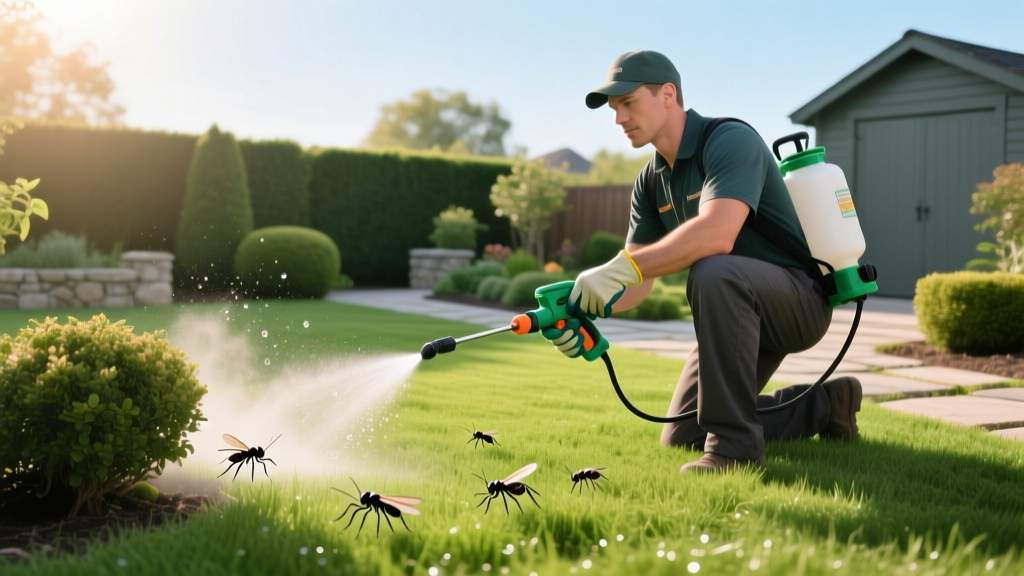
Outside Flea Treatment: How to Eradicate Yard Infestations
The Biology of Yard Fleas: Targeting the Hidden 95%
Treating your pets for fleas while ignoring your yard is a losing battle. The outdoor environment serves as the primary reservoir for flea populations. According to Texas A&M AgriLife Extension, adult fleas living on hosts represent only about 5% of the total population. The remaining 95% exist as eggs, larvae, and pupae hidden in soil, thatch, and shaded microclimates.
⚠️ The Pupal Armor Problem: Flea pupae are encased in a sticky cocoon that camouflages them with soil debris and renders them highly resistant to most chemical sprays. This is why a single outside flea treatment rarely works; you must target emerging adults and use Insect Growth Regulators (IGRs) to break the life cycle.
Step-by-Step Outside Flea Treatment Protocol
An effective perimeter defense requires a multi-modal approach combining habitat modification, chemical knockdown, and biological growth disruption. As of 2026, professional-grade concentrates remain the most cost-effective solution for homeowners managing lawns larger than 2,000 square feet.
Step 1: Habitat Modification and UV Exposure
Flea larvae are photophobic and desiccate quickly in direct sunlight. Before applying any chemicals, mow your lawn to a height of 2.5 inches and remove all leaf litter, pine straw, and debris from shaded areas beneath shrubs and along fence lines. This exposes the soil surface to UV light and ensures your liquid treatments penetrate the thatch layer rather than coating the top of dead leaves.
Step 2: Adulticide Application (The Knockdown)
Use a pyrethroid-based adulticide to kill actively foraging fleas. Bifenthrin (commonly sold as Talstar P) is the industry standard for outdoor flea control due to its long residual life and low toxicity to mammals once dried.
- Mixing Ratio: 1 fluid ounce of 7.9% bifenthrin concentrate per gallon of water.
- Application Rate: Apply 1 to 2 gallons of mixed solution per 1,000 square feet.
- Target Zones: Focus on shaded areas, under decks, dog runs, and the perimeter of the home. Do not waste product spraying open, sun-baked concrete or bare dirt.
- Cost: A gallon of professional bifenthrin concentrate averages $45–$55 and yields up to 128 gallons of finished spray.
Step 3: Insect Growth Regulator (IGR) Integration
Adulticides do not stop eggs from hatching. You must tank-mix an IGR like Pyriproxyfen (Archer IGR) or Methoprene. Pyriproxyfen mimics juvenile hormones, preventing larvae from molting into adults. Mix 1 ounce of IGR per 1,500 square feet into your bifenthrin sprayer. This combination provides up to 7 months of residual egg-hatch suppression outdoors.
Step 4: Biological Control (The Organic Alternative)
If you maintain an organic yard or have free-roaming chickens, chemical pyrethroids are not viable. Instead, use Steinernema carpocapsae beneficial nematodes. These microscopic worms actively seek out flea larvae in the soil, enter their bodies, and release bacteria that kill the host within 48 hours.
- Application Rate: 10 million nematodes per 3,000 square feet.
- Cost: Approximately $30–$40 per 10-million count sponge or powder.
- Critical Requirement: Nematodes require moisture to survive. Water the lawn thoroughly before application and keep the soil lightly moist for 7 days post-application. Apply in the early evening to avoid UV degradation.
Chemical vs. Organic Treatment Matrix
| Treatment Type | Active Ingredient | Target Life Stage | Residual Life | Pet Safety Profile |
|---|---|---|---|---|
| Adulticide | Bifenthrin (7.9%) | Adults | 30–60 Days | Safe once completely dry; highly toxic to aquatic life and bees |
| IGR | Pyriproxyfen | Eggs & Larvae | Up to 7 Months | Very low mammalian toxicity |
| Biological | S. carpocapsae Nematodes | Larvae & Pupae | Requires reapplication every 3-4 weeks | 100% safe for all pets, wildlife, and humans |
| Botanical | Spinosad | Adults & Larvae | 14–21 Days | Safe once dry; toxic to bees while wet |
Wildlife Vector Control: Stopping the Resupply
The most meticulous outside flea treatment will fail if local wildlife continually reseeds your lawn. The Centers for Disease Control and Prevention (CDC) notes that fleas are primary vectors for murine typhus and bartonellosis, frequently transmitted by opossums, roof rats, and feral cats.
🛡️ Perimeter Exclusion Tactics:
- Deck & Crawl Space Sealing: Install 1/4-inch galvanized hardware cloth around the base of decks and sheds. Bury the bottom edge 6 inches deep in an L-shape facing outward to prevent rodents from digging underneath.
- Trash Management: Opossums are notorious flea carriers. Secure all outdoor trash cans with bungee cords or locking lids. Do not leave pet food outdoors overnight.
- Rodent Bait Stations: Place tamper-resistant bait stations (e.g., Protecta LP) along fence lines every 20 feet to control the rat and mouse populations that serve as primary flea hosts.
Common Application Mistakes and Edge Cases
The 14-Day Pupal Emergence Window
Because pupae are immune to sprays, a newly treated yard will still see adult fleas emerging for up to 14 days. Vibrations and carbon dioxide trigger them to hatch. You must schedule a secondary knockdown spray exactly 14 days after the initial application to kill these emerging adults before they can lay new eggs. Failure to execute the second spray is the #1 reason homeowners report treatment failure.
Rain Wash-Off and Irrigation Timing
Liquid bifenthrin and IGRs require a minimum of 24 hours of dry time to bind to soil particles and thatch. Check your local weather forecast before mixing chemicals. Conversely, if you are applying nematodes, you must irrigate the lawn immediately after application to wash the microscopic worms down into the soil profile where flea larvae reside.
Concrete and Gravel Dog Runs
Fleas do not breed in bare concrete or loose gravel; they breed in the organic debris trapped in the cracks. Before treating a dog run, use a pressure washer to blast out organic matter from the joints, then apply a dust formulation like DeltaDust into the crevices, as liquid sprays will simply pool and run off impervious surfaces.
Frequently Asked Questions
Can I use indoor flea bombs in my garage or outdoor shed?
No. Total release foggers (bug bombs) are entirely ineffective for outdoor or semi-outdoor spaces. They do not penetrate the soil or thatch where larvae hide, and the aerosol quickly dissipates in unsealed areas. Furthermore, foggers leave a toxic residue on surfaces without killing the actual pest reservoir. Stick to targeted liquid sprays and dusts.
How long should I keep my dogs off the lawn after an outside flea treatment?
Keep all pets and children off the treated area until the liquid application is completely dry. Under typical outdoor conditions (70°F and moderate humidity), this takes 1 to 2 hours. Once dry, pyrethroids like bifenthrin bind tightly to the soil and pose minimal risk to mammals.
Does cedar mulch repel fleas?
While cedar contains natural oils (thujone) that are mildly repellent to adult fleas, it does not kill larvae or pupae. Replacing pine straw with cedar mulch can reduce adult flea harborage in garden beds, but it cannot replace a targeted chemical or biological outside flea treatment protocol.

