
Pest Control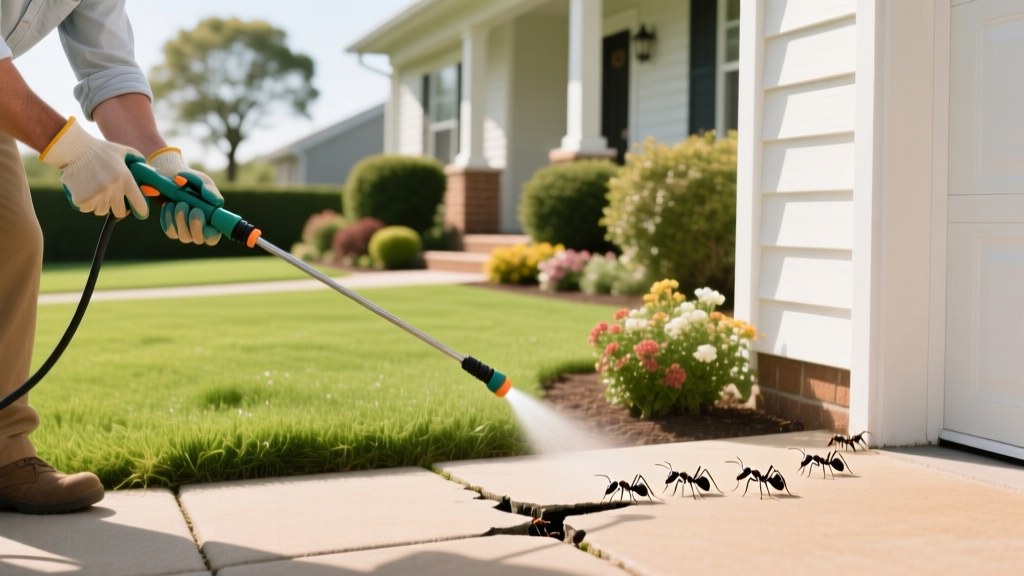
How to Get Rid of Ants Overnight: Yard-to-Home Defense
The 12-Hour Overnight Ant Elimination Protocol
When a sudden ant invasion breaches your home, the immediate goal is twofold: halt the visible indoor trail and intercept the outdoor colony before it sends reinforcements. Most homeowners make the critical mistake of spraying indoor trails with aerosol repellents like Raid. This triggers a survival mechanism called 'budding,' where the colony splinters into multiple sub-colonies, making the infestation exponentially worse. To successfully execute an overnight elimination, you must leverage the ant's social feeding behavior, known as trophallaxis, alongside a lethal yard perimeter barrier.
⚠ CRITICAL WARNING: Stop Spraying the Trail
Do not use contact killers (sprays, powders, or vinegar) on the ants you see marching across your floor. Those workers are scouts and foragers. You need them alive long enough to carry the poison back to the queen. Killing them on sight only alerts the colony to reroute through a different crack in your foundation.
Step 1: Deploy Non-Repellent Liquid Baits (Hours 1-4)
For sugar-feeding ants (like Odorous House Ants or Argentine Ants), borax-based liquid baits are the gold standard for overnight trail cessation. The Terro T300B Liquid Ant Bait (5.4% Sodium Borate) remains a top performer due to its high palatability. Alternatively, for professional-grade results, Advion Ant Gel (0.05% Indoxacarb) utilizes a unique bio-activation process: the active ingredient only becomes toxic after being metabolized by the ant's enzymes, ensuring it is not detected as a threat.
- Application Technique: Squeeze bait beads no larger than 1/8 inch in diameter directly onto the pheromone trail. Space them 2 inches apart.
- Expected Cost: Terro T300B retails for $5-$7 per 24-station pack; Advion Gel costs $25-$30 for a 4-tube pack.
- Overnight Result: You will see a massive swarm of ants on the bait within 2 hours. By morning, trail activity will drop by 90% as the workers are either dead or have retreated to the nest to feed the queen.
Step 2: Establish the Yard Perimeter Barrier (Hours 4-6)
While the bait is working indoors, you must sever the supply line from the yard. Ants nest in mulch beds, under concrete slabs, and in lawn thatch. Apply a granular bifenthrin barrier around the foundation of your home.
Using a broadcast spreader, apply Ortho Home Defense Insect Killer Granules (0.115% Bifenthrin) in a 2-foot-wide band extending outward from your foundation. Water the granules in with a hose for exactly 10 minutes to activate the chemical and push it into the soil where foraging ants travel. This creates a lethal, long-lasting perimeter that kills new scouts before they can reach your siding or weep holes. A 10-pound bag covers roughly 1,000 square feet and costs around $12.
Step 3: Targeted Mound Drenching for Fire Ants (If Applicable)
If your invasion stems from Red Imported Fire Ant mounds in the yard, indoor baits will fail because fire ants primarily seek proteins and fats, not the high-sugar syrups found in standard liquid baits. According to Texas A&M AgriLife Extension, the fastest way to eliminate a fire ant mound overnight is a liquid mound drench.
Mix 1 gallon of water with a Spinosad-based concentrate (such as Monterey Garden Insect Spray) or a fast-acting pyrethroid. Pour the entire gallon directly into the center of the mound, then sprinkle the surrounding 2-foot radius with a dry fire ant bait (like Advion Fire Ant Bait). The liquid drench kills the active workers and queens immediately, while the dry bait catches any satellite colonies attempting to escape the flooded mound.
Product Matrix: Fast-Acting vs. Colony-Killing Solutions
Selecting the wrong product is the primary reason overnight ant treatments fail. Use this matrix to match your specific ant species with the correct chemical mechanism.
| Product / Model | Active Ingredient | Target Species | 2026 Price Range | Trail Cessation | Colony Death |
|---|---|---|---|---|---|
| Terro T300B Liquid Bait | Borax (5.4%) | Sugar Ants, Odorous House | $5 - $7 | 12 - 24 Hours | 3 - 5 Days |
| Advion Ant Gel | Indoxacarb (0.05%) | All Sweet/Grease Ants | $25 - $30 | 24 - 48 Hours | 5 - 7 Days |
| Ortho Home Defense Granules | Bifenthrin (0.115%) | General Perimeter Crawlers | $12 - $15 | Immediate (Barrier) | N/A (Repellent/Kill) |
| Monterey Spinosad Concentrate | Spinosad | Fire Ants, Carpenter Ants | $18 - $22 | Immediate (Drench) | 24 - 48 Hours |
Identifying Your Ant Species for Targeted Treatment
The UC Agriculture and Natural Resources Integrated Pest Management program emphasizes that misidentification leads to treatment failure. Use this quick diagnostic framework before purchasing products:
- Odorous House Ants: Small, dark brown/black. Emit a strong coconut-like smell when crushed. Highly attracted to the high-fructose syrup in Terro baits. Nest outdoors in shallow soil under rocks or mulch.
- Carpenter Ants: Large (1/4 to 1/2 inch), often black with reddish joints. They do not eat wood; they excavate it to build galleries. Liquid sugar baits work poorly. You must locate the satellite nest in rotting wood and apply a dust insecticide like DeltaDust directly into the gallery holes.
- Pavement Ants: Small, dark, with distinct parallel lines on their heads. Often nest under driveways and patios. They have variable diets; if they ignore sweet baits, switch to a protein-based gel like Maxforce Quantum.
Common Failure Modes: Why Your Ants Came Back by Morning
If you wake up to a renewed ant invasion, one of the following edge cases likely occurred:
- The 'Clean Freak' Error: You wiped down the countertops with bleach or vinegar before placing the bait. This destroys the pheromone trail. Ants rely on these chemical highways; without them, they won't find the bait station. Leave the trail intact until the baiting is complete.
- Bait Aversion (Sugar Fatigue): Some colonies cycle between carbohydrate and protein preferences depending on their reproductive stage. If a Borax sugar bait is ignored after 12 hours, the colony is likely in a protein-feeding cycle. Switch to a gel bait containing Imidacloprid formulated with a protein base.
- Moisture Ignorance: Ants require high moisture. If your yard has poor drainage, leaky spigots, or heavy thatch, the colony will simply relocate to another damp area of your foundation rather than dying out. Fixing the moisture source is mandatory for long-term defense.
💡 Expert Landscaping Insight
Maintain a 12-inch 'pest-free zone' between your mulch beds and your home's foundation. Replace organic wood mulch near the house with inorganic gravel or river rock. Wood mulch retains moisture and provides ideal nesting habitat for both ants and termites, completely undermining your overnight chemical barriers.
Long-Term Yard Defense Post-Elimination
Once the overnight baiting and perimeter spraying have halted the immediate threat, transition to maintenance mode. The Environmental Protection Agency recommends focusing on exclusion and habitat modification over continuous chemical application. Seal all exterior cracks wider than 1/16 inch with silicone caulk, ensure downspouts divert water at least 4 feet away from the foundation, and keep tree branches trimmed at least 3 feet back from your roofline to eliminate aerial ant highways. By combining rapid-response non-repellent baits with strict yard perimeter management, you ensure that an overnight ant problem stays a one-time event rather than a seasonal recurrence.

