
Pest Control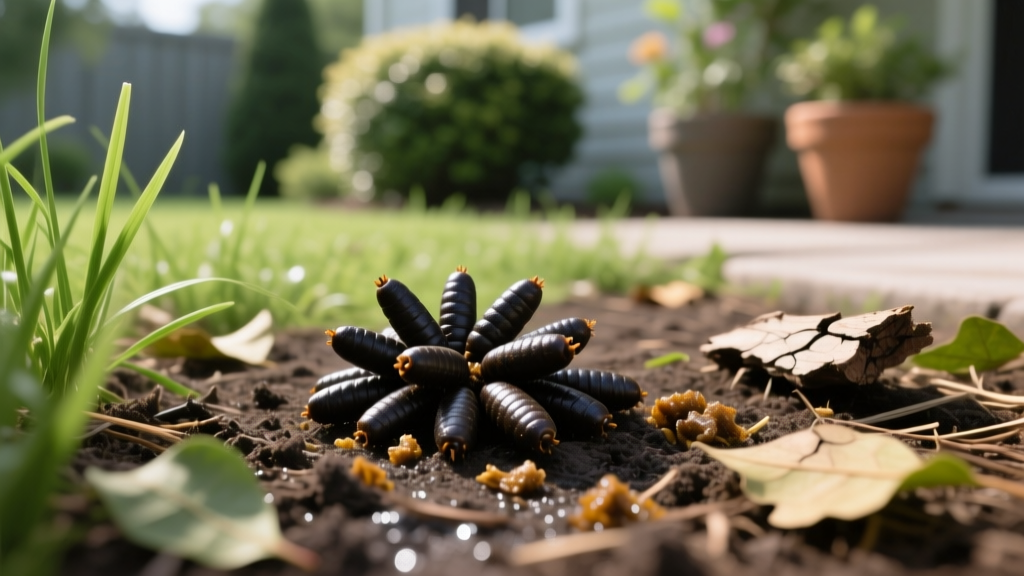
Palmetto Bug Feces: Identification and Yard Defense Guide
The Perimeter Threat: Understanding Palmetto Bug Activity
Palmetto bugs—the regional colloquialism for American cockroaches (Periplaneta americana) and Smokybrown cockroaches (Periplaneta fuliginosa)—are formidable perimeter pests in the Southeastern and Gulf Coast United States. While homeowners often focus on indoor sightings, the true battleground for population control is the yard. Finding palmetto bug feces in your landscaping is a critical biological indicator. It reveals not only the presence of an established colony but also pinpoints their primary harborage zones before they migrate indoors during temperature extremes or drought conditions.
Effective yard defense requires accurate identification of these droppings, strategic mapping of outdoor harborage sites, and the deployment of targeted chemical and environmental controls. According to the Environmental Protection Agency (EPA), integrated pest management (IPM) focusing on exterior sanitation and perimeter barriers is the most sustainable method for reducing outdoor cockroach populations.
Visual Identification: What Palmetto Bug Feces Looks Like
Accurately identifying roach droppings outdoors prevents misdiagnosis and ensures you apply the correct treatment. Palmetto bugs are large insects, and their feces reflect their size. The droppings are typically blunt, cylindrical, and dark brown to black. Because these insects digest cellulose and organic decay, their feces often have a slightly ridged or textured appearance, unlike the smooth droppings of smaller German cockroaches.
Comparative Feces Identification Matrix
Homeowners frequently confuse palmetto bug droppings with rodent or termite evidence. Use this diagnostic table to confirm the pest:
| Feature | Palmetto Bug Feces | Mouse Droppings | Drywood Termite Frass |
|---|---|---|---|
| Size | 1/8 to 3/16 inch long | 1/4 to 1/2 inch long | ~1/32 inch (poppy seed size) |
| Shape | Cylindrical with blunt ends | Spindle-shaped with pointed ends | Hexagonal, uniform pellets |
| Texture | Slightly ridged, may crumble | Smooth when fresh, hard when dry | Hard, smooth, distinct ridges |
| Color | Dark brown to black | Dark brown to black | Matches consumed wood color |
| Location | Damp mulch, leaf litter, bark | Near food sources, garages, walls | Directly below wood kick-out holes |
Expert Insight: If the droppings smear easily when pressed with a gloved finger or twig, they are likely palmetto bug feces or mouse droppings. Termite frass is heavily calcified and will not smear; it rolls like sand.
Strategic Yard Mapping: Where to Find Droppings Outdoors
Palmetto bugs require high moisture levels and decaying organic matter. Finding their feces acts as a GPS tracker for their nesting sites. When inspecting your yard, focus your flashlight beam on these high-probability zones:
- Thick Mulch Beds: Cypress and pine straw mulch retain the exact moisture levels Smokybrown cockroaches need. Part the mulch near the foundation to check the soil line.
- Tree Skirts and Palm Bases: The decaying fronds at the base of palm trees and the hollows of oak trees provide ideal aerial harborage.
- HVAC Condensate Lines: The constant drip of AC drain lines creates localized mud patches that attract roaches seeking hydration.
- Compost Bins and Leaf Piles: Fermenting organic matter generates heat and moisture, creating a perfect incubator for egg cases (oothecae).
- Utility Boxes and Meter Housings: The slight ambient heat from electrical boxes, combined with the undisturbed mulch around them, makes these prime nesting spots.
Health Warning: The Purdue University Extension notes that cockroach feces contain potent allergens and can harbor pathogens like Salmonella and E. coli. Always wear nitrile gloves and an N95 mask when disturbing heavy accumulations of roach guano in dry, dusty mulch beds to avoid inhaling aerosolized allergenic proteins.
The Perimeter Defense Protocol: Eradicating the Source
Once harborage zones are mapped via feces identification, deploy a two-pronged chemical defense: residual liquid barriers and granular baits. This combination targets both foraging nymphs and hidden breeding adults.
Step 1: Microencapsulated Liquid Barrier
Apply a microencapsulated liquid insecticide like Demand CS (Active ingredient: Lambda-cyhalothrin 9.7%). Microencapsulation allows the active ingredient to withstand UV degradation and irrigation, providing up to 90 days of residual control in outdoor soil.
- Mix Rate: 0.4 fluid ounces per gallon of water (0.03% concentration).
- Application Zone: Spray a continuous band 3 feet up the exterior foundation wall and 3 feet out into the adjacent soil and mulch.
- Cost: Approximately $45 for an 8 oz bottle, which yields roughly 20 gallons of finished solution—enough to treat the perimeter of an average 2,500 sq ft home multiple times.
Step 2: Granular Bait Deployment
Place a granular bait such as Advion Insect Granule Bait (Active ingredient: Indoxacarb 0.22%) directly into the mulch beds and leaf litter where feces were found. Indoxacarb is a bio-activated toxin; it only becomes lethal after the roach's digestive enzymes metabolize it, ensuring the roach lives long enough to return to the nest and spread the toxin via coprophagy (feces consumption) and cannibalism.
- Application Rate: 1.1 to 4.4 lbs per 1,000 square feet of landscaped bed area.
- Cost: Roughly $50 for a 25 lb bag.
Critical Failure Mode to Avoid: Never spray your liquid residual barrier (Demand CS) directly on top of your granular bait (Advion). Liquid insecticides often contain repellent solvents that will deter roaches from eating the bait. Apply the liquid barrier to the foundation and hardscapes, and toss the granular bait deep into the interior of the mulch beds where the liquid spray does not reach.
Habitat Modification: Making Your Yard Inhospitable
Chemical controls will fail if the environment continues to support massive population growth. Altering the yard's microclimate is mandatory for long-term defense.
Moisture and Grading Corrections
Palmetto bugs cannot survive without accessible water. Audit your yard's drainage. Ensure soil grading slopes away from the foundation at a minimum drop of 6 inches over the first 10 feet. Install splash blocks or extend downspouts at least 4 feet away from the house to prevent soil saturation near the perimeter. Repair leaky outdoor spigots and replace cracked irrigation emitters immediately.
The 12-Inch Mulch Rule
Wood mulch directly against siding acts as a biological bridge for pests. Rake all mulch, pine straw, and dense groundcover (like ivy or jasmine) back to create a bare, 12-inch buffer zone between the landscaping and the foundation. This exposed soil dries quickly in the sun, creating a hostile desert crossing that roaches are highly reluctant to traverse.
Phototaxis and Lighting Adjustments
Smokybrown cockroaches are strong fliers and are highly attracted to the ultraviolet and blue light spectrums emitted by standard mercury vapor and cool-white LED security lights. Replace exterior porch and garage bulbs with 2700K warm-white LEDs or specialized yellow 'bug bulbs' that emit light in the 570-590 nanometer wavelength range, which is virtually invisible to most nocturnal insects.
Frequently Asked Questions
Does finding palmetto bug feces outside mean my house is infested?
Not necessarily. Outdoor droppings indicate a perimeter population. However, if outdoor populations are allowed to boom, the statistical probability of them migrating indoors through weep holes, soffit gaps, and door sweeps increases exponentially during late summer heat waves or heavy autumn rains.
How long does it take for outdoor treatments to stop new droppings from appearing?
When combining a microencapsulated residual spray with an Indoxacarb granular bait, you should see a 70% to 80% reduction in visible feces within 14 days. Complete colony collapse in heavily wooded yard zones may take 30 to 45 days as the bait cycles through the nesting generations.
Can I use diatomaceous earth (DE) in the yard for palmetto bugs?
Food-grade diatomaceous earth is highly ineffective in outdoor landscaping. DE requires a completely dry environment to abrade the insect's waxy exoskeleton. The high humidity, dew, and irrigation inherent to mulch beds and Southern yards will render DE inert within hours of application. Stick to water-resistant granular baits and microencapsulated liquids for outdoor defense.

