
Pest Control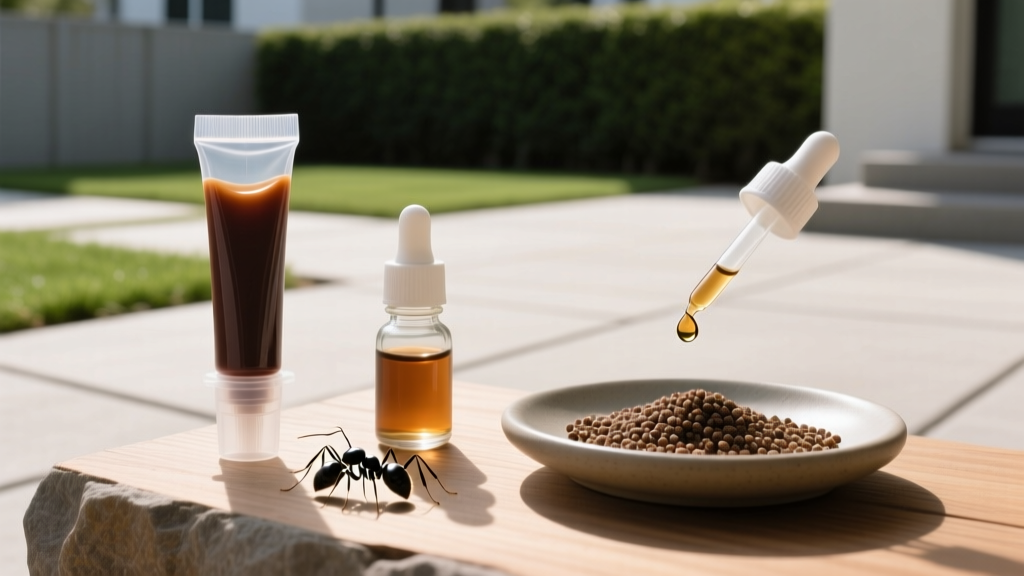
Best Ant Bait for Pavement Ants: Gel, Liquid, and Granule Strategies
The Biology of Hardscape Colonies: Why Contact Sprays Fail
Pavement ants (Tetramorium caespitum) are uniquely adapted to exploit the thermal mass of human infrastructure. By nesting beneath concrete driveways, asphalt shingles, and stone patios, they utilize the heat retained by these materials to accelerate brood development and survive freezing winter temperatures. When homeowners attempt to control these colonies with standard pyrethroid contact sprays (like bifenthrin or permethrin), they only kill the surface foragers. The queen, located 12 to 36 inches beneath the hardscape, remains entirely unaffected and simply accelerates egg production to replace the lost workers.
To achieve total colony elimination, you must use a slow-acting ant bait for pavement ants that foragers will carry back through the sub-slab tunnel networks. The toxicant must have a delayed action of 24 to 72 hours, allowing the trophallaxis process (food sharing) to distribute the lethal dose to the queen, larvae, and the colony's fungal gardens. According to Penn State Extension, pavement ant colonies can contain tens of thousands of workers, making the slow-kill transfer mechanism of baits the only viable long-term eradication strategy.
Seasonal Dietary Shifts: Matching the Bait Matrix
The most common reason baiting fails is a mismatch between the bait's nutritional matrix and the colony's current physiological needs. Pavement ants are omnivorous, but their dietary preferences shift drastically based on the season and the colony's reproductive cycle.
- Spring (March - May): Colonies are in peak brood-rearing mode. Queens require high levels of protein and lipids to produce eggs, and larvae need protein to develop. During this window, sugar-based liquid baits are often ignored. You must use protein/lipid-based gel baits or granular baits containing insect meal.
- Summer (June - August): The colony shifts to energy-gathering for foraging workers and the production of alates (winged reproductives). Carbohydrates become the primary target. High-sugar liquid baits (like borax-sucrose solutions) and sweet gel matrices are highly effective during this period.
- Autumn (September - November): Ants aggressively forage for both proteins and fats to build winter lipid reserves. A dual-baiting strategy (placing both sweet and protein baits simultaneously) yields the highest success rates in autumn.
Active Ingredient Comparison Matrix
Not all active ingredients perform equally in sub-slab environments. The following matrix compares the most effective toxicants used in professional and consumer-grade pavement ant baits available in 2026.
| Active Ingredient | Product Example | Speed of Kill | Transfer Effect (Trophallaxis) | Avg. Price (2026) |
|---|---|---|---|---|
| Indoxacarb (0.05%) | Syngenta Advion Ant Gel | 24 - 48 Hours | Excellent (Requires gut bioactivation) | $28 / 4x30g tubes |
| Fipronil (0.01%) | Maxforce Fleet Ant Bait Gel | 3 - 5 Days | Superior (Highly delayed, deep colony reach) | $32 / 4x27g tubes |
| Sodium Tetraborate (5.4%) | Terro T300B Liquid Ant Baits | 24 - 36 Hours | Moderate (Fast kill can limit deep transfer) | $6 / 12 stations |
| Abamectin B1 (0.011%) | Advance 375A Select Granular | 3 - 7 Days | Good (Ideal for protein/lipid spring feeding) | $24 / 2lb shaker |
Note: Indoxacarb is a pro-insecticide. It is biologically inactive until it encounters the specific digestive enzymes inside the ant's gut, which converts it into a potent oxadiazine neurotoxin. This biological lock prevents the bait from degrading in the environment and ensures it only becomes lethal after ingestion, maximizing the transfer effect.
Hardscape Placement Protocol for Concrete and Pavers
Proper placement is just as critical as the chemical formulation. Pavement ants do not forage randomly; they follow established pheromone trails along structural edges and expansion joints. Follow this protocol for optimal bait interception:
- Identify the Thermal Seams: Inspect your property between 10:00 AM and 2:00 PM. Look for the telltale small craters of displaced soil (frass) in the expansion joints of your driveway, the gaps between patio pavers, and the seam where the concrete meets the foundation.
- Clear the Debris: Use a wire brush or compressed air to clear loose sand, dirt, and dead organic matter from the crack. If the crack is clogged, foragers will not venture deep enough to encounter the bait.
- Apply Pea-Sized Dabs (Gels): For Indoxacarb or Fipronil gels, apply 0.5g dabs (the size of a standard pea) every 10 to 15 linear feet directly inside the crack. Do not draw long continuous lines; discrete dabs mimic natural food drops and encourage multiple foraging trips.
- Deploy Liquid Stations at Perimeters: For Borax-based liquid baits, place the pre-filled stations flush against the foundation wall or directly on top of the paver edge. Ensure the station is shaded from direct UV light, which degrades the sucrose matrix and crystallizes the liquid within 48 hours.
- Scatter Granules in Voids: If dealing with a retaining wall or a raised patio with deep sub-base voids, use a hand duster or shaker to apply Abamectin granules deep into the crevices where liquid and gel cannot reach.
Critical Warning: The Irrigation Interference Factor
Do not apply gel or granular baits to hardscapes if your automated sprinkler system is scheduled to run within the next 12 hours. Pavement ant trails are highly sensitive to moisture. A sudden influx of water from a sprinkler head will wash away the pheromone trail, reset the foraging map, and dissolve water-soluble gel matrices before the colony can consume a lethal dose. Suspend irrigation in the target zone for a minimum of 72 hours post-application.
Do not apply gel or granular baits to hardscapes if your automated sprinkler system is scheduled to run within the next 12 hours. Pavement ant trails are highly sensitive to moisture. A sudden influx of water from a sprinkler head will wash away the pheromone trail, reset the foraging map, and dissolve water-soluble gel matrices before the colony can consume a lethal dose. Suspend irrigation in the target zone for a minimum of 72 hours post-application.
Troubleshooting Bait Failures and Edge Cases
Even with the correct active ingredient, environmental and biological variables can disrupt the baiting process. If you are still observing active pavement ant mounds after 7 days of baiting, evaluate the following failure modes:
1. Competitive Food Sources
Pavement ants are opportunistic scavengers. If an unsealed trash receptacle, a pet food bowl, or a grease-stained grill is located within 20 feet of the colony, the foragers will bypass your bait in favor of the higher-calorie, more abundant natural food source. You must eliminate all alternative food sources within a 30-foot radius of the hardscape colony before the bait will be accepted.
2. Bait Shyness and Sub-Lethal Dosing
If you are using a fast-acting consumer bait (like high-concentration borax liquids) and the ants die before reaching the nest, the surviving colony members will associate the bait's scent with death. This phenomenon, known as bait shyness, causes the colony to physically wall off the baited tunnels. If you suspect bait shyness, remove all current bait, flush the cracks with water to remove residual toxicants, and switch to a completely different active ingredient matrix (e.g., moving from a sweet borax liquid to a protein-based Fipronil gel) after a 5-day waiting period.
3. Polydomous Colony Structures
According to the EPA guidelines on structural pest management, mature pavement ant infestations often develop polydomous (multi-nest) structures. A single driveway may harbor three or four interconnected but distinct queen chambers. If baiting eliminates activity on the south end of the driveway but the north end remains active, you are likely dealing with separate supercolonies. You must treat each distinct soil-frass mound as an independent target, adjusting your bait placement to address the specific foraging radius of each sub-colony.
When to Combine Baiting with Non-Repellent Liquids
In extreme cases where pavement ants have compromised the structural integrity of a patio base or are invading the interior slab of a home, baiting alone may take too long to prevent damage. In these scenarios, pest management professionals utilize a dual-protocol: applying a non-repellent liquid insecticide (such as Dinotefuran or Fipronil suspension) to the deep perimeter trench, while simultaneously placing gel baits on the surface. Because non-repellents are undetectable to the ants' chemoreceptors, the foragers walk through the treated zone, pick up the toxicant on their tarsi, and carry it back to the nest alongside the ingested bait, creating a devastating two-pronged colony collapse.

