
Pest Control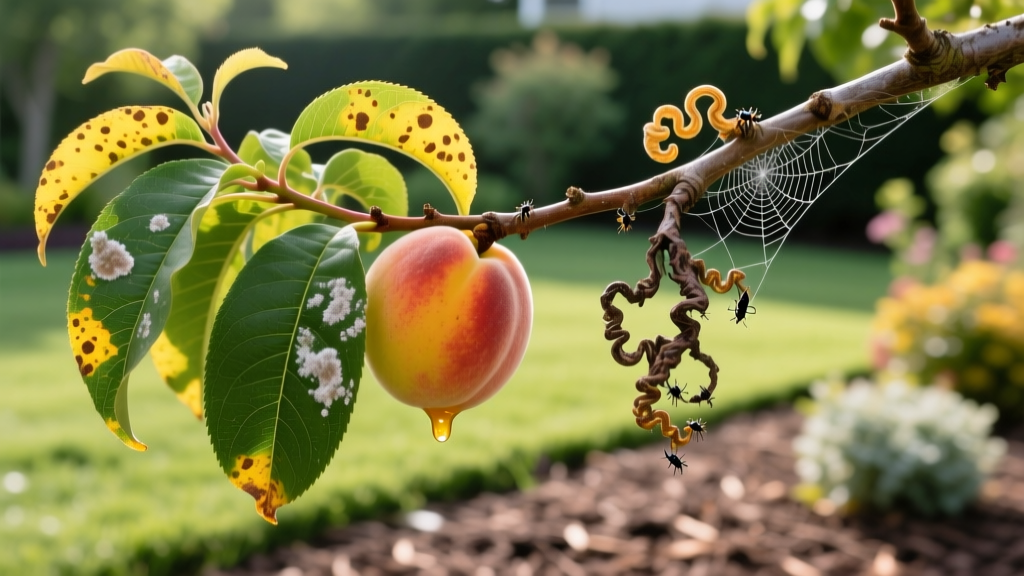
Diagnosing Peach Plant Diseases: Symptoms & Rescue Fixes
The Diagnostic Decision Tree: Match Symptoms to the Pathogen
When peach tree foliage begins blistering or fruit turns to brown mummies, immediate identification is critical. Misdiagnosing peach plant diseases leads to wasted chemical applications and irreversible tree decline. Use this visual decision tree to pinpoint the exact pathogen attacking your stone fruit.
Foliage & Shoot Symptoms
- Red, puckered, thickened leaves: Peach Leaf Curl (Taphrina deformans).
- Angular, water-soaked spots that turn brown and drop out: Bacterial Spot (Xanthomonas arboricola).
- Yellowing leaves with premature drop and shoot dieback: Cytospora Canker or severe root rot.
Fruit & Bark Symptoms
- Brown, velvety spore masses on ripening fruit: Brown Rot (Monilinia fructicola).
- Amber-colored sap (gummosis) oozing from sunken bark lesions: Cytospora Canker (Leucostoma persoonii).
- Small, dark, sunken pits on green fruit: Bacterial Spot or early-stage scab.
Critical Warning: Never apply copper-based fungicides to peach trees after the spring 'green-tip' stage. Peach foliage is highly sensitive to copper phytotoxicity, which will cause severe defoliation and mimic the damage of bacterial spot.
Top 4 Peach Plant Diseases: Identification and Rescue Fixes
1. Peach Leaf Curl (Taphrina deformans)
This fungal disease overwinters as spores in bark crevices and bud scales. When spring rains coincide with bud swell, spores infect emerging leaves, causing them to thicken, pucker, and turn vibrant red or purple before dropping.
The Rescue Fix: Once leaves are curled, fungicides are entirely ineffective. The rescue protocol shifts to tree survival. Apply a foliar spray of liquid kelp or seaweed extract (such as Neptune's Harvest at 1 oz per gallon) to provide immediate micronutrients the tree cannot absorb through damaged leaves. Rake and destroy all fallen leaves to reduce localized spore loads.
Long-Term Prevention: You must apply a dormant copper spray (like Bonide Liquid Copper Fungicide, approx. $15 per pint) twice: once at 50% leaf drop in autumn, and again at bud swell (before green tissue shows) in late winter. Mix at 2 fl oz per gallon of water.
2. Brown Rot (Monilinia fructicola)
Brown rot is the most destructive fruit disease in home orchards. It strikes blossoms (causing blossom blight) and ripening fruit, turning peaches into shriveled, gray-fuzz-covered 'mummies' that cling to the branches through winter.
The Rescue Fix: Immediately hand-pick all mummified fruit from the tree and the ground. Prune out any blighted twigs, cutting at least 4 inches below the visible necrotic margin. During the fruit development stage, apply Spectracide Immunox Multi-Purpose Fungicide (active ingredient: Myclobutanil). Mix at 1.5 fl oz per gallon and spray every 14 days, stopping 14 days before harvest.
3. Bacterial Spot (Xanthomonas arboricola)
Unlike fungal issues, bacterial spot thrives in warm, wet, and windy conditions. It creates 'shot-hole' lesions on leaves and deep, cracked pits on the fruit surface, rendering peaches unmarketable and susceptible to secondary rot.
The Rescue Fix: There is no chemical cure for active bacterial infections in the canopy. Stop overhead irrigation immediately to keep foliage dry. Prune the canopy to increase airflow and reduce humidity. For the following dormant season, apply a low-rate Bordeaux mixture or fixed copper spray to reduce overwintering bacterial populations on the bark.
4. Cytospora Canker (Leucostoma persoonii)
This opportunistic fungus attacks trees weakened by winter injury, drought, or poor pruning. It manifests as sunken, discolored bark lesions that exude copious amounts of amber gum (gummosis).
The Rescue Fix: Surgical excision is required. Sterilize your pruning saw or knife with 70% isopropyl alcohol. Carefully cut away the diseased bark until you reach clean, white, healthy wood. Ensure your cuts extend at least 2 inches past the visible margin of the canker. Do not apply wound paint; modern arboriculture dictates that leaving the excision open to air-dry promotes faster callus tissue formation. Dispose of the infected bark in municipal green waste, not your home compost.
Chemical & Organic Treatment Matrix
Selecting the correct compound is vital for managing peach plant diseases effectively. Below is a comparison of industry-standard treatments for home orchards.
| Active Ingredient | Brand Example | Target Disease | Est. Cost (16oz) | Application Rate |
|---|---|---|---|---|
| Copper Octanoate | Bonide Liquid Copper | Leaf Curl, Bacterial Spot | $14 - $18 | 2 fl oz / gallon (Dormant only) |
| Myclobutanil | Spectracide Immunox | Brown Rot, Scab | $16 - $20 | 1.5 fl oz / gallon (Spring/Summer) |
| Chlorothalonil | Ortho Garden Disease Control | Brown Rot, Leaf Spot | $12 - $15 | 3 fl oz / gallon (Pre-harvest) |
| Bacillus subtilis | Serenade Garden | Brown Rot (Organic) | $22 - $26 | 2 fl oz / gallon (7-day intervals) |
Pro-Tip for Organic Growers: If you are managing an organic orchard, Bacillus subtilis (Serenade) is highly effective against Brown Rot but requires strict adherence to a 7-day spray schedule during fruit ripening. It works by colonizing the fruit surface, leaving no physical space for fungal spores to germinate.
The 48-Hour Emergency Rescue Protocol
If your peach tree is exhibiting rapid decline, multiple dropping leaves, or widespread fruit rot, execute this 48-hour triage plan to save the tree's vascular system and salvage the remaining crop.
- Hour 1: Sanitation Sweep. Collect all fallen fruit, dropped leaves, and mummified peaches from the ground. Bag them in heavy-duty contractor trash bags and send them to a landfill. Do not compost.
- Hour 2: Canopy Triage. Prune out all dead wood, crossing branches, and visibly infected twigs. Dip your pruning shears in a 10% bleach solution between every single cut to prevent spreading bacterial or fungal pathogens to healthy tissue.
- Hour 4: Hydration Check. Insert a soil moisture probe 8 inches deep near the drip line. Cytospora canker often exploits drought-stressed trees. If the soil is dry, apply 15 gallons of water slowly via a soaker hose.
- Hour 12: Targeted Fungicide Application. Mix your chosen fungicide (e.g., Myclobutanil for brown rot) in a 2-gallon pump sprayer. Apply to the point of runoff, ensuring you coat the undersides of the remaining healthy leaves and the developing fruit.
- Hour 48: Nutritional Support. Apply a fast-acting liquid foliar fertilizer (high in potassium and phosphorus, low in nitrogen) to help the tree push new, healthy vegetative growth without stimulating the soft, succulent tissue that attracts pests and fungi.
Authoritative Sources
For ongoing monitoring and localized extension advice, consult these university-backed resources:
- Clemson University HGIC: Peach & Nectarine Diseases - Comprehensive breakdown of disease cycles and chemical control timelines.
- UC ANR Integrated Pest Management: Peach - Official state guidelines for monitoring and treating stone fruit pathogens in commercial and home orchards.

