
Pest Control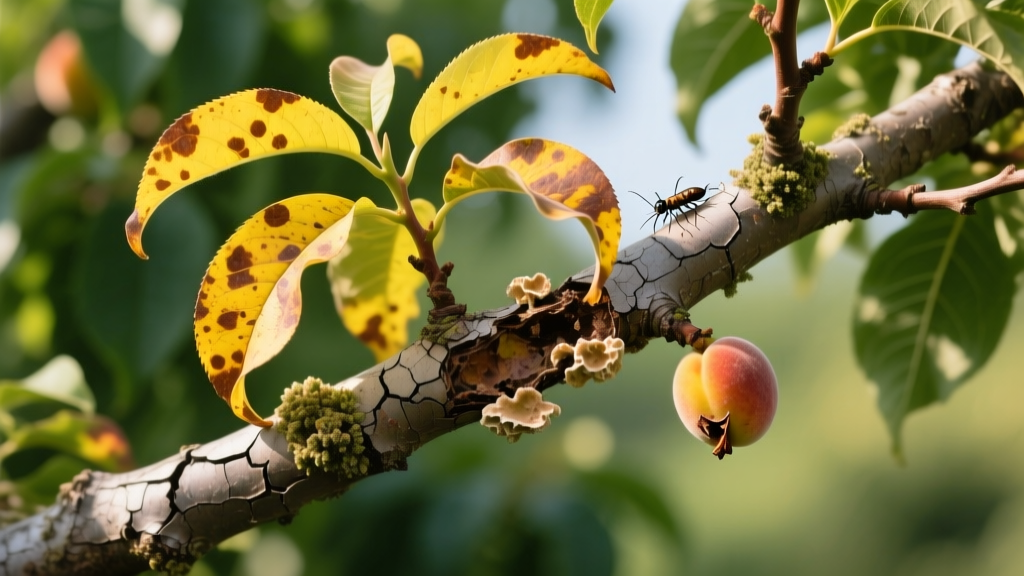
Peach Tree Diseases Images: Visual Diagnosis and Rescue Fixes
Visual Diagnostics: Matching Symptoms to Pathogens
Diagnosing peach tree diseases requires matching visual symptoms to specific fungal or bacterial life cycles. Relying on generic treatments wastes time and money, as a copper spray that halts bacterial spot will do nothing against the fungal pathogens causing brown rot. By comparing your tree's symptoms against verified peach tree diseases images and clinical descriptions, you can deploy targeted rescue fixes before the infection compromises the entire harvest.
⚠️ Critical Diagnostic Rule: Never apply foliar fungicides when daytime temperatures exceed 85°F. High heat combined with chemical surfactants causes severe phytotoxicity, burning the leaf cuticle and accelerating defoliation.
Peach Leaf Curl (Taphrina deformans)
Peach leaf curl is the most visually striking disease in the home orchard. The fungal pathogen Taphrina deformans overwinters in bark crevices and infects emerging tissue during cool, wet spring weather (48°F to 55°F).
Visual Identification
- Early Stage: Emerging leaves appear thickened, puckered, and pale green.
- Progression: Leaves curl tightly inward, turning vibrant red or purple.
- Late Stage: A velvety gray bloom (fungal spores) covers the leaf surface before the leaf turns black and drops.
Rescue Fixes and Management
Once you see the red, curled leaves matching typical peach tree diseases images for leaf curl, it is too late for fungicides. The fungus is already inside the leaf tissue. Your rescue protocol must shift from eradication to tree support.
- Defoliation & Disposal: Hand-pick severely curled leaves and dispose of them in municipal trash (not the compost pile) to reduce secondary spore spread.
- Nutritional Rescue: Apply a high-nitrogen foliar feed to stimulate a second flush of healthy leaves. Use Neptune's Harvest Hydrolyzed Fish Fertilizer (approx. $25 per gallon), diluted at 1 tablespoon per gallon of water, applied every 14 days until new growth emerges.
- Future Prevention: The only effective cure is a dormant-season spray. Apply a fixed copper fungicide (like Bonide Copper Fungicide, $16 per pint) or Chlorothalonil in late winter, exactly three weeks before bud swell.
Brown Rot (Monilinia fructicola)
Brown rot is the primary destroyer of peach fruit in humid climates. According to the University of California IPM guidelines, this pathogen can infect blossoms, twigs, and fruit, with the most devastating losses occurring 2 to 3 weeks before harvest.
Visual Identification
- Fruit: Small, circular brown spots that rapidly expand to rot the entire fruit, followed by concentric rings of grayish-brown spore masses.
- Twigs: Elliptical, sunken cankers with gum exudation (gummosis) on the bark surface.
- Mummies: Shriveled, blackened, desiccated fruit clinging to the branches through winter.
Fungicide Rotation Matrix
Repeated use of a single chemical class leads to rapid fungal resistance. Use this rotation schedule during the shuck-split and pre-harvest stages:
| Active Ingredient | Trade Name Example | FRAC Group | Est. Cost (2026) |
|---|---|---|---|
| Myclobutanil | Spectracide Immunox | Group 3 (DMI) | $12 / 16 oz |
| Captan | Bonide Captan | Group M4 | $22 / 8 oz |
| Chlorothalonil | Daconil WeatherStik | Group M5 | $18 / 16 oz |
Rescue Fix: If brown rot is actively spreading on ripening fruit, immediately harvest all salvageable fruit. Pick fruit that is slightly under-ripe (firm but showing background color change) and allow it to ripen indoors at 65°F. Spray the remaining tree canopy with Captan, ensuring thorough coverage of the fruit stems.
Bacterial Spot (Xanthomonas arboricola)
Bacterial spot thrives in warm, wet, and windy conditions. Unlike fungal diseases, bacterial pathogens require physical wounds or natural openings (stomata) to enter the plant tissue. Penn State Extension notes that certain peach cultivars, like 'Elberta', are highly susceptible, while 'Redhaven' shows moderate resistance.
Visual Identification
- Leaves: Small, angular, water-soaked spots that turn dark brown or black. The centers often drop out, creating a 'shot-hole' appearance.
- Fruit: Dark, sunken, pinpoint lesions on the fruit skin that crack as the peach expands, creating entry points for secondary brown rot infections.
Rescue Protocol for Bacterial Infections
Fungicides are entirely ineffective against bacterial spot. Management relies on bactericides and rigorous sanitation.
💡 Expert Insight: Copper sprays can cause severe leaf drop (phytotoxicity) on peaches if applied during humid weather or when temperatures exceed 75°F. Always add a buffering agent or use a pre-formulated fixed copper like Copper octanoate to reduce free copper ions in the solution.
- Summer Pruning: Sterilize your bypass pruners with a 10% bleach solution or 70% isopropyl alcohol between every single cut. Remove heavily infected shoots showing severe shot-hole damage to improve canopy airflow.
- Bactericide Application: Apply Oxytetracycline (e.g., FireLine 17WP) during the early post-bloom period if available in your state. For home growers, use a low-rate Bordeaux mixture (1 pound copper sulfate, 1 pound hydrated lime, 1 gallon water) strictly during the dormant season.
- Nutritional Support: Avoid excessive nitrogen fertilization, which promotes the soft, succulent tissue growth that bacteria easily penetrate. Maintain soil pH between 6.0 and 6.5.
Orchard Sanitation: The Ultimate Preventative Fix
According to Clemson University's Home & Garden Information Center, cultural controls form the backbone of long-term disease management. No chemical rescue fix will succeed if the local inoculum load remains high.
The 4-Step Sanitation Checklist
- Mummy Removal: Hand-pick all desiccated, rotted fruit (mummies) from the branches and the ground before bud break in late winter.
- Canker Excision: Prune out all twig cankers associated with brown rot and bacterial spot, making cuts at least 6 inches below the visible margin of the lesion.
- Canopy Thinning: Thin the fruit to one peach every 6 to 8 inches along the branch. This prevents fruit-to-fruit contact, which creates microclimates of high humidity where brown rot spores germinate.
- Debris Management: Rake and destroy fallen leaves in autumn to eliminate overwintering sites for scab and leaf curl pathogens.
Accurate visual diagnosis using verified peach tree diseases images and clinical symptom matching allows you to stop guessing and start executing targeted rescue protocols. By combining precise chemical timing with aggressive orchard sanitation, you can salvage infected trees and protect your future yields.

