
Pest Control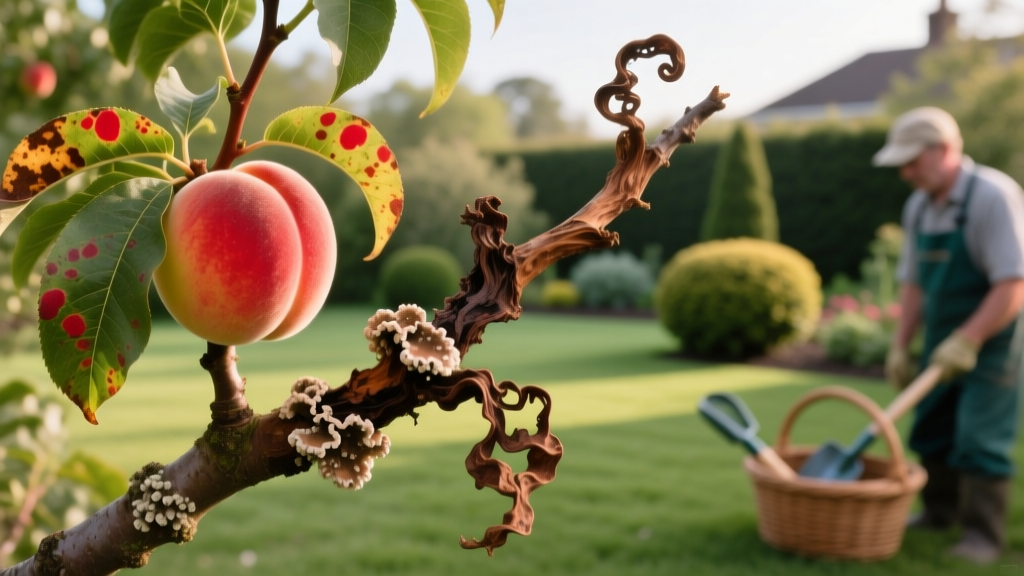
Peach Tree Fruit Diseases: Symptom Diagnosis & Rescue Fixes
The Diagnostic Framework for Stone Fruit Pathology
When peach tree fruit diseases strike, the window to save your current crop is measured in days, not weeks. Fungal spores and bacterial pathogens exploit the microclimates within a dense canopy, turning a promising harvest into a rotting mess. Home orchardists often misidentify these pathogens, applying copper sprays for fungal issues or fungicides for bacterial infections, which wastes money and accelerates crop loss. Accurate symptom diagnosis paired with targeted, immediate rescue protocols is the only way to salvage a compromised peach crop.
Below is a rapid-triage matrix to help you identify the specific pathogen attacking your fruit based on visual symptoms and seasonal timing.
| Disease Pathogen | Primary Fruit Symptom | Secondary Signs & Failure Modes | Peak Infection Window |
|---|---|---|---|
| Brown Rot (Monilinia fructicola) | Small, firm brown spots that rapidly expand into concentric rings. | Gray/buff spore masses; fruit mummifies and clings to branches. | Bloom through harvest (worst in wet, humid spells). |
| Peach Scab (Venturia carpophila) | Small, olive-green to black velvety spots (freckles) on the fruit skin. | Spots merge, causing skin cracking which invites secondary rot. | Shuck fall to 6 weeks post-bloom. |
| Bacterial Spot (Xanthomonas arboricola) | Dark, sunken, angular lesions that crack deeply as fruit expands. | Lesions weep bacteria; severe defoliation of surrounding leaves. | Early spring rains; wind-driven spread. |
| Rusty Spot (Podosphaera leucotricha) | White, powdery patches that turn rust-colored and rough. | Stunted fruit growth; premature dropping of severely infected peaches. | Shuck split to pit hardening. |
Brown Rot: The Ultimate Crop Killer
Brown rot is the most destructive of all peach tree fruit diseases. A single infected fruit can produce millions of spores, spreading via wind and rain to neighboring peaches. If you see a firm, brown lesion on a green or ripening peach, the infection is already systemic in that fruit.
Rescue Fix: Fungicide Rotation and Mummy Removal
You cannot cure a peach that already shows brown rot symptoms. The rescue protocol focuses on halting the spread to the remaining healthy fruit.
- Sanitation Sweep: Immediately pick and destroy (burn or bag in black plastic) all symptomatic fruit. Do not compost them. Check the ground for dropped fruit and the branches for hardened, shriveled "mummies" from last year, which act as primary inoculum sources.
- Canopy Thinning: Prune out any water sprouts or crossing branches to increase airflow. Fungal spores require 3 to 6 hours of continuous leaf wetness to germinate; opening the canopy reduces humidity and drying time.
- Chemical Intervention: Apply a systemic fungicide like Myclobutanil (e.g., Spectracide Immunox Multi-Purpose Fungicide, approx. $18 for 16 oz) or a protectant like Captan (e.g., Bonide Captan, approx. $22 for 8 oz). Alternate between these two modes of action (FRAC Group 3 and FRAC Group M4) every 7 to 10 days to prevent pathogen resistance.
CRITICAL WARNING: Pre-Harvest Intervals (PHI)
Always check the PHI on your fungicide label. Captan typically has a 3-day PHI, meaning you cannot spray it within 3 days of picking the fruit. Myclobutanil often has a 14-day PHI. Spraying too close to harvest violates federal pesticide regulations and leaves unsafe chemical residues on your food.
Always check the PHI on your fungicide label. Captan typically has a 3-day PHI, meaning you cannot spray it within 3 days of picking the fruit. Myclobutanil often has a 14-day PHI. Spraying too close to harvest violates federal pesticide regulations and leaves unsafe chemical residues on your food.
Peach Scab: Managing Cosmetic and Structural Damage
Peach scab, often called "freckles," is primarily a cosmetic issue on the fruit skin. However, when lesions merge, the fruit skin loses its elasticity. As the peach swells during the pit-hardening stage, the scabbed skin cracks. These fissures become open doorways for brown rot and insect infiltration, turning a cosmetic issue into a total crop loss scenario.
Rescue Fix: Protectant Sprays and Thinning
If scab appears shortly after shuck fall, you must establish a protective chemical barrier on the developing fruit.
- Active Ingredients: Chlorothalonil (e.g., Ferti-lome Broad Spectrum Fungicide) or Thiophanate-methyl (e.g., Cleary 3336F). Chlorothalonil is strictly a protectant and must be applied before rain events.
- Application Rate: Mix Chlorothalonil at 3 tablespoons per gallon of water. A mature, 12-foot peach tree requires 1.5 to 2 gallons of mixed solution to achieve full coverage. Spray until the point of runoff, ensuring the top and bottom of all leaves and the entire fruit surface are coated.
- Fruit Thinning: Hand-thin peaches so they are spaced at least 6 to 8 inches apart on the branch. Touching fruit creates micro-pockets of high humidity where scab spores thrive and where spray coverage fails.
Bacterial Spot: When Fungicides Fail
Bacterial spot is notoriously difficult to manage because it is caused by Xanthomonas arboricola, a bacterium that is completely immune to standard fungal treatments. Symptoms manifest as dark, angular, water-soaked spots on leaves that eventually fall out (shot-hole effect), and deep, sunken, cracked pits on the fruit.
"Bacterial spot management in home orchards relies heavily on dormant-season copper applications and planting resistant cultivars like 'Redhaven' or 'Contender'. Once the bacteria infect the green fruit in spring, chemical rescue options are severely limited and often cause phytotoxicity."
— Adapted from Clemson University Home & Garden Information Center pathology guidelines.
Rescue Fix: Copper-Mancozeb Tank Mixes
If you are mid-season and bacterial spot is aggressively defoliating your tree and scarring fruit, your only chemical rescue option is a copper-based bactericide. However, copper is highly phytotoxic to peach foliage in the summer, causing leaf yellowing and premature drop.
To mitigate this, commercial growers use a tank mix of copper and Mancozeb, often buffered with zinc sulfate. For home growers, use a liquid copper soap (e.g., Monterey Liqui-Cop, approx. $15 for 16 oz) at the absolute lowest label rate (usually 0.5 to 1 tablespoon per gallon). Apply only in the late evening to slow drying and reduce leaf burn. According to Penn State Extension, maintaining soil nutrition, particularly avoiding excess nitrogen which promotes lush, susceptible tissue, is critical for minimizing bacterial spot severity.
The Dormant Season Reset: Eradicating Overwintering Pathogens
Rescue fixes during the growing season only manage active outbreaks. To permanently reduce the disease pressure in your orchard, you must execute a rigorous dormant season protocol.
Step-by-Step Dormant Eradication
- The Mummy Shake: In late winter, physically shake the branches and use a long pole to knock off all mummified fruit left from the previous year. Rake the orchard floor and remove all debris.
- Dormant Copper Spray: At the delayed-dormant stage (just before bud swell, when buds are swollen but showing no green tissue), apply a high-concentration fixed copper spray (e.g., Kocide 3000 or Bonide Liquid Copper). This kills overwintering bacterial spot and brown rot spores on the bark.
- Horticultural Oil: Tank-mix the copper with a dormant horticultural oil (like Bonide All Seasons Horticultural Oil) at a 2% to 3% rate. The oil smothers overwintering insect eggs (like peach tree borers and scale) and helps the copper adhere to the rough bark.
By combining rapid symptom identification with precise chemical timing and aggressive sanitation, you can intercept peach tree fruit diseases before they compromise your entire harvest. Always calibrate your sprayer, respect pre-harvest intervals, and prioritize canopy airflow to create an environment where pathogens cannot thrive.

