
Pest Control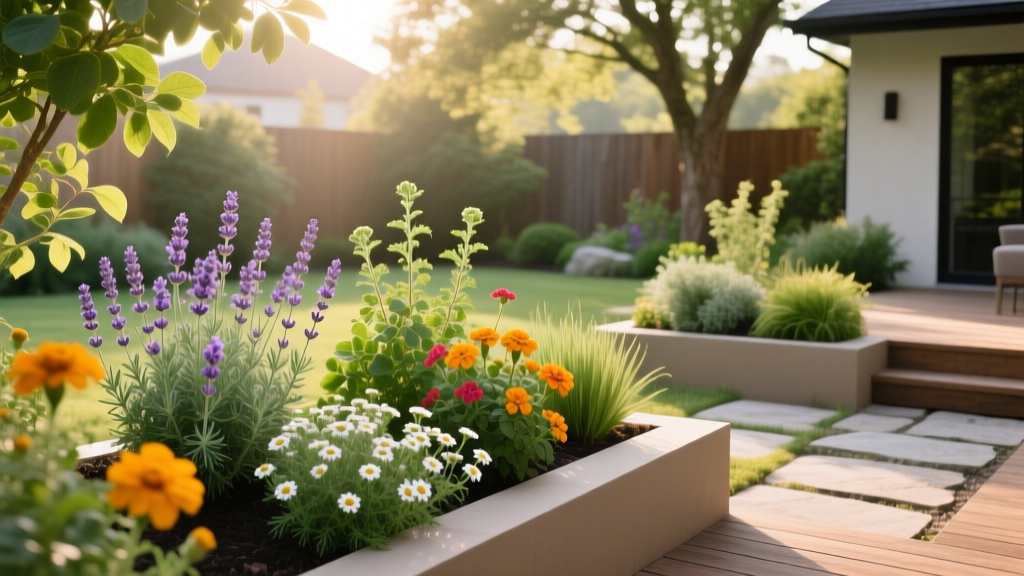
Best Perennials That Repel Mosquitoes for Yard Defense
The Mechanics of Botanical Spatial Repellency
When designing a natural yard defense system against biting insects, it is critical to understand the difference between contact repellency and spatial repellency. Perennials that repel mosquitoes do not generate an invisible, impenetrable forcefield. Instead, they emit Volatile Organic Compounds (VOCs)—such as nepetalactone, linalool, and pulegone—that mask the carbon dioxide and lactic acid signatures humans emit, confusing the insects' olfactory receptors. According to the Environmental Protection Agency (EPA), plant-based essential oils can effectively deter pests, but their efficacy in an open-air environment depends entirely on planting density, wind conditions, and physical agitation of the foliage.
To build a functional botanical barrier, you must select hardy, climate-appropriate perennials and deploy them using high-density clustering. Below is a comprehensive, data-driven guide to the most effective perennials for mosquito defense, complete with cultivar recommendations and deployment strategies.
Top Perennials for Mosquito Defense: Species & Cultivar Guide
1. Catmint (Nepeta cataria)
Catmint is arguably the most scientifically validated mosquito-repelling perennial. The active compound, nepetalactone, has been shown in laboratory vapor-phase tests to be significantly more effective than DEET at repelling mosquitoes. However, in real-world yard applications, the VOCs must be released into the immediate air column.
- Recommended Cultivar: 'Walker's Low' (sterile, won't reseed aggressively, blooms continuously).
- USDA Zones: 3-9.
- Spacing & Soil: Plant 18-24 inches apart in well-draining soil. Tolerates poor, rocky soil and drought once established.
- Pro-Tip: Brushing against catmint when walking past your garden beds fractures the trichomes on the leaves, releasing a localized burst of nepetalactone.
2. English Lavender (Lavandula angustifolia)
Lavender produces high concentrations of linalool and camphor, compounds that are highly offensive to mosquitoes, ticks, and moths. The challenge with lavender is its strict environmental requirements; it will quickly succumb to root rot in heavy, moisture-retentive soils.
- Recommended Cultivar: 'Phenomenal' (highly resistant to foliar diseases and humidity stress) or 'Munstead' (compact, ideal for patio borders).
- USDA Zones: 5-9.
- Spacing & Soil: 24-30 inches apart. Requires alkaline soil (pH 6.5-7.5). Amend heavy clay with expanded shale or coarse grit, never peat moss.
3. Ornamental Alliums (Allium spp.)
While not a traditional "fragrant" herb, ornamental alliums release sulfur-based compounds (allicin and related thiosulfinates) that disrupt mosquito host-seeking behavior. They are exceptionally valuable because they provide vertical architectural interest while functioning as a biological pest deterrent.
- Recommended Cultivar: 'Purple Sensation' or 'Globemaster'.
- USDA Zones: 4-9.
- Spacing & Soil: Plant bulbs 4-8 inches deep in autumn, spacing 8-12 inches apart. They require full sun and sharp drainage.
4. Rosemary (Salvia rosmarinus)
Rosemary is a woody perennial that thrives in hot, arid climates. Its pine-like scent contains 1,8-cineole and camphor, which mask human scent profiles. When burned as dried clippings in a fire pit, rosemary produces a smoke that is highly effective at clearing a seating area of flying insects.
- Recommended Cultivar: 'Tuscan Blue' (upright, culinary grade) or 'Prostratus' (trailing, ideal for retaining walls).
- USDA Zones: 8-10 (must be overwintered indoors or treated as an annual in colder zones).
- Spacing & Soil: 24-36 inches apart. Highly drought-tolerant.
Warning: The Mint Family Trap
Plants like Lemon Balm (Melissa officinalis), Peppermint (Mentha × piperita), and Pennyroyal are heavily cited online as mosquito repellents. While their VOC profiles (pulegone, menthol, citronellal) are excellent, they spread via aggressive subterranean rhizomes and will rapidly choke out neighboring perennials. If you must use mints for yard defense, plant them in sunken, bottomless 15-gallon nursery pots buried flush with the soil line, or use commercial high-density polyethylene (HDPE) bamboo root barriers buried to a depth of 24 inches.
Plants like Lemon Balm (Melissa officinalis), Peppermint (Mentha × piperita), and Pennyroyal are heavily cited online as mosquito repellents. While their VOC profiles (pulegone, menthol, citronellal) are excellent, they spread via aggressive subterranean rhizomes and will rapidly choke out neighboring perennials. If you must use mints for yard defense, plant them in sunken, bottomless 15-gallon nursery pots buried flush with the soil line, or use commercial high-density polyethylene (HDPE) bamboo root barriers buried to a depth of 24 inches.
Perennial Mosquito Repellent Comparison Matrix
| Plant Species | Active VOC Compound | Zones | Sun / Water Needs | Invasiveness Risk |
|---|---|---|---|---|
| Catmint | Nepetalactone | 3-9 | Full Sun / Low | Low (Spreads slowly) |
| English Lavender | Linalool, Camphor | 5-9 | Full Sun / Very Low | None |
| Ornamental Allium | Sulfur compounds | 4-9 | Full Sun / Low | Low (Self-seeds mildly) |
| Rosemary | 1,8-Cineole | 8-10 | Full Sun / Low | None |
| Lemon Balm* | Citronellal | 4-9 | Part Sun / Medium | EXTREME (Rhizomatous) |
The 'Patio Envelope' Planting Strategy
According to the American Mosquito Control Association (AMCA), source reduction (eliminating standing water) is the primary defense against breeding populations. However, for adult mosquito deterrence in localized seating areas, spatial repellents must be deployed using the Patio Envelope Strategy.
The Patio Envelope involves creating a dense, 3-to-5-foot perimeter of VOC-emitting perennials immediately surrounding your primary outdoor living spaces. Because botanical VOCs dissipate rapidly in open air, a plant located 20 feet away provides zero localized protection.
- Define the Perimeter: Measure a 3-foot radius around your patio furniture, fire pit, or deck stairs.
- Layer by Height: Plant ornamental alliums in the back row (24-36 inches tall), catmint in the middle tier (18-24 inches), and trailing rosemary or creeping thyme at the ground level.
- Force Agitation: Plant these perennials close to walkways where brushing against them is unavoidable. The physical friction breaks the leaf cuticles, releasing the essential oils directly into the breathing zone of the people walking by.
Troubleshooting: Why Your Botanical Barrier Might Fail
Many homeowners plant a few lavender bushes and assume they are protected, only to be bitten. Here are the most common failure modes in botanical yard defense:
Edge Case 1: Wind Shear and Thermal Updrafts
If your patio is situated in a high-wind corridor or experiences strong thermal updrafts from a south-facing concrete slab, the VOC plume will be dispersed before it reaches a concentration high enough to confuse a mosquito's maxillary palp. In windy yards, you must supplement perennials with physical windbreaks (like privacy screens or dense hedges) to trap the volatile oils in the seating area.
Edge Case 2: The 'Passive Plant' Fallacy
Perennials are not electronic diffusers. On cool, still mornings, the emission rate of essential oils from an intact leaf is negligible. To maximize spatial repellency during peak mosquito hours (dawn and dusk), you must actively agitate the plants. Keep a pair of gardening shears nearby and lightly crush or bruise the foliage of your catmint and lemon balm 15 minutes before hosting an outdoor gathering.
"Botanical repellents are highly effective in enclosed or semi-enclosed spaces, or when the leaf surface area is mechanically damaged to release a sudden burst of terpenes and alkaloids. Relying purely on passive emission in an open landscape will yield inconsistent results against aggressive species like Aedes albopictus."
Cost & Sourcing for 2026
When budgeting for a perennial mosquito defense perimeter, purchasing mature 1-gallon or 3-gallon shrubs is rarely cost-effective for large borders. For the 2026 planting season, nursery pricing averages $16 to $28 for a 1-gallon lavender or rosemary plant.
Instead, source deep-root plugs (72-cell trays) from specialized perennial wholesalers or native plant nurseries. Plugs typically cost $3.50 to $6.00 each. Because catmint, lavender, and alliums establish rapidly, planting plugs in early spring will yield the same biomass as 1-gallon pots by mid-summer, saving you 60-70% on your total landscaping budget while ensuring a denser, more uniform VOC barrier.

