
Pest Control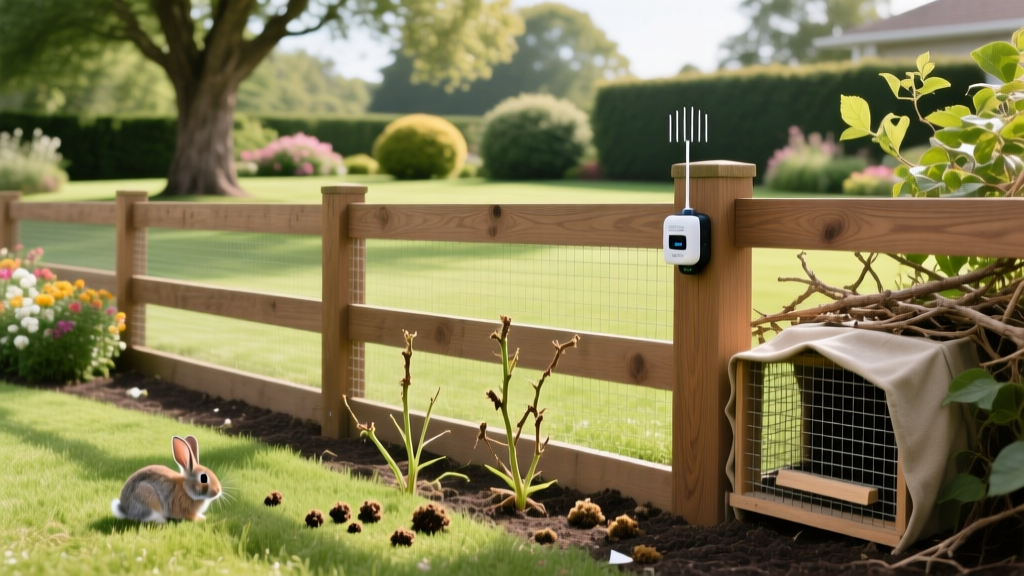
How to Get Rid of Rabbits Permanently: Fencing, Repellents & Traps
The Reality of Rabbit Damage in Home Landscapes
Eastern cottontails and other wild rabbit species can consume up to one-third of their body weight in vegetation daily. When they target your garden, the damage is immediate and severe: cleanly clipped stems at a 45-degree angle, stripped bark on young saplings, and shallow dug-out burrows beneath sheds. While many homeowners resort to temporary scare tactics, learning how to get rid of rabbits permanently requires a structural and ecological approach. Rabbits are highly adaptable, prolific breeders (a single female can produce up to 35 kits a year), and they quickly habituate to superficial deterrents. Permanent removal relies on a triad of physical exclusion, targeted chemical repellents, and habitat modification.
The 3-Pronged Permanent Rabbit Defense Matrix
Before purchasing products, evaluate your property against these three core strategies. Relying on just one method rarely yields permanent results.
| Strategy | Upfront Cost | Maintenance Level | Permanent Efficacy |
|---|---|---|---|
| Physical Exclusion (Fencing) | $2.50 - $4.50 / linear ft | Low (Annual inspection) | 95-100% |
| Chemical & Sensory Repellents | $15 - $35 per application | High (Reapply every 30 days) | 60-75% (Variable) |
| Habitat Modification | $0 - $150 (Labor/Tools) | Low (Seasonal clearing) | 80% (Reduces carrying capacity) |
Why Common Scare Tactics Fail
To achieve permanent results, you must abandon methods that rely on rabbit fear responses. According to the University of California Integrated Pest Management (IPM) program, rabbits quickly realize that stationary threats pose no actual danger. Avoid investing in the following:
- Ultrasonic Repellents: Field studies consistently show wild rabbits are largely unaffected by high-frequency sound emitters, and the sound waves do not penetrate dense foliage.
- Predator Urine (Coyote/Fox): The scent degrades within 48 hours under UV light and rain. Furthermore, urban rabbits have a diminished innate fear of predators they do not regularly encounter.
- Plastic Owls and Snakes: Unless these decoys are moved to a new location every 12 hours, rabbits will map them as static landscape features and ignore them within three days.
Step 1: Physical Exclusion (The Only True Permanent Fix)
If you want to know how to get rid of rabbits permanently, the answer is physical exclusion. Standard chicken wire (which often features a 2-inch hexagonal mesh) is ineffective because young rabbit kits can easily squeeze through the gaps.
Specs for Rabbit-Proof Garden Fencing
For perimeter garden fencing, purchase 16-gauge galvanized steel hardware cloth with a 1/2-inch or 1-inch mesh. The fence must be at least 2 feet tall above ground. However, height is only half the battle; rabbits are proficient diggers. You must construct an 'L-footer' underground barrier.
Pro Tip: The L-Footer Trench Method
Dig a trench 6 inches deep and 6 inches wide along the outside of your fence line. Bend the bottom 6 inches of your hardware cloth outward at a 90-degree angle and lay it flat in the trench. Cover with soil. When a rabbit attempts to dig directly under the fence, they hit the wire mesh and lack the cognitive ability to back up two feet to start digging outside the barrier.
Dig a trench 6 inches deep and 6 inches wide along the outside of your fence line. Bend the bottom 6 inches of your hardware cloth outward at a 90-degree angle and lay it flat in the trench. Cover with soil. When a rabbit attempts to dig directly under the fence, they hit the wire mesh and lack the cognitive ability to back up two feet to start digging outside the barrier.
Protecting Individual Trees and Shrubs
Rabbits girdle young trees in winter by eating the bark all the way around the trunk, which severs the phloem and kills the tree. Protect saplings by wrapping the base with 1/4-inch hardware cloth. The cylinder should be 18 inches tall, buried 2 inches into the soil, and stand at least 2 inches away from the trunk to allow for growth and prevent moisture trapping against the bark.
Step 2: Chemical Repellents (The Secondary Layer)
While fencing protects the core garden, repellents are necessary for protecting open lawn areas and ornamental beds where fencing is aesthetically unfeasible. Repellents work via two mechanisms: odor-based (area repellents) and taste-based (contact repellents).
Active Ingredients That Actually Work
Not all repellents are created equal. Look for products containing these specific active ingredients:
- Putrescent Whole Egg Solids: Products like Liquid Fence Deer & Rabbit Repellent (approx. $16 for a 32oz ready-to-use bottle) rely on the scent of decaying protein. This triggers a biological avoidance response in rabbits, signaling a predator kill site. It is highly effective but must be applied to dry foliage and allowed to cure for 6 hours before rain.
- Capsaicin (Hot Pepper Wax): A taste-based deterrent. When a rabbit bites a treated leaf, the intense oral irritation conditions them to avoid the plant. Note that capsaicin breaks down rapidly in high UV index environments and requires reapplication every 14 to 21 days.
- Thiram (Tetramethylthiuram disulfide): A powerful fungicide that doubles as a bitter-tasting animal repellent. It is highly effective but generally restricted to non-edible ornamental plants and dormant winter applications due to toxicity regulations.
Application Rule of Thumb: Never apply liquid repellents when temperatures are below freezing or above 85°F. Extreme temperatures cause the liquid to freeze on the leaf cuticle or rapidly evaporate, leading to phytotoxicity (leaf burn) on sensitive ornamentals like hostas and hydrangeas.
Step 3: Habitat Modification (Removing the Draw)
Rabbits require dense cover to feel secure from aerial predators like hawks and owls. If your property offers ideal hiding spots, new rabbits will quickly replace any that are removed. The Internet Center for Wildlife Damage Management (ICWDM) emphasizes that reducing the 'carrying capacity' of your yard is vital for permanent deterrence.
Clearing and Filling Protocols
- Brush Piles: Remove all brush piles, tall weed patches, and stacked lumber within 50 feet of your garden perimeter.
- Shed Skirting: Rabbits love to dig beneath sheds and decks. Install heavy-duty lattice or hardware cloth skirting around the base of all outbuildings, ensuring it is trenched 4 inches into the ground.
- The Newspaper Burrow Test: If you find an active burrow, do not immediately fill it with concrete or dirt, as trapping a rabbit inside will result in a decomposing odor and digging elsewhere. Instead, wad up a piece of newspaper and stuff it loosely into the hole. Check it in 48 hours. If the paper is undisturbed, the burrow is abandoned. Fill it with a mixture of 3/4-inch crushed gravel and topsoil to prevent future excavation.
Trapping and Relocation: Legal and Ethical Realities
Many homeowners attempt to use live traps (such as the Havahart 1077 Two-Door Trap, priced around $45) to catch and release rabbits. However, relocation is rarely a permanent or humane solution.
Warning: Relocation Laws and Survival Rates
In many states and municipalities, it is strictly illegal to relocate trapped wildlife without a specific nuisance wildlife permit. Furthermore, studies show that relocated rabbits suffer a mortality rate exceeding 75% within the first two weeks due to stress-induced enteritis, exposure to unfamiliar predators, and territorial disputes with established local rabbit populations. Lethal euthanasia by a licensed wildlife control operator is often the legally and ethically mandated route for trapped animals.
In many states and municipalities, it is strictly illegal to relocate trapped wildlife without a specific nuisance wildlife permit. Furthermore, studies show that relocated rabbits suffer a mortality rate exceeding 75% within the first two weeks due to stress-induced enteritis, exposure to unfamiliar predators, and territorial disputes with established local rabbit populations. Lethal euthanasia by a licensed wildlife control operator is often the legally and ethically mandated route for trapped animals.
Frequently Asked Questions
Will planting rabbit-resistant flowers keep them out of my yard?
Plants like marigolds, lavender, and snapdragons are less palatable to rabbits, but they are not a physical barrier. During early spring when tender new shoots are scarce, or during drought conditions, rabbits will eat 'resistant' plants out of sheer caloric necessity. Use plant selection as a supplementary tactic, not a primary defense.
How high can a cottontail rabbit jump?
Eastern cottontails are not high jumpers; they typically clear a maximum of 2 feet vertically. However, they can squeeze through incredibly small gaps. A 2-foot tall fence is sufficient for height, provided the mesh is 1 inch or smaller to prevent them from pushing their heads through and collapsing the wire.
Do motion-activated sprinklers work for permanent removal?
Motion-activated sprinklers (like the Orbit 62100 Yard Enforcer, approx. $60) are excellent for seasonal protection of specific garden beds. However, they are not a permanent, year-round solution. They must be winterized to prevent pipe freezing, and the batteries require frequent replacement. They are best used as a temporary deterrent during the peak spring planting season.

