
Pest Control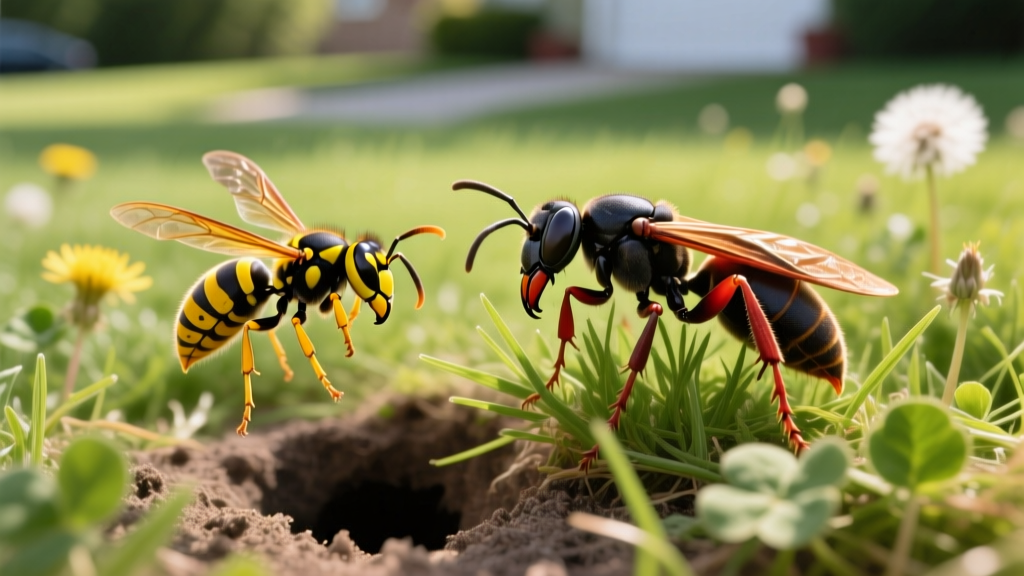
Pest Control for Ground Hornets: Yellowjackets vs Cicada Killers
The Taxonomic Reality: Why "Ground Hornets" Don't Exist
The term "ground hornet" is a widespread colloquial misnomer that leads to severe mismanagement of lawn pests. True hornets (such as the European hornet or bald-faced hornet) are aerial nesters that build large, papery football-shaped structures in trees, shrubs, or under eaves. When homeowners encounter stinging insects emerging from holes in the turf, they are almost exclusively dealing with one of two entirely different species: colonial ground-nesting yellowjackets (Vespula spp.) or solitary cicada killer wasps (Sphecius speciosus).
Accurate identification is the mandatory first step in effective pest control for ground hornets. Applying an aggressive colony-eradication strategy to a solitary, beneficial cicada killer is an ecological waste, while treating a massive yellowjacket colony with a superficial surface spray will result in a dangerous retaliatory swarm.
Diagnostic Matrix: Yellowjackets vs. Cicada Killers
| Feature | Ground-Nesting Yellowjackets | Cicada Killer Wasps |
|---|---|---|
| Aggression Level | Extreme. Will swarm and pursue threats for 50+ feet. | Very Low. Females sting only if physically crushed; males cannot sting. |
| Nest Structure | Deep subterranean paper cavities (12-24 inches deep). | Individual 6-10 inch vertical burrows in bare soil. |
| Entrance Mound | Small, quarter-sized hole with a faint fan of loose soil. | Prominent 2-inch high horseshoe-shaped mound of excavated dirt. |
| Colony Size | 500 to 5,000+ workers per nest. | Solitary. One female per burrow. |
| Primary Diet | Scavengers (meat, sweets, other insects). | Adults drink nectar; females hunt cicadas to feed larvae. |
Step-by-Step Eradication Protocol for Yellowjackets
Yellowjackets are highly defensive and their nests often feature lateral tunnels branching off the main vertical shaft. According to University of Minnesota Extension, late summer and early autumn are when colonies reach peak population and maximum aggression.
CRITICAL FAILURE MODE TO AVOID: Never use expanding aerosol foams (like Spectracide Wasp Freeze) on ground nests. These foams only penetrate 2 to 3 inches. Yellowjackets will simply plug the treated tunnel from the inside and excavate a secondary exit three feet away in your landscape bed. Furthermore, never plug the hole with dirt after treatment; the trapped colony will dig a new exit and remain active.
1. Locate at Noon, Treat at Dusk
Observe the nest entrance during the heat of the day when foraging traffic is highest to pinpoint the exact location. Do not approach the nest. Return to treat the nest between 9:00 PM and 11:00 PM when temperatures drop below 70°F. At these temperatures, yellowjackets are lethargic and all foragers have returned to the subterranean cavity.
2. Mandatory PPE and Lighting
Standard gardening gloves are insufficient; yellowjacket stingers (approx. 3mm) easily penetrate woven fabrics. Wear a full-body bee suit (e.g., VEVOR Professional Bee Suit, ~$85), thick goatskin leather welding gloves, and closed-toe leather boots. Pro Tip: Wasps are highly attracted to white light. Use a headlamp equipped with a red LED filter; yellowjackets cannot process the red light spectrum, allowing you to illuminate the nest entrance without triggering a swarm response.
3. Apply Waterproof Insecticide Dust
Liquid drenches soak into the surrounding soil before reaching the deep nest cavity. Instead, use a waterproof insecticide dust like DeltaDust (0.05% Deltamethrin, ~$28 per 1lb bottle) or Tempo Dust (1% Cyfluthrin, ~$25 per 10oz). Using a handheld bulb duster (like the JT Eaton 371, ~$18), puff a generous cloud of dust directly into the entrance hole. The foraging wasps will track the dust deep into the paper nest on their bodies, transferring the lethal dose to the queen and larvae over 48 to 72 hours.
Managing Solitary Cicada Killers: The Cultural Control Route
If your lawn features dozens of individual, horseshoe-shaped dirt mounds in mid-to-late summer, you are hosting cicada killers. The University of Florida IFAS notes that these wasps are highly beneficial predators that control cicada populations and are generally non-aggressive. Broad-spectrum chemical eradication is ecologically harmful and unnecessary.
Cicada killers strictly prefer dry, sandy, sparsely vegetated soil for nesting. You can force them to relocate by altering the turf microenvironment:
- Intensive Irrigation: Apply 1 to 1.5 inches of water per week using oscillating sprinklers during their active nesting months (July and August). They will abandon saturated soil.
- Canopy Density: Raise your mower deck to 3.5 or 4.0 inches. Cicada killers avoid digging through thick, dense turfgrass canopies.
- Overseeding Bare Patches: Heavily overseed thin areas of your lawn with competitive grass varieties like Tall Fescue or Kentucky Bluegrass in the fall to eliminate the bare dirt they seek the following summer.
DIY vs. Professional Pest Control: Cost & Expectation Matrix
While DIY dusting is highly effective for accessible yellowjacket nests, certain scenarios demand professional intervention. Refer to the Ohio State University Extension guidelines on stinging insect management for structural proximity risks.
| Scenario | DIY Approach (Cost & Time) | Professional Exterminator (Cost & Time) |
|---|---|---|
| Standard Lawn Nest (Center of Yard) | $45 for dust/duster. 3 nights for full colony collapse. | $150 - $250 per visit. 24-hour guarantee. |
| Nest Near Foundation/HVAC Intake | Not Recommended. High risk of insects flooding into the home. | $200 - $350. Includes structural void treatment and exclusion sealing. |
| Cicada Killers (Widespread Mounds) | $0 (Cultural lawn modifications). 1 season for relocation. | $300+ for broadcast spraying (Ecologically discouraged). |
Post-Treatment Lawn Recovery
Once the yellowjacket colony is entirely inactive (verify by observing zero traffic at the hole for three consecutive days), address the physical damage to your turf. Subterranean yellowjacket nests leave behind hollow cavities that can cause the ground to sink or collapse underfoot or under mower wheels.
- Fill the Void: Mix a 50/50 blend of screened topsoil and fine compost. Pour the mixture directly into the nest entrance until it overflows slightly.
- Flatten and Seed: Tamp the soil down firmly with the back of a steel landscaping rake. Broadcast a handful of grass seed matching your existing turf over the patched area.
- Rake Existing Mounds: For cicada killer mounds, simply use a stiff-tine leaf rake to break apart the loose, excavated soil and distribute it evenly across the surrounding grass. This acts as a natural, free topdressing that will work its way into the turf canopy with the next rainfall.
Lawn Care Pro Tip: Never roll your lawn with a heavy water-filled roller in an attempt to flatten yellowjacket or cicada killer mounds. This severely compacts the soil profile, destroys grass root zones, and exacerbates drainage issues, creating the exact dry, hard-packed conditions that invite next year's pest generation.

