
Pest Control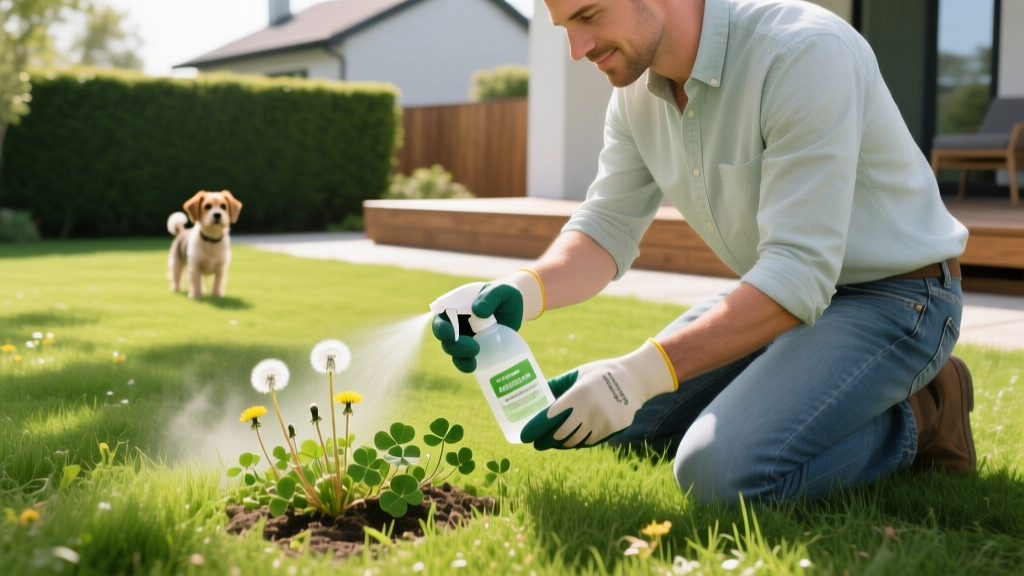
Pet Friendly Grass Weed Killer: Spot-Treating Common Weeds
The Chemistry of Pet-Safe Weed Control
Finding an effective pet friendly grass weed killer requires understanding the biochemical differences between broadleaf weeds, grassy weeds, and your turfgrass. Most conventional herbicides rely on synthetic auxins (like 2,4-D) or systemic inhibitors (like glyphosate) that pose documented risks to canine and feline endocrine systems. For spot-treating specific weed species without compromising pet safety, homeowners must pivot to two primary active ingredients: Chelated Iron (FeHEDTA) and high-concentration Fatty/Acetic Acids.
Chelated iron works through a fascinating biological loophole. Broadleaf weeds (dandelions, clover) lack the ability to regulate iron uptake, leading to fatal oxidative stress and tissue necrosis within hours. Turfgrasses, however, possess an enzyme mechanism that safely sequesters excess iron, making FeHEDTA highly selective and entirely non-toxic to mammals once dried. According to the EPA guidelines on safe pesticide use, iron-based herbicides are classified as minimum-risk alternatives when formulated correctly, bypassing the stringent re-entry intervals required for synthetic chemicals.
Spot-Treatment Decision Matrix by Weed Species
Not all pet-safe killers work on all weeds. Using acetic acid on broadleaves often results in top-kill only, while using FeHEDTA on crabgrass will yield zero results. Use this matrix to select the correct product for your specific infestation.
| Weed Species | Active Ingredient | Top Product (2026 Market) | Est. Cost | Pet Re-entry Time |
|---|---|---|---|---|
| Dandelion, Plantain | FeHEDTA (Chelated Iron) | Fiesta Lawn Weed Killer | $45 / gal | Immediately after drying |
| White Clover, Ground Ivy | FeHEDTA + Surfactant | Natria Lawn Weed Control | $22 / 32oz | Immediately after drying |
| Crabgrass, Goosegrass | 20-30% Acetic Acid | Natural Armor 30% Vinegar | $35 / gal | 12-24 hours (paw irritant) |
| Nutsedge (Yellow/Purple) | Pelargonic Acid | BioSafe Weed & Grass Killer | $40 / gal | Immediately after drying |
Broadleaf Weeds: The FeHEDTA Protocol
For deep-rooted perennials like dandelions and broadleaf plantain, Fiesta Lawn Weed Killer remains the industry standard for pet-safe spot treatment. The active ingredient, Iron HEDTA, must be applied at a precise rate of 2.5 fluid ounces per gallon of water. Because it is a contact and systemic hybrid, you will observe the dandelion leaves turning black and desiccating within 12 to 24 hours.
Expert Insight: FeHEDTA does not always translocate fully to the taproot on the first application if the weed is mature. Schedule a follow-up spot treatment exactly 21 days after the initial application to eliminate any surviving root crown tissue. Do not mow the lawn for 48 hours before or after application to maximize the leaf surface area available for absorption.
Grassy Weeds: The Acetic Acid Approach
Crabgrass and goosegrass are monocots, meaning they share the same cellular structure as your desirable lawn grass. FeHEDTA will not harm them. To spot-treat grassy weeds safely around pets, you must use a non-selective desiccant like 30% acetic acid (e.g., Natural Armor or Green Gobbler). Household 5% vinegar is entirely ineffective on mature crabgrass; it will merely burn the leaf tips while the plant continues to photosynthesize.
Because 30% acetic acid is non-selective, it will kill your desirable turf if oversprayed. You must use a shielded sprayer nozzle or a foam-applicator brush to paint the chemical directly onto the crabgrass leaves. While acetic acid is naturally derived, a 30% concentration is a severe irritant to canine and feline paw pads. Keep pets off the treated zones until the liquid has fully evaporated and the soil pH has neutralized, typically 12 to 24 hours.
Critical Warning: The 'Natural' Citrus Oil Trap
Toxicity Alert for Cat Owners
Many commercial 'organic' weed killers list d-limonene (citrus oil) as an active ingredient. While effective at dissolving the waxy cuticle of weeds, d-limonene is highly toxic to felines. Cats lack the hepatic enzyme (glucuronyl transferase) required to metabolize terpenes. Exposure to citrus-oil-based weed killers—either through direct skin contact or grooming paws that have walked on treated grass—can cause severe hepatic failure and central nervous system depression. Always verify the ingredient list and strictly avoid d-limonene if cats roam your yard. For more on household toxins, consult the ASPCA Animal Poison Control database.
Step-by-Step Spot-Treatment Execution
To maximize the efficacy of your pet friendly grass weed killer while preventing turf damage, follow this calibrated application protocol:
- Temperature Check: Never apply FeHEDTA when ambient temperatures exceed 85°F (29°C). High heat accelerates the oxidation process, causing temporary phytotoxicity (blackening) in your desirable cool-season turfgrasses like Kentucky Bluegrass and Fescue.
- Sprayer Calibration: Use a dedicated 1-gallon pump sprayer fitted with a flat-fan nozzle (8002 or 8004 tip). Adjust the pressure to 25-30 PSI to produce medium-coarse droplets. Fine misting causes drift, which can damage nearby ornamental shrubs.
- The 'Wet-But-Not-Dripping' Rule: Apply the solution until the weed leaves are uniformly wet, but stop before the liquid begins to drip onto the soil. Soil drenching wastes the product and reduces foliar absorption rates by up to 40%.
- Post-Application Irrigation: Wait 12 hours after spraying FeHEDTA before irrigating the lawn. If rain is forecast within 6 hours of application, postpone the treatment. Acetic acid treatments, however, require only 2 hours of dry time to achieve maximum cellular destruction.
Common Application Mistakes That Harm Pets or Grass
- Adding Dish Soap to FeHEDTA: Many DIY guides suggest adding dish soap as a surfactant. Commercial FeHEDTA formulations already contain optimized non-ionic surfactants. Adding household soap can alter the pH, causing the iron to precipitate out of the solution and rendering the weed killer useless.
- Spot-Treating Wet Grass: Morning dew dilutes acetic acid solutions on contact. Always apply grassy weed killers between 10:00 AM and 2:00 PM when leaf surfaces are completely dry.
- Ignoring Soil Compaction: Weeds like plantain and spurge thrive in compacted soil. If you do not pair your pet-safe spot treatment with core aeration, the weeds will return from seed within the same growing season. Chemical control must be paired with cultural practices.
Frequently Asked Questions
Can I let my dog eat the grass after a FeHEDTA treatment?
While FeHEDTA is non-toxic and iron is a common dietary supplement, consuming large amounts of treated grass immediately after application can cause mild gastrointestinal upset in dogs. It is best practice to restrict grazing access until the spray has completely dried (usually 1-2 hours).
Will 30% vinegar change my soil pH and hurt my lawn?
Spot-treating small patches of crabgrass with 30% acetic acid will temporarily lower the soil pH in that immediate 6-inch radius. However, soil buffering capacity quickly neutralizes this effect. It will not cause long-term acidification unless you are repeatedly drenching the same square footage weekly.
Are corn gluten meal products effective for spot-treating existing weeds?
No. Corn gluten meal is strictly a pre-emergent herbicide. It inhibits root formation in germinating seeds but has absolutely zero post-emergent activity on existing dandelions, clover, or crabgrass. Do not waste money using it as a spot-treatment for visible weeds.
For comprehensive lawn renovation strategies that naturally suppress weeds without chemicals, refer to Penn State Extension's guide on cultural weed control. By maintaining a dense turf canopy through proper nitrogen cycling and mowing heights, you drastically reduce the need for even the safest spot-treatments.

