
Pest Control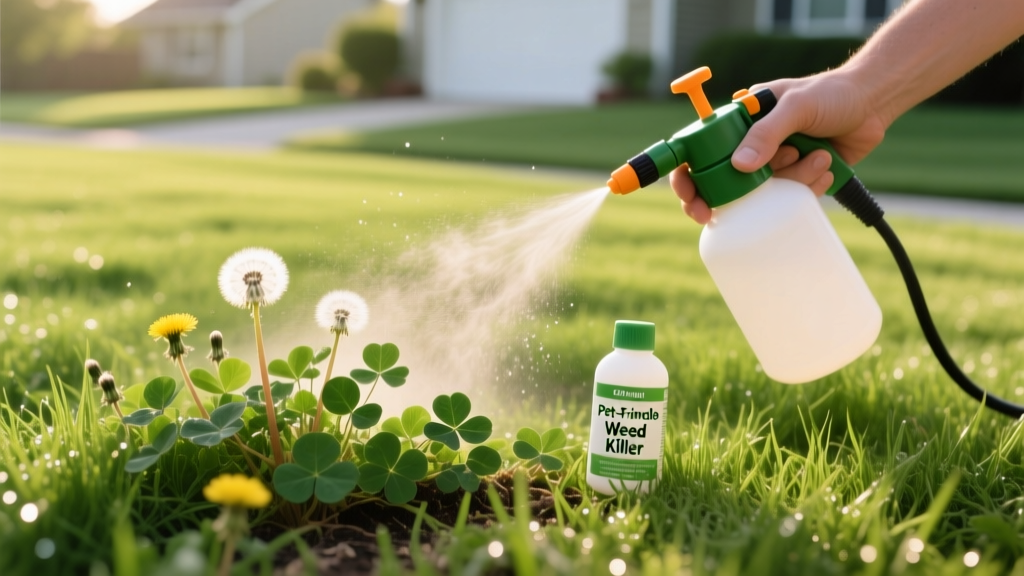
Spot-Treating Common Weeds With a Pet Friendly Weed Killer for Lawns
The Science Behind Pet-Safe Herbicides (And What to Avoid)
When managing localized weed outbreaks in yards frequented by dogs and cats, the margin for error with synthetic chemicals is zero. Traditional broadleaf herbicides rely on synthetic auxins like 2,4-D, dicamba, and MCPP. While highly effective at disrupting plant growth, these compounds pose documented risks to pets. Dogs can absorb these chemicals through their paw pads or ingest them while grooming after walking on treated turf. According to the ASPCA Animal Poison Control, exposure to synthetic lawn herbicides can lead to gastrointestinal distress, lethargy, and in severe cases, neurological symptoms.
⚠️ Toxicity Warning: Never use products containing glyphosate, 2,4-D, or atrazine for spot-treatments in pet-accessible zones. Even after drying, synthetic residues can bind to soil particles and be tracked indoors on paws, creating long-term exposure risks.
Instead, a true pet friendly weed killer for lawns utilizes naturally occurring compounds that target specific plant metabolic pathways without leaving toxic soil residues. As of 2026, the most reliable active ingredients for spot-treatment are chelated iron (FeHEDTA), horticultural acetic acid, and d-limonene. These compounds break down rapidly in the environment and are recognized by the EPA Safer Choice program as low-risk alternatives for residential use.
Active Ingredient Comparison Matrix
Selecting the right organic chemistry depends entirely on the weed species you are targeting and your specific turfgrass type. Below is a breakdown of the top three pet-safe active ingredients available on the market.
| Active Ingredient | Brand Examples | Avg. Cost (2026) | Best Target Weeds | Pet Re-entry Time |
|---|---|---|---|---|
| Chelated Iron (FeHEDTA) | Fiesta, Natria Lawn Weed Control | $32 - $38 / 32oz | Dandelion, Plantain, Thistle | Once dry (2-4 hrs) |
| Acetic Acid (20% Vinegar) | Green Gobbler, Harris 30% | $22 - $28 / Gallon | Clover, Chickweed, Annuals | Once dry (1-2 hrs) |
| d-Limonene (Citrus Oil) | Avenger, BurnOut | $25 - $30 / 32oz | Small annuals, Seedlings | Once dry (1-2 hrs) |
Species-Specific Spot-Treatment Protocols
A common failure mode when using organic herbicides is applying a one-size-fits-all approach. Pet-safe chemicals are generally contact or semi-systemic, meaning application technique and timing are critical. Here is how to spot-treat the three most common lawn weeds using safe chemistry.
1. Dandelions (Taraxacum officinale)
Dandelions possess a deep, brittle taproot that can regenerate if severed. Contact herbicides like 20% vinegar will only burn the top growth, guaranteeing regrowth within 14 days. For dandelions, you must use a chelated iron (FeHEDTA) formulation.
- Mechanism: Broadleaf weeds cannot regulate iron uptake the way monocot grasses do. FeHEDTA causes rapid iron toxicity in the weed, leading to cellular necrosis that travels down into the taproot.
- Application Rate: Spray the dandelion rosette until just before runoff (approximately 1.5 oz per square foot of weed canopy). Do not drench the surrounding soil.
- Timing: Apply when temperatures are between 60°F and 80°F. Avoid applications within 48 hours of mowing, as the weed needs maximum leaf surface area to absorb the iron.
2. White Clover (Trifolium repens)
White clover spreads via above-ground stolons (runners). While FeHEDTA works on clover, 20% horticultural acetic acid is often more cost-effective and faster-acting for localized clover patches, provided you have a warm-season turfgrass like Bermuda or Zoysia.
- Mechanism: Acetic acid rapidly destroys plant cell membranes, causing immediate desiccation.
- The Catch: Vinegar is non-selective. It will burn any grass it touches. If you have a cool-season lawn (Kentucky Bluegrass, Fescue), stick to FeHEDTA to avoid killing your turf.
- Application Technique: Use a shielded sprayer or a paintbrush to apply the vinegar directly to the clover stolons and leaves. Apply in the early afternoon when the sun is brightest to accelerate the burn-down process.
3. Broadleaf Plantain (Plantago major)
Plantain leaves feature a thick, waxy cuticle that repels water-based sprays. If you spray FeHEDTA or vinegar directly onto plantain without a surfactant, the droplets will simply roll off onto the soil.
- The Fix: You must add a Non-Ionic Surfactant (NIS) to your tank mix. Add 0.25% v/v (roughly 1/2 teaspoon per quart of herbicide) of a pet-safe NIS like methylated seed oil or a dedicated horticultural surfactant.
- Targeting: Aim for the center crown of the plantain where the newest, least waxy leaves are emerging. The surfactant will break the surface tension, allowing the active ingredient to penetrate the cuticle.
Environmental Variables and Failure Modes
Organic and pet-safe herbicides are highly sensitive to environmental conditions. Ignoring these variables is the primary reason homeowners abandon organic weed control.
🌡️ Temperature Thresholds for FeHEDTA
Chelated iron is incredibly safe for pets, but it can be dangerous to your lawn if applied incorrectly. Never apply FeHEDTA when ambient temperatures exceed 85°F. In high heat, the grass's metabolic rate slows, and it loses its ability to sequester the iron, resulting in severe phytotoxicity (blackening of the turfgrass). If a heatwave is approaching, pause all iron-based spot treatments.
Rainfastness and Irrigation
Unlike synthetic herbicides that require immediate watering-in to protect the soil profile, pet-safe contact and semi-systemic herbicides need time to dry on the leaf surface. FeHEDTA requires a minimum of 3 hours of dry weather post-application. Acetic acid requires 1 to 2 hours. If rain is in the forecast within these windows, delay the application. Furthermore, do not run your automated sprinkler system for at least 24 hours after spot-treating, as washing the herbicide off the leaf and into the soil renders it completely ineffective.
Troubleshooting Common Mistakes
Even with the right pet friendly weed killer for lawns, execution errors can lead to poor results. Review this checklist if your weeds are surviving treatment:
- Mistake 1: Mowing too soon. Cutting the lawn removes the very leaf tissue required to absorb the herbicide. Always wait at least 48 hours after application before mowing.
- Mistake 2: Under-dosing. Organic herbicides do not translocate as efficiently as synthetics. A light misting will only stunt the weed. You must spray to the point of wetness (just before dripping).
- Mistake 3: Ignoring the growth stage. Spot-treatments are most effective on young, actively growing weeds. Mature, bolting dandelions or woody plantain stalks have restricted vascular flow, making it difficult for FeHEDTA to reach the root system. Treat weeds when they are in the rosette stage.
Frequently Asked Questions
Will horticultural vinegar change my soil pH?
A common myth is that spraying 20% vinegar will permanently acidify your soil, harming your grass. According to the University of Minnesota Extension, acetic acid breaks down rapidly in the soil profile through microbial action. The temporary pH drop is localized to the top millimeter of soil and dissipates within 48 to 72 hours, posing no long-term threat to turfgrass health or soil biology.
Is corn gluten meal a good spot-treatment?
No. Corn gluten meal is strictly a pre-emergent herbicide. It inhibits root formation in germinating seeds but has absolutely zero post-emergent activity on existing weeds. It is excellent for preventing crabgrass in the spring, but useless for spot-treating visible dandelions or clover in the summer.
How many applications are needed for complete control?
Because pet-safe options are generally less aggressive than synthetic auxins, expect to make 2 to 3 applications spaced 14 to 21 days apart for deep-rooted perennials like dandelions and plantain. Annual weeds like chickweed or spurge usually succumb to a single application of acetic acid or d-limonene.

