
Pest Control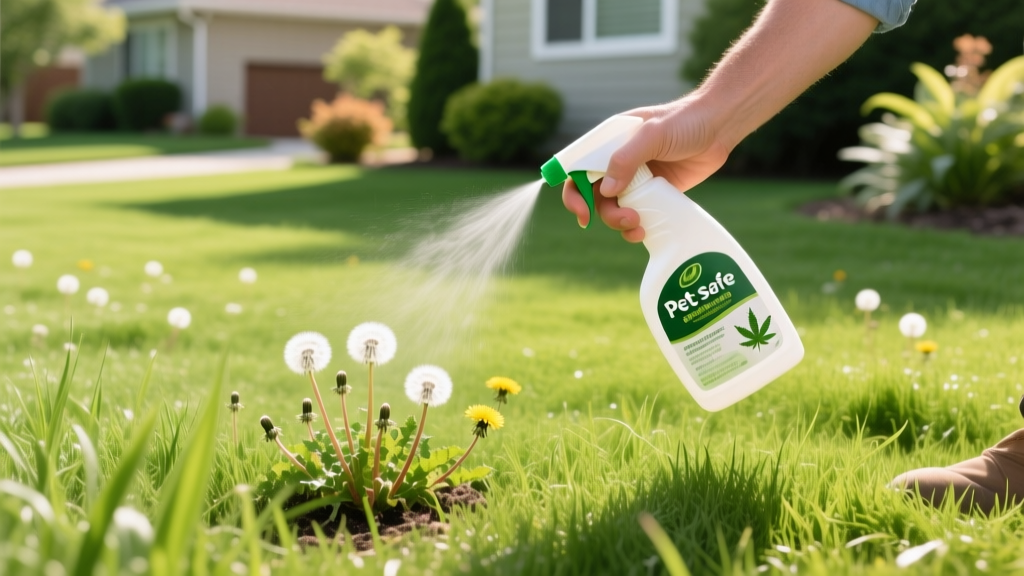
Spot-Treatment Guide: Choosing a Pet Safe Weed Killer for Lawns
Managing isolated weed outbreaks without risking your pets' health requires a precise understanding of organic herbicide chemistry and targeted application techniques. Traditional synthetic auxins like 2,4-D and glyphosate pose documented risks to canines and felines, ranging from contact dermatitis on paw pads to systemic toxicity when ingested during grooming. Transitioning to a pet safe weed killer for lawns does not mean sacrificing efficacy; it means shifting from broadcast chemical warfare to surgical, species-specific spot-treatments.
This guide details the exact active ingredients, dilution ratios, and environmental parameters required to eradicate common lawn weeds using pet-safe formulations, ensuring your turf recovers and your animals remain protected.
The Toxicity Problem: Why Traditional Spot-Treatments Fail Pet Owners
Dogs and cats interact with lawns differently than humans. They walk barefoot, lie directly on the turf, and routinely ingest grass. When synthetic herbicides are applied, the residue binds to the leaf cuticle and soil surface. According to the Pet Poison Helpline, exposure to wet or recently dried synthetic herbicides is a leading cause of seasonal toxicological emergencies in companion animals. Symptoms include hypersalivation, vomiting, and chemical burns to the footpads.
WARNING: The 'Dry to the Touch' Myth
Many synthetic herbicide labels claim pets can return to the lawn once the spray is 'dry.' However, residual crystallized chemicals can reactivate with morning dew or pet saliva. True pet-safe spot-treatment relies on ingredients that break down into harmless organic compounds (like water, carbon dioxide, and naturally occurring iron) within hours of application.
Many synthetic herbicide labels claim pets can return to the lawn once the spray is 'dry.' However, residual crystallized chemicals can reactivate with morning dew or pet saliva. True pet-safe spot-treatment relies on ingredients that break down into harmless organic compounds (like water, carbon dioxide, and naturally occurring iron) within hours of application.
Active Ingredients to Look For (and Avoid)
When sourcing a pet safe weed killer for lawns, you must differentiate between selective and non-selective organic compounds. The EPA's FIFRA 25(b) exempt list outlines minimum-risk active ingredients that do not require federal registration due to their proven safety profiles.
The Safe List (Minimum Risk)
- FeHEDTA (Chelated Iron): The gold standard for selective broadleaf control. Broadleaf weeds absorb iron rapidly and cannot regulate it, leading to fatal oxidative stress. Monocots (turfgrasses) regulate iron uptake and remain unharmed.
- Acetic Acid (Horticultural Vinegar, 20%-30%): A non-selective contact herbicide that strips the waxy leaf cuticle, causing rapid desiccation. Safe for pets once fully neutralized and dried, but highly irritating to eyes and paw pads in liquid form.
- Pelargonic Acid & d-Limonene: Fatty acids and citrus oils that destroy cell membranes on contact. Excellent for quick burn-down of young annual weeds.
The Avoid List (High Risk to Pets)
- 2,4-D, Dicamba, MCPP: Synthetic auxins linked to canine lymphoma and acute neurological distress.
- MSMA & DSMA: Arsenical herbicides (largely banned but still found in older stock) causing severe heavy metal poisoning.
Weed Species Spot-Treatment Matrix
Efficacy depends entirely on matching the active ingredient to the specific weed biology. Below is a spot-treatment protocol for the most common lawn invaders.
| Weed Species | Classification | Pet-Safe Active Ingredient | Mix Rate (Per Gallon) | Expected Timeline |
|---|---|---|---|---|
| Dandelion (Taraxacum officinale) | Perennial Broadleaf | FeHEDTA (Chelated Iron) | 4 fl oz + 1 tsp Surfactant | 14-21 days (browning) |
| White Clover (Trifolium repens) | Perennial Broadleaf | FeHEDTA (Chelated Iron) | 5 fl oz + 1 tsp Surfactant | 21-28 days (requires 2 apps) |
| Crabgrass (Digitaria) | Annual Grass | Acetic Acid (20%) | Undiluted (Shielded Spray) | 24-48 hours (burn-down) |
| Nutsedge (Cyperus esculentus) | Perennial Sedge | Manual Extraction + Iron | N/A (Dig out nutlets) | Immediate removal |
| Plantain (Plantago major) | Perennial Broadleaf | Pelargonic Acid / d-Limonene | 3 fl oz per gallon | 7-10 days (necrosis) |
Step-by-Step Application Guide for Maximum Efficacy
Organic and minimum-risk herbicides lack the systemic translocation power of synthetics. They require flawless execution to kill the root system or achieve complete foliar burn-down.
Step 1: Calibration and Surfactant Addition
FeHEDTA requires a non-ionic surfactant (NIS) or methylated seed oil (MSO) to penetrate the waxy cuticle of broadleaf weeds. Add 1 teaspoon of high-quality NIS per gallon of mixed FeHEDTA. Calibrate your 1-gallon pump sprayer to deliver a fine mist, not a heavy stream, ensuring complete leaf coverage without runoff to the soil.
Step 2: Environmental Timing
Apply FeHEDTA when ambient temperatures are between 60°F and 80°F. Never apply chelated iron when temperatures exceed 85°F; the rapid oxidation will cause phytotoxicity (chemical burn) to your surrounding turfgrass. Apply acetic acid (vinegar) on hot, sunny days (80°F+) to accelerate the desiccation process.
Step 3: Surgical Application
For broadleaves, spray until the leaves are uniformly wet but not dripping. For grassy weeds like crabgrass using 20% acetic acid, use a cardboard shield or a specialized bell-nozzle to prevent overspray from drifting onto your desirable turf. Acetic acid is non-selective and will kill your lawn grass on contact.
Top Commercial Pet-Safe Spot Treatments (Current Market)
If you prefer ready-to-use or pre-formulated concentrates over DIY mixing, these three products dominate the pet-safe market based on active ingredient stability and efficacy.
1. Natria Lawn Weed Control (FeHEDTA Base)
Best For: Selective broadleaf spot-treatment in cool and warm-season lawns.
Cost: ~$22 for a 32 oz ready-to-spray bottle.
Pros: Pre-mixed with surfactants; safe for pets immediately after drying (approx. 2 hours); will not harm Bermuda, Fescue, or Zoysia.
Cons: Ineffective on grassy weeds; requires multiple applications for mature clover.
2. Green Gobbler 20% Horticultural Vinegar
Best For: Non-selective burn-down of crabgrass, spurge, and weeds in driveway cracks.
Cost: ~$30 for a 1-gallon jug.
Pros: Rapid visual results within 24 hours; breaks down into harmless acetates in the soil.
Cons: Will kill desirable grass; highly acidic liquid can cause temporary paw pad irritation if pets walk on it before the 12-hour neutralization window.
3. Doctor Kirchner Natural Weed Killer
Best For: Spot-treating delicate garden bed edges where turf meets ornamentals.
Cost: ~$45 for a 1-gallon ready-to-use sprayer.
Pros: Formulated with ocean water, vinegar, and soap; extremely low toxicity profile; safe for ASPCA standards once dry.
Cons: Slower action than 20% acetic acid; struggles against deep-rooted perennial weeds.
Post-Treatment Lawn Recovery and Pet Re-entry Timelines
The re-entry timeline is the most critical safety variable for pet owners. While minimum-risk ingredients are non-toxic once processed, the physical state of the chemical dictates safety.
- FeHEDTA (Chelated Iron): Wait 2 to 3 hours, or until the leaf surface is completely dry to the touch. Once dry, the iron is bound to the plant tissue and poses zero risk to paw pads or ingestion.
- 20% Acetic Acid: Wait a minimum of 12 hours. Even after drying, residual acidity can reactivate with morning dew. Keep pets off treated patches until the next afternoon to prevent chemical irritation to sensitive footpads.
- Essential Oils (Clove/Citrus): Wait 4 hours. While natural, concentrated d-Limonene is a known skin sensitizer for dogs with contact allergies.
Frequently Asked Questions
Will pet urine neutralize my pet-safe weed killer?
Yes. Dog urine is highly concentrated in urea and salts, and its pH can alter the efficacy of acetic acid and FeHEDTA applications. If your dog urinates on a freshly treated weed (even if dry), the nitrogen spike may actually stimulate the weed's recovery or neutralize the acidic burn-down. Restrict pet access to treated zones for at least 24 hours to allow the herbicide to translocate or fully desiccate the target plant.
Can I make my own pet-safe weed killer with kitchen vinegar?
Standard kitchen vinegar is only 5% acetic acid. While safe for pets, it is too weak to kill mature weeds and will only temporarily stunt their growth. For effective spot-treatment, you must source horticultural-grade 20% to 30% acetic acid. Handle 30% acetic acid with heavy gloves and eye protection, as it is corrosive to human skin before it dilutes in the soil.
Integrating a pet safe weed killer for lawns into your maintenance routine requires patience and precision. By leveraging the biological vulnerabilities of specific weed species—such as iron toxicity in broadleaves and cuticle stripping in grassy weeds—you can maintain a pristine, chemical-free turf that is entirely safe for your animals to roam.

