
Pest Control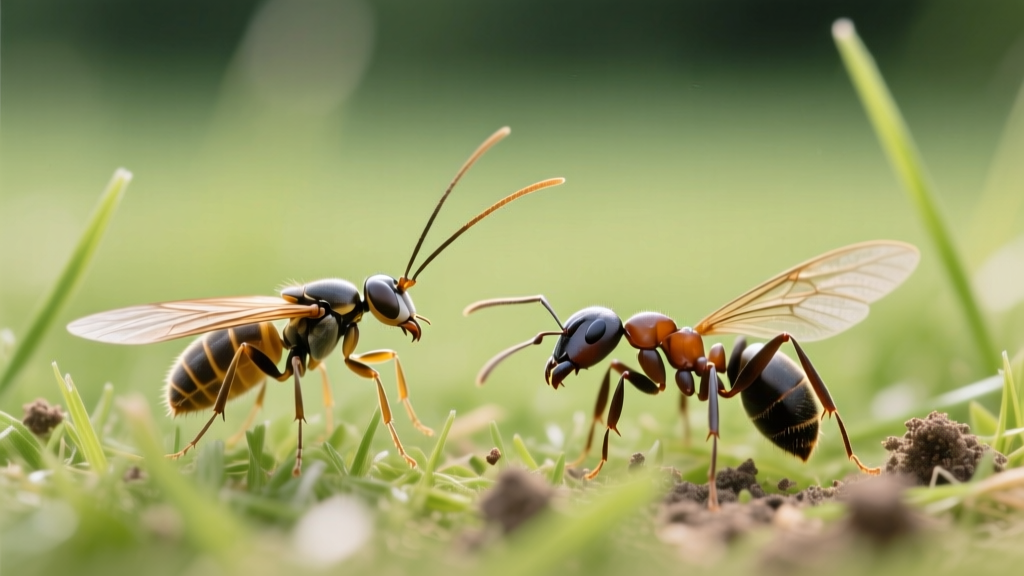
Photos of Flying Termites vs Ants: Visual Yard ID Guide
The Anatomy of a Swarmer: Decoding Photos of Flying Termites
When homeowners search for photos of flying termites, they are usually looking at alates—the reproductive swarmers that emerge from mature colonies to mate and establish new nests. Spotting these insects in your yard is a critical warning sign. However, the most common mistake in lawn and garden pest defense is misidentifying termite swarmers as flying carpenter ants. While both insects emerge in the spring and share a superficial resemblance, their anatomical differences dictate entirely different treatment protocols for your yard's perimeter.
Understanding the visual cues in photos of flying termites is the first step in protecting your home's foundation and landscape structures. According to the University of Kentucky Entomology, subterranean termite colonies typically must be three to five years old before they produce swarmers, meaning if you see them in your mulch beds or near tree stumps, a massive, wood-destroying colony is already established nearby.
Visual Identification Matrix: Termite vs. Ant
To accurately interpret photos of flying termites versus flying ants, focus on three primary anatomical zones: the wings, the waist, and the antennae. Use the comparison matrix below when examining specimens caught on your patio or windowsills.
| Anatomical Feature | Flying Termites (Alates) | Flying Carpenter Ants |
|---|---|---|
| Wing Structure | Two pairs of equal-length wings that extend well past the abdomen. Wings are translucent with a milky or smoky hue. | Two pairs of unequal-length wings (front wings longer than hind wings). Wings are clear with visible, distinct veins. |
| Waist (Thorax-Abdomen) | Broad, thick waist. The body appears as a single, continuous cylinder with no distinct segmentation. | Pinched, narrow waist (petiole) creating a distinct hourglass figure between the thorax and abdomen. |
| Antennae | Straight and beaded, resembling a string of tiny pearls extending forward from the head. | Elbowed (geniculate), bending sharply at a 90-degree angle midway down the antenna. |
| Body Color | Uniform dark brown to black (subterranean) or pale yellow-brown (drywood). | Often multi-colored, featuring combinations of black, reddish-brown, and dark brown segments. |
What Swarmer Sightings Mean for Your Yard's Perimeter
Finding discarded wings on your patio, driveway, or garden pathways is often more common than seeing the live insects. Termite swarmers are notoriously fragile; shortly taking flight, they shed their wings to crawl into the soil and start a new colony. If you find piles of identical, translucent wings near your yard's perimeter, the Environmental Protection Agency (EPA) advises treating this as an active infestation indicator, not just a passing nuisance.
Species-Specific Swarming Patterns in the Yard
Different termite species target different areas of your landscape. Identifying the swarmer helps pinpoint the yard defense strategy required:
- Eastern Subterranean Termites (Reticulitermes flavipes): Typically swarm during daylight hours on warm, calm days following a spring rainstorm (March to May). They target soil-mulch interfaces, fence posts, and landscape timbers.
- Formosan Subterranean Termites (Coptotermes formosanus): Known for massive, aggressive colonies. They swarm at dusk or night from May through June, often clustering around outdoor security lights and patio fixtures. They are notorious for attacking living trees and shrubs in the yard.
- Drywood Termites (Incisitermes minor): Swarm in late summer or early fall. Unlike subterranean species, they do not require soil contact and will target attic eaves, wooden patio furniture, and dead tree branches.
Immediate Yard Defense Protocols After a Swarm
⚠️ CRITICAL WARNING: Do not rely on over-the-counter aerosol sprays (like Raid or Ortho Home Defense) to kill flying swarmers. Spraying the visible insects only kills the reproductive caste temporarily and does absolutely nothing to eliminate the primary worker colony hidden underground, which is actively consuming your property's structural wood.
Once you have confirmed the presence of termite swarmers via photos or physical specimens, your yard defense strategy must shift from surface-level pest control to deep-soil and wood-targeted eradication.
Step-by-Step Perimeter Fortification
- Eliminate Moisture and Wood-to-Soil Contact: Subterranean termites require moisture. Regrade soil near your foundation to ensure a 5% slope away from the house. Remove any landscape timbers, railroad ties, or wood mulch that directly touches the soil within 5 feet of your foundation. Replace with inorganic mulch like gravel or rubber.
- Trenching for Liquid Termiticide Barriers: For immediate perimeter defense, dig a continuous trench 6 inches wide and 6 inches deep around the foundation and any detached wooden structures (sheds, pergolas). Apply a non-repellent termiticide like Termidor SC (9.1% Fipronil) or Altriset (Chlorantraniliprole). The standard application rate is 4 gallons of finished solution per 10 linear feet of trench. Because these are non-repellent, foraging workers will unknowingly carry the active ingredient back to the colony, triggering a transfer effect that collapses the nest.
- Deploy Advanced Bait Stations: For long-term yard monitoring and colony elimination, install cellulose-based bait stations containing Noviflumuron (an insect growth regulator). Space stations 10 to 20 feet apart around the perimeter. Systems like Trelona Compressed Termite Bait or the Sentricon System require professional installation and quarterly monitoring, but they intercept foraging workers before they reach your home.
Professional Inspection vs. DIY Monitoring
While DIY liquid trenching is possible for experienced homeowners, the equipment and chemical costs often blur the line between DIY and professional services. A professional liquid barrier treatment typically costs between $8 and $12 per linear foot. For a standard 200-linear-foot perimeter, expect to pay $1,600 to $2,400, which usually includes a 10-year retreatment warranty.
Conversely, purchasing professional-grade bait stations and the required trenching rods, augers, and 100-gallon sprayers for a DIY liquid application can easily exceed $1,200 upfront, without the guarantee of proper soil saturation. If your photos of flying termites reveal Formosan swarmers or if you have a well, cistern, or complex drainage system in your yard, hiring a licensed pest management professional (PMP) is legally and environmentally mandatory to prevent groundwater contamination.
Frequently Asked Questions
Can flying termites bite humans or pets?
No. Termite swarmers possess mandibles designed for chewing wood and soil, not for biting skin. They do not carry venom or stingers. Their primary threat is structural damage to your property, not physical harm to your family or pets.
How long does a termite swarm last?
A single swarming event is incredibly brief, usually lasting only 30 to 45 minutes. However, a mature colony may release swarmers in multiple waves over a period of several weeks during their peak season. Finding discarded wings weeks after the initial sighting is normal.
Will outdoor bug zappers help control flying termites?
Bug zappers are highly ineffective for termite control. While they may kill a small percentage of alates attracted to the UV light, they also indiscriminately kill beneficial predatory insects that naturally help regulate pest populations in your yard. Focus on soil and wood treatments instead of aerial traps.

