
Pest Control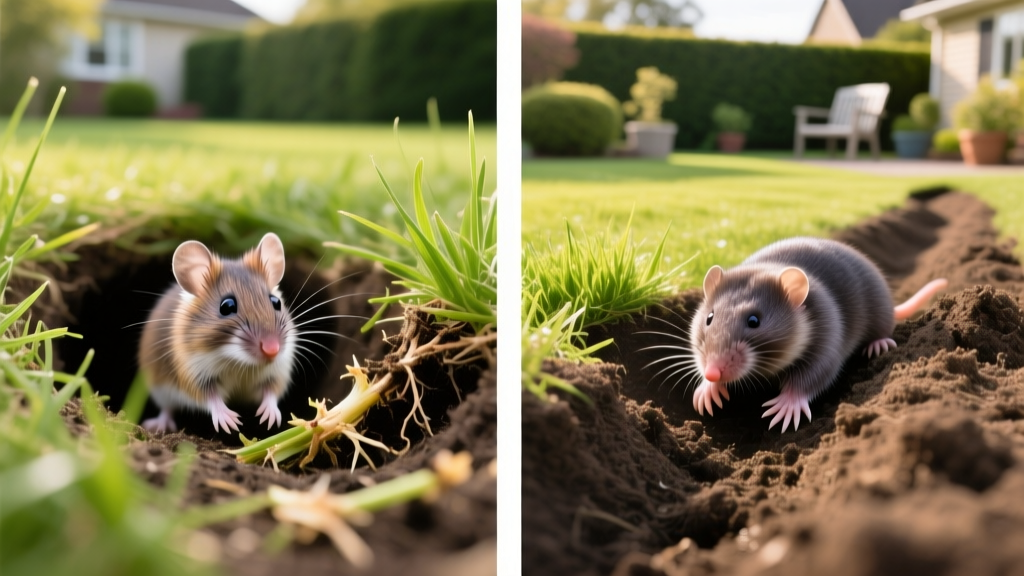
Photos of Voles vs. Moles: Identifying and Stopping Lawn Damage
The Visual Diagnosis: Why Photos of Voles Matter for Lawn Care
When homeowners discover mysterious dying grass patches or gnawed tree bark, the immediate instinct is to search for photos of voles online to confirm their suspicions. Visual identification is the critical first step in mammal pest control because treating for the wrong animal wastes time, money, and chemical applications. Voles (often called meadow mice) are responsible for extensive damage to turfgrass, ornamental plants, and tree root systems, yet they are frequently misidentified as moles, shrews, or deer mice. Understanding the distinct physical traits and behavioral markers of voles allows you to deploy targeted, highly effective deterrence and eradication protocols.
Decoding Physical Traits: Voles vs. Moles vs. Mice
When comparing photos of voles to other common lawn rodents, focus on three distinct anatomical features: the tail, the ears, and the snout. Voles belong to the genus Microtus, with the meadow vole (Microtus pennsylvanicus) and the pine vole (Microtus pinetorum) being the most destructive to residential landscapes.
| Feature | Vole (Meadow/Pine) | Mole (Eastern/Star-nosed) | Deer Mouse |
|---|---|---|---|
| Body Shape | Stocky, heavy-set, cylindrical | Wedge-shaped, broad shoulders | Sleek, narrow, lightweight |
| Tail Length | Short (1–2 inches), fuzzy | Very short, nearly hairless | Long (3–5 inches), bi-colored |
| Ears | Small, partially hidden by fur | Hidden beneath fur, no external pinna | Large, prominent, erect |
| Snout & Teeth | Blunt snout, prominent orange incisors | Pointed, star-like or elongated snout | Pointed snout, small teeth |
| Front Claws | Small, standard rodent claws | Massive, outward-turned digging spades | Small, delicate claws |
Recognizing Vole Damage in Your Landscape
Even if you never actually see the animal, the damage they leave behind serves as a reliable proxy for those photos of voles you might be referencing. According to the University of California Agriculture and Natural Resources, voles do not hibernate; they remain active year-round, meaning damage can occur in any season, though it is most severe in late fall and winter when other food sources dwindle.
Surface Runways and Clipping Patterns
Meadow voles create distinct surface runways that are typically 1.5 to 2 inches wide. Unlike mole tunnels, which are raised ridges of soil, vole runways are clear paths where the grass has been clipped precisely at the soil line. You will often find small, golf-ball-sized exit holes (about 1.5 inches in diameter) leading into these runways, with no soil mounding around the entrance.
Tree Girdling and Root Damage
Pine voles spend more time underground and are notorious for severing the root systems of young trees and shrubs. Meadow voles, conversely, target the cambium layer (the nutrient-rich inner bark) of trees, particularly under the cover of snow or dense mulch. If you notice a tree suddenly wilting or dying, inspect the base. Vole girdling appears as parallel, side-by-side gnaw marks roughly 1/16 inch wide and 3/8 inch long, stripping the bark entirely around the circumference.
Proven Habitat Modification Techniques
Eradication is nearly impossible if the habitat remains inviting. Voles require dense ground cover to protect them from aerial predators like hawks and owls. Implementing strict landscape hygiene is your first line of defense.
- Mowing Height: Maintain turfgrass at a height of 2.5 to 3 inches. Grass taller than 4 inches provides the perfect canopy for vole runways.
- Mulch Management: Never pile mulch against tree trunks (the "volcano mulching" mistake). Keep mulch layers no deeper than 3 inches and maintain a strict 6-inch bare-soil buffer zone around the base of all trees and shrubs.
- Groundcover Thinning: Remove dense, low-growing groundcovers like ivy, pachysandra, or hostas within 3 feet of valuable tree trunks, replacing them with coarse gravel or bare soil.
Physical Exclusion: The Hardware Cloth Protocol
For high-value ornamental trees and young fruit trees, physical exclusion is the only 100% effective deterrent against winter girdling. Penn State Extension recommends using 1/4-inch galvanized hardware cloth. Standard chicken wire (poultry netting) is useless, as voles can easily squeeze through the 1-inch hexagonal gaps.
Step-by-Step Tree Guard Installation
- Cut a piece of 1/4-inch hardware cloth to a height of 24 inches and a width sufficient to circle the trunk with a 2-inch overlap.
- Form the mesh into a cylinder and secure the seam with heavy-duty zip ties or galvanized wire.
- Place the cylinder around the tree trunk, ensuring it is centered.
- Bury the bottom edge 3 to 6 inches deep in the soil to prevent voles from burrowing underneath.
- Ensure the top of the guard extends at least 18 inches above the anticipated winter snow line.
Strategic Trapping and Baiting
When population pressures are high, habitat modification must be paired with active reduction. Trapping is highly effective for localized infestations, while rodenticides are reserved for severe, widespread agricultural or large-estate scenarios.
Trapping Mechanics
Use standard wooden snap traps (like the Victor Easy Set Mouse Trap) rather than expensive specialized "vole traps." The trigger mechanism on a standard mouse trap is perfectly calibrated for a vole's weight.
Baiting: Mix peanut butter with wild birdseed or oatmeal. Voles are granivores and herbivores; the seeds provide a familiar texture while the peanut butter acts as an adhesive.
Placement: Identify an active runway and place the trap perpendicular to the path, with the trigger end facing directly into the runway. Voles travel with their bellies brushing the ground and will trigger the trap without needing to step on the pedal.
Covering: Voles are agoraphobic and will avoid exposed traps. Cover the trap with a 3-inch diameter PVC pipe cut to an 8-inch length, or lean a shoebox over it with a small entry notch cut into the side. This also prevents birds and pets from accessing the trap.
Rodenticide Considerations and Safety
If trapping fails to curb the population, baiting may be necessary. Always use tamper-resistant, locking bait stations anchored to the ground.
Anticoagulants: Products containing diphacinone (e.g., Ramik Green) require multiple feedings over several days to be lethal. They are effective but carry a risk of secondary poisoning if a predator eats the deceased vole.
Acute Toxicants: Zinc phosphide baits (e.g., Kaput-D ZP Gopher Bait) act rapidly after a single feeding. When zinc phosphide reacts with stomach acid, it releases phosphine gas. Crucially, zinc phosphide does not accumulate in the tissues of the dead vole, eliminating the risk of secondary poisoning to owls, hawks, or neighborhood cats. However, it is highly toxic to dogs if they ingest the bait directly, making secure bait stations non-negotiable.
The Reality of Commercial Repellents
Many homeowners turn to castor oil sprays or capsaicin-based repellents (like Bonide Ro-Pel) hoping for a non-lethal solution. While these products can provide temporary relief, university trials consistently show that their efficacy drops significantly after rainfall or heavy irrigation. Thiram-based fungicides (often used as taste repellents) offer slightly better protection for dormant tree bark but are not approved for use on edible crops or active lawns. Repellents should be viewed as a supplementary measure, never a primary eradication strategy.
Summary: Your Vole Action Plan
Successfully managing voles requires moving past simple identification via photos of voles and implementing a multi-tiered defense strategy. By combining strict mowing protocols, 1/4-inch hardware cloth exclusion, and strategically placed, covered snap traps, you can protect your turf and ornamental investments from these relentless rodents.

