
Pest Control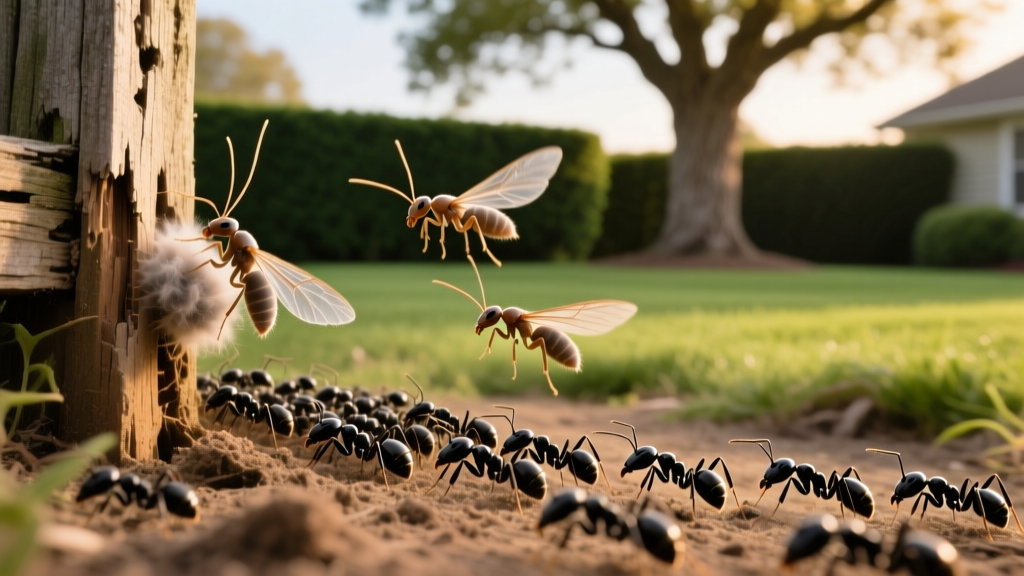
Picture of Flying Termites vs Ants: How to Identify Yard Swarmers
The Swarmers Are Here: Decoding Your Picture of Flying Termites
Finding a pile of discarded wings on your patio or spotting a cloud of insects emerging from your lawn mulch triggers immediate concern. When you snap a picture of flying termites to figure out what you are dealing with, you are usually looking at one of two things: reproductive termite swarmers (alates) or winged carpenter ants. Misidentifying these insects leads to wasted money on the wrong treatments and unchecked structural or yard damage. Subterranean termites typically swarm in the spring when soil temperatures reach 65°F to 70°F, while carpenter ants often swarm later in the early summer. Understanding the visual differences in your photo is the first critical step in your yard defense protocol.
According to the Environmental Protection Agency (EPA), termites cause an estimated $5 billion in property damage annually in the United States, and standard homeowners insurance rarely covers it. Catching a swarm early in your yard gives you a narrow window to intercept the colony before it expands or establishes a new satellite nest near your foundation.
Termite Swarmers vs. Flying Ants: The Visual Breakdown
When analyzing a picture of flying termites, focus on three distinct anatomical features: the wings, the antennae, and the waist. Carpenter ants and termites evolved differently, and their physical structures reflect their distinct behaviors and habitats.
| Feature | Termite Swarmers (Alates) | Flying Carpenter Ants |
|---|---|---|
| Wings | Two pairs of equal-length wings, milky or translucent, extending far past the abdomen. | Two pairs of unequal-length wings (front wings longer than hind wings), tinted brown or reddish. |
| Antennae | Straight and beaded, resembling a string of tiny pearls extending forward. | Elbowed (bent at a 45-degree angle) with a distinct clubbed tip. |
| Waist (Thorax) | Thick and broad; the abdomen connects directly to the thorax with no pinching. | Narrow, pinched, and distinctly segmented (hourglass shape). |
| Coloration | Uniform dark brown, black, or pale yellow depending on the species (e.g., Formosan vs. Eastern Subterranean). | Often multi-colored, featuring reddish-brown heads and thoraxes with dark black abdomens. |
Yard Defense Protocol: What to Do When Swarmers Hit Your Lawn
If your picture of flying termites confirms a termite swarm, the insects you see are merely the reproductive winged adults. The real threat is the worker colony hidden underground, feeding on cellulose in your yard and potentially your home's sill plate. You must target the soil and the wood-to-ground contact points.
Step 1: Locate the Emergence Point and Assess Moisture
Termite swarm tubes (mud structures) usually emerge within 10 to 20 feet of the main colony. Inspect your yard for areas with excessive moisture, such as leaking irrigation heads, poorly graded soil pooling against the foundation, or thick layers of wood mulch. Termites require high soil moisture to survive. Fixing a broken sprinkler head that keeps the foundation soil perpetually soaked is just as important as chemical application.
Step 2: Deploy Targeted Soil Treatments
For immediate yard defense and structural protection, non-repellent liquid termiticides are the industry standard. Unlike older repellent chemicals that termites simply avoid, non-repellents allow workers to pass through the treated zone, pick up the active ingredient, and transfer it to the rest of the colony via trophallaxis (grooming and food sharing).
- Termidor SC (Fipronil 9.1%): Mix at a rate of 0.8 fluid ounces per gallon of water. Apply via a 6-inch wide by 6-inch deep trench dug directly against the foundation. The standard application rate is 4 gallons of finished solution per 10 linear feet of trench.
- Altriset (Chlorantraniliprole): An excellent alternative if you have concerns about soil toxicity near sensitive garden beds. It halts termite feeding within hours and has a lower toxicity profile for mammals, making it a preferred choice for yards with active pets and children.
Warning: Never use over-the-counter aerosol foggers or "bug bombs" on a termite swarm. These products only kill the visible alates on contact and cause the underground colony to fracture and spread to untreated areas of your yard, worsening the infestation.
Step 3: Install Advanced Bait Stations for Perimeter Defense
If trenching is impossible due to hardscaping, concrete patios, or dense root systems, deploy an in-ground bait system. The Advance Termite Bait System or Trelona ATBS utilize active ingredients like Novaluron or Hexaflumuron, which are chitin synthesis inhibitors. These prevent termites from molting, eventually collapsing the colony. Install stations every 10 feet around the perimeter of your property, drilling through concrete where necessary using a hammer drill and a 1-inch masonry bit.
Preventative Landscaping to Deter Future Swarms
Your yard's design can either invite or repel subterranean termites. Implementing these specific landscaping adjustments removes the environmental triggers that draw swarmers to your property.
- The 12-Inch Mulch Rule: Wood mulch retains moisture and provides a hidden highway for termites. Maintain a strict 12-inch gap of bare soil or gravel between any mulch bed and your home's foundation. If you must use mulch near the house, switch to inorganic options like crushed stone or rubber mulch.
- Stump and Root Extraction: Decaying tree stumps are primary food sources. Do not just grind the stump; use a stump grinder to remove the root ball at least 12 inches below grade, and treat the remaining soil with a borate-based wood preservative like Bora-Care.
- Correct Grading and Downspouts: Ensure your yard slopes away from the foundation at a minimum drop of 6 inches over the first 10 feet. Extend all gutter downspouts at least 5 feet away from the house to prevent soil saturation near the sill plate.
Cost Analysis: DIY Yard Treatment vs. Professional Intervention
Deciding whether to treat the yard yourself or hire a licensed pest control operator depends on the scale of the swarm and your property's layout. The National Pest Management Association strongly recommends professional intervention for active structural threats, but yard perimeter defense can sometimes be managed by diligent homeowners.
| Treatment Method | DIY Material Costs | Professional Service Costs | Longevity / Warranty |
|---|---|---|---|
| Liquid Trenching (Fipronil) | $150 - $250 (Concentrate + Equipment) | $1,200 - $2,500 | DIY: None / Pro: 1-Year Renewable |
| Bait Station Network (Trelona) | $300 - $450 (Stations + Bait Cartridges) | $800 - $1,400 (Includes Monitoring) | Requires Quarterly Inspection |
| Localized Wood Treatment (Borates) | $40 - $80 per gallon | $400 - $800 (Spot Treatment) | Permanent for Treated Wood |
Frequently Asked Questions
Do flying termites mean my house is infested?
Not necessarily. Swarmers are attracted to light and may emerge from a colony located in a neighbor's yard or a decaying tree stump at the edge of your property. However, if you find swarmers emerging from the soil directly adjacent to your foundation, or if you find discarded wings on interior windowsills, an active structural infestation is highly likely and requires immediate professional inspection.
How long do termite swarms last?
A single subterranean termite swarm event is brief, typically lasting only 30 to 45 minutes. The alates emerge, take a short mating flight, drop to the ground, shed their wings, and begin burrowing into the soil to start a new colony. Because the event is so short, capturing a clear picture of flying termites requires quick action, but the discarded wings left behind serve as lasting evidence of their presence.
Can I treat my yard for termites if I have a well or water feature?
Yes, but you must adhere to strict buffer zones. The EPA mandates that liquid termiticides like Termidor SC cannot be applied within 5 feet of a well, cistern, or pond. In these sensitive zones, you must use physical barriers, in-ground bait stations (which contain the active ingredient in a sealed plastic matrix), or localized borate treatments on the wood itself rather than broadcasting chemicals into the soil.

