
Pest Control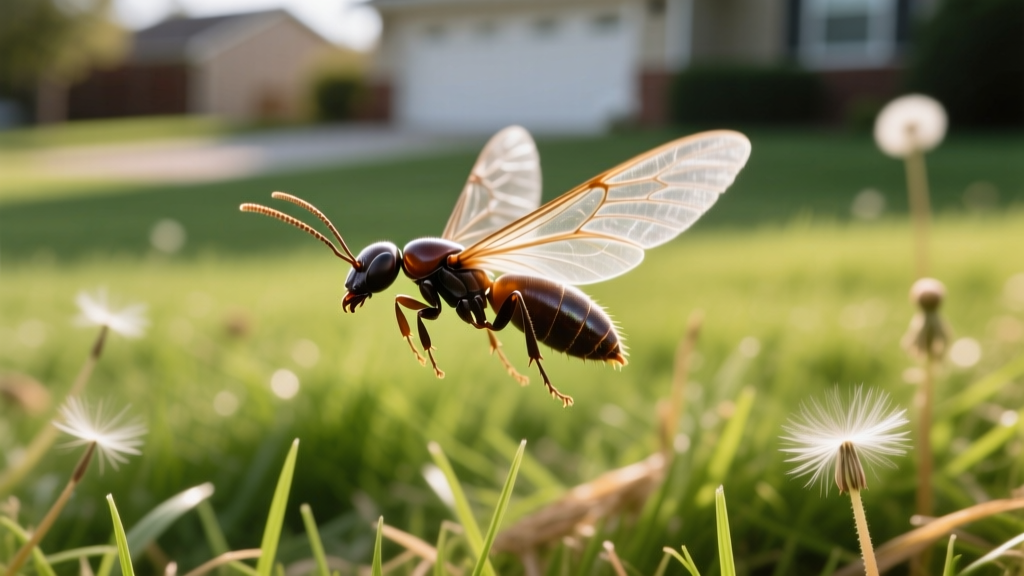
Is That a Picture of a Termite With Wings? Swarmer ID & Yard Defense
Decoding the Swarm: Why You Are Seeing Winged Termites
If you have found yourself searching for a picture of a termite with wings to compare against a bug you found on your patio, you are likely looking at a termite alate, commonly known as a swarmer. These reproductive termites emerge from mature underground colonies to mate and establish new nests. Spotting them in your yard is not a death sentence for your home, but it is a critical biological indicator that a mature, wood-consuming colony is active within a 100-yard radius of your property.
Unlike the worker termites that cause structural damage, alates do not eat wood. Their sole purpose is reproduction. However, their presence dictates immediate yard defense action. According to the Environmental Protection Agency (EPA), subterranean termites cause billions in property damage annually, and early perimeter intervention is the most cost-effective mitigation strategy.
Visual Identification Matrix: Termite Alates vs. Flying Ants
Homeowners frequently confuse termite swarmers with flying carpenter ants. Misidentification leads to incorrect chemical applications and wasted budget. Use the morphological matrix below to verify your specimen against a reference picture of a termite with wings.
| Anatomical Feature | Termite Swarmer (Alate) | Flying Carpenter Ant |
|---|---|---|
| Wings | Four wings of equal length, extending well past the abdomen. Translucent or milky white. | Front wings are significantly longer than hind wings. Darker, brownish tint. |
| Antennae | Straight and beaded, resembling a string of tiny pearls. | Elbowed (bent at a 90-degree angle near the base). |
| Waist / Thorax | Broad, uniform, and thick. No distinct segmentation between thorax and abdomen. | Pinched, narrow, and highly segmented (hourglass shape). |
| Coloration | Dark brown to black (Eastern Subterranean) or pale yellowish-brown (Drywood). | Typically solid black, red, or multi-toned brown. |
The Real Threat: What Swarmers Mean for Your Yard
Seeing a swarm does not mean the termites are currently eating your house. It means a colony nearby has reached a population threshold (usually 3 to 5 years of age) and is expanding. The alates will shed their wings within 30 minutes of landing, pair up, and attempt to burrow into soil to start a new colony. Your yard's soil moisture and mulch beds provide the perfect incubation environment.
Warning: The Shed Wing Trap
Homeowners often find piles of discarded, translucent wings on windowsills or patios and assume the threat has passed. In reality, the mating pairs have just moved underground to begin excavating the foundational chamber for a new colony. Always treat shed wings as an active biological alert.
2026 Yard Defense Protocol: Stopping Termites at the Property Line
Effective yard defense requires a multi-layered approach combining moisture management, physical barriers, and targeted chemical interventions. The National Pest Management Association (NPMA) recommends integrating baiting systems with localized liquid barriers for comprehensive perimeter security.
Phase 1: Moisture and Wood-to-Soil Elimination
Subterranean termites require soil contact and high moisture levels to survive. Before deploying chemicals, alter the yard environment to make it inhospitable.
- Grade Correction: Ensure soil slopes away from the foundation at a minimum drop of 6 inches over the first 10 horizontal feet.
- Downspout Extensions: Route all gutter discharge at least 4 feet away from the foundation using corrugated piping.
- Wood Clearances: Maintain a strict 6-inch vertical gap between soil and any wooden siding, fence posts, or deck framing. Use galvanized steel post bases for any new yard structures.
- Mulch Management: Keep organic mulch at least 12 inches away from the foundation. Substitute with inorganic gravel or rubber mulch in the immediate perimeter zone.
Phase 2: Perimeter Bait Station Deployment
Bait stations intercept foraging workers before they reach your home. The active ingredient disrupts the molting process, eventually collapsing the colony.
- Product Selection: Use commercial-grade stations like the Advance Termite Bait System or Trelona Compressed Termite Bait (active ingredient: Novaluron).
- Spacing: Install stations every 10 to 20 linear feet around the entire perimeter of the structure.
- Placement: Position stations 2 to 4 feet away from the foundation wall. Avoid placing them under roof drip lines where excessive water will saturate the bait matrix.
- Maintenance: Inspect wooden monitoring bases every 90 days. If termite feeding is observed, replace the monitor with a 150g Novaluron bait cartridge immediately.
Phase 3: Liquid Trenching (The Fipronil Transfer Method)
For immediate, high-density colony suppression, a non-repellent liquid barrier is required. Fipronil-based termiticides (like Termidor SC) are undetectable to termites. Workers pass through the treated soil and transfer the chemical to the rest of the colony via grooming and trophallaxis (food sharing).
- Trench Dimensions: Dig a continuous trench 6 inches wide and 6 inches deep directly against the foundation footer.
- Dilution Rate: Mix 0.8 fluid ounces of Termidor SC (9.1% Fipronil) per gallon of water to achieve a 0.06% active ingredient concentration.
- Application Volume: Apply 4 gallons of the finished solution per 10 linear feet of trench.
- Backfilling: After the liquid is absorbed, backfill the trench with the excavated soil to restore the yard grade.
Cost Breakdown: DIY vs. Professional Perimeter Defense
Understanding the financial commitment helps homeowners decide between a DIY approach and hiring a licensed pest control operator. Below is the average pricing data for a standard 200-linear-foot home perimeter in 2026.
| Intervention Method | DIY Material Cost (200 ft) | Professional Service Cost (200 ft) | Longevity / Warranty |
|---|---|---|---|
| Advanced Bait Stations | $450 - $600 (Stations + Initial Bait) | $800 - $1,200 (Includes 1st Year Monitoring) | Indefinite (Requires annual $150-$300 bait replenishment) |
| Liquid Trench (Fipronil) | $180 - $250 (Chemical only) | $1,600 - $2,400 (Labor + Chemical) | 5 to 10 years soil residual |
| Combined Protocol | $630 - $850 | $2,200 - $3,200 | Maximum protection / Annual renewal required |
Frequently Asked Questions
Do flying termites cause immediate damage to my home?
No. The alates (swarmers) possess mandibles designed for chewing through soil and wood during their brief mating flight, but they do not consume structural lumber. The damage is caused exclusively by the blind, wingless worker caste that remains hidden underground and inside wall voids.
How long does a typical termite swarm last?
A localized swarm event is surprisingly brief, typically lasting only 30 to 45 minutes. The alates emerge en masse, usually on a warm, humid afternoon following a spring rain, mate in the air, and drop to the ground to shed their wings. If you miss the flight, you will only find the discarded wings as evidence.
Will termite bait stations kill the colony that produced the swarmers?
Yes, but it requires patience. Bait stations utilize Insect Growth Regulators (IGRs) like Novaluron, which prevent termites from molting. Because the workers must return to the central nest to feed the queen and nymphs, the IGR is distributed throughout the colony. Complete colony elimination via baiting typically takes 3 to 6 months of continuous feeding.

