
Pest Control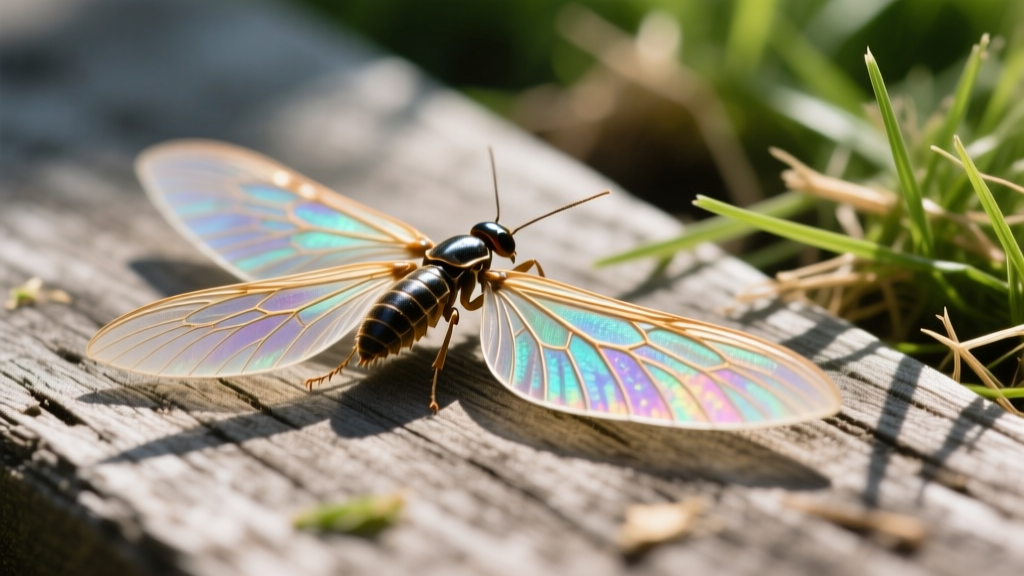
Analyzing Pictures of Termite Wings to Spot Early Yard Infestations
The Biology of the Shed: Why Wings Matter in Yard Defense
When reproductive termites, known as alates or swarmers, emerge from a mature colony to mate, they leave behind their most telling signature: discarded wings. Finding these wings is often the first visual evidence of an active, wood-destroying colony on your property. While many homeowners search for pictures of termite wings online to confirm their suspicions, accurate visual identification requires understanding specific morphological markers. Misidentifying a shed carpenter ant wing as a termite wing can lead to unnecessary panic, while missing the subtle signs of a Formosan subterranean termite swarm can result in catastrophic structural damage.
Alates possess two pairs of elongated, membranous wings. Unlike other insects that chew off their wings or lose them haphazardly, termites have a specialized anatomical suture line near the wing base. After the nuptial flight, the termite flexes its back, snapping all four wings off simultaneously. This biological mechanism results in the characteristic piles of identical, translucent wings found on window sills, mulch beds, and patio decks.
Decoding Pictures of Termite Wings vs. Flying Ants
The most common point of confusion in yard pest identification is distinguishing termite swarmers from carpenter ants. Both insects swarm in the spring, both have wings, and both can be found near wooden structures. However, a close analysis of pictures of termite wings reveals distinct structural differences that are critical for determining your treatment protocol.
| Feature | Termite Wings | Carpenter Ant Wings |
|---|---|---|
| Wing Length | Equal length (front and hind wings match exactly) | Unequal length (front wings significantly longer than hind wings) |
| Color & Texture | Milky, translucent, opalescent sheen | Clear or smoky brown, distinct glossy finish |
| Vein Structure | Few, faint, and difficult to see without magnification | Prominent, dark, heavily branching veins |
| Average Size | 3/8 to 1/2 inch (varies slightly by species) | 1/2 to 3/4 inch (often larger and wider) |
| Shedding Pattern | Snapped cleanly at the base suture | Often chewed off or detached with the base intact |
Key Visual Markers to Look For in Photos
When comparing your findings to reference pictures of termite wings, use a millimeter scale or a standard tape measure to verify the following traits:
- The Stack Test: Termite wings shed in perfectly matched pairs. If you find a pile where every wing is the exact same length and width, you are likely looking at termite alates.
- The Light Test: Hold the wing up to direct sunlight. Subterranean termite wings will appear milky white with a subtle iridescent sheen, lacking the complex capillary vein networks seen in ant wings.
- The Base Inspection: Examine the detached end of the wing. Termite wings break cleanly at a distinct node, leaving a blunt, squared-off edge rather than a torn or jagged margin.
⚠️ Warning: Drywood vs. Subterranean Wing Differences
Not all termite wings look identical. Subterranean termite wings typically measure 3/8 to 1/2 inch and are found near ground-level mud tubes or foundation weep holes. Drywood termite wings are slightly larger (up to 5/8 inch), feature slightly more visible venation, and are usually found in attic spaces, near fascia boards, or around high window frames. Identifying the species from the shed wing dictates whether you need a soil trenching treatment or a localized wood injection protocol.
Strategic Yard Locations for Finding Shed Wings
Termites do not shed their wings randomly. The alates are phototactic (attracted to light) and seek specific microclimates to begin digging their royal chambers. According to University of Kentucky Entomology, you should prioritize inspecting the following zones in your yard:
- Spider Webs Near Exterior Lighting: Spiders are natural predators of swarmers. You will frequently find clusters of shed wings trapped in orb webs near porch lights or security floodlights.
- Mulch-to-Foundation Interfaces: Subterranean termites often swarm from expansion joints and mulch beds. Check the first 12 inches of your home's foundation perimeter.
- Window Tracks and Sills: Swarmers that enter the home or emerge from interior baseboards will fly toward glass, leaving piles of wings in the tracks.
- Tree Stumps and Grade Timbers: Retaining walls made of railroad ties or decaying landscape stumps are primary satellite colony hubs.
Action Plan: What to Do After Confirming Termite Wings
Once you have matched your specimen to pictures of termite wings and confirmed an infestation, immediate remediation is required. The Environmental Protection Agency (EPA) advises against relying solely on DIY surface sprays, as they do not reach the subterranean colony. Follow this structured defense framework:
Step 1: Locate the Swarm Origin
Trace the wing piles back to their source. Look for mud tubes (shelter tubes) on the foundation. These tubes, typically the width of a pencil, are the highways subterranean termites use to travel from the soil to the wood. Break a tube open; if it is repaired within 48 hours, the colony is highly active.
Step 2: Choose Your Treatment Matrix
Select a treatment based on your property layout, budget, and soil type.
- Liquid Soil Barrier (Non-Repellent): Products containing Fipronil (e.g., Termidor SC at 9.1% concentration) utilize a transfer effect. Termites pass the chemical to the colony. Application: Trench 6 inches wide by 6 inches deep around the foundation. Apply 4 gallons of mixed solution per 10 linear feet. Cost: $150–$250 for DIY materials; $1,200–$2,500 for professional application.
- Cellulose Bait Stations: Systems like Trelona ATBS (Active Ingredient: Novaluron) or Sentricon use chitin synthesis inhibitors to disrupt termite molting. Application: Stations are installed every 10 feet around the perimeter. Cost: $1,500–$3,000 for professional installation and annual monitoring.
Step 3: Eliminate Yard Conducive Conditions
Treatment fails if the yard remains a termite magnet. Remove all wood-to-soil contact. Ensure downspouts divert water at least 5 feet away from the foundation, as subterranean termites require high soil moisture to survive. Replace organic mulch near the foundation with a 12-inch barrier of crushed stone or gravel.
'The presence of shed wings means the colony has been established for at least three to five years. You are not dealing with a new infestation; you are dealing with a mature super-organism that has already compromised the structural integrity of the wood.' — National Pest Management Association (NPMA) Field Guidelines
Frequently Asked Questions
Do termite wings grow back?
No. Once an alate sheds its wings after the nuptial flight, it never regrows them. The wingless king and queen spend the rest of their lives entirely underground or inside wood, dedicating their biological function solely to egg production. Finding wings means the reproductive cycle has successfully initiated a new colony.
Can I identify the termite species just from the wings?
While difficult for a layperson, an entomologist can often differentiate between species based on wing venation patterns and exact millimeter measurements. For example, Formosan subterranean termite wings are pale, slightly larger, and feature a distinct fontanelle (pore) on the head of the swarmer, though the head is rarely found with the shed wings. For homeowners, distinguishing between subterranean and drywood based on location and size is usually sufficient to guide the initial inspection.
Why do I see pictures of termite wings but no actual termites?
Swarmer flights are incredibly brief, often lasting less than 40 minutes. Once the wings are shed, the vulnerable alates are quickly consumed by birds, ants, and spiders, or they burrow into the soil to start a colony. The shed wings are highly durable due to their chitin composition and will remain on surfaces for months, long after the insects themselves have vanished.

