
Pest Control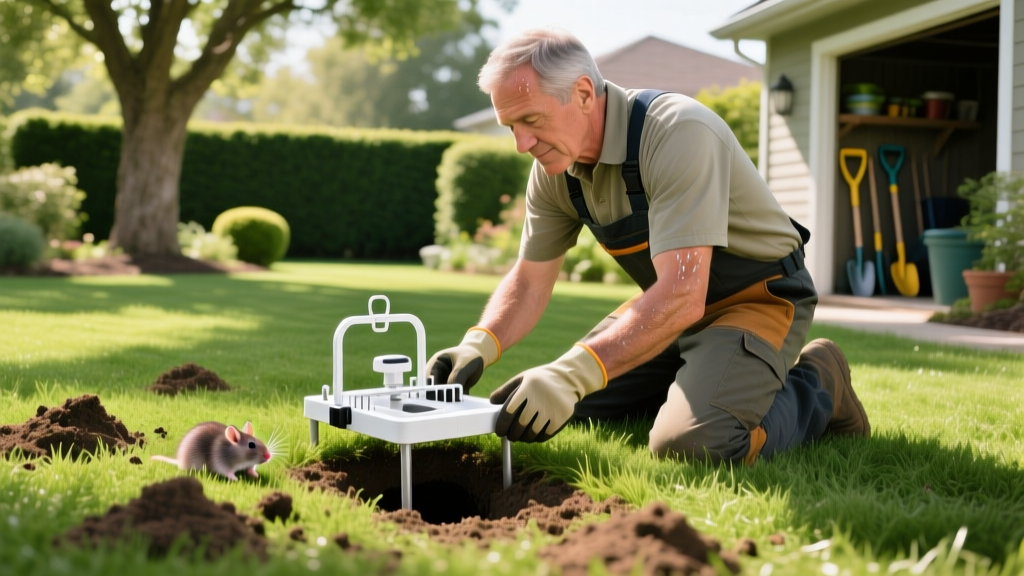
How to Rid Gophers From Your Yard: Proven Trapping and Deterrence Tactics
A single pocket gopher can move over 2,000 pounds of soil to the surface in a year, destroying root systems, severing irrigation lines, and turning a manicured lawn into a minefield of dirt mounds. Because they spend almost their entire lives underground, surface-level repellents rarely work. To successfully reclaim your landscape, you must target their subterranean tunnel networks directly.
This guide details exactly how to rid gophers from your yard using professional-grade trapping, targeted chemical applications, and physical exclusion, complete with cost breakdowns and specific product recommendations.
Identifying the Enemy: Gophers vs. Moles vs. Voles
Misidentifying the pest leads to wasted money on the wrong traps and baits. Before deploying control measures, verify you are dealing with a pocket gopher (Thomomys or Geomys species) rather than a mole or vole.
| Feature | Pocket Gopher | Mole | Vole |
|---|---|---|---|
| Mound Shape | Crescent or fan-shaped with a distinct dirt plug off to one side. | Symmetrical, conical volcano shape. | No mounds; small, clean golf-ball-sized holes. |
| Surface Tunnels | Rarely visible; they feed underground on roots. | Raised, squishy ridges across the lawn surface. | Visible surface runways through grass, often lined with grass clippings. |
| Diet | Herbivore (roots, tubers, bulbs). | Insectivore (grubs, earthworms). | Herbivore (grass blades, bark, seeds). |
| Trap Type Needed | Box traps, choker traps, pincer traps. | Scissor-jaw traps, harpoon traps. | Standard mouse snap traps. |
The Economics of Gopher Damage and Control
Ignoring a gopher infestation is exponentially more expensive than treating it. A mature gopher can destroy a $50 ornamental tree or sever a $300 PVC irrigation main in a single night. Professional wildlife control operators typically charge $150 to $250 for an initial site visit, plus $25 to $50 per active mound treated. For a yard with 15 active mounds, professional eradication can easily exceed $800. DIY trapping reduces this cost to roughly $40–$80 in equipment, provided you execute the tunnel probing correctly.
Lethal Control: Mastering the Trap
Trapping is the most effective, environmentally sound method for eliminating gophers. According to the University of California Integrated Pest Management program, trapping requires no chemicals and provides immediate confirmation of success.
Top Trap Models for 2026
- Macabee Box Trap ($18–$22 per pair): The traditional standard. Features a spring-loaded jaw that triggers when the gopher pushes through the trigger wire. Best for smaller, straight tunnels.
- Gophinator Trap ($35–$45 per pair): A modern pincer-style trap with a wider jaw spread and higher spring tension. Highly effective in larger, deeper main runways. Includes a tether ring to prevent the gopher from dragging the trap deep into the burrow.
- Victor Black Hole ($12–$15 each): A tubular choker trap designed to mimic the tunnel shape, reducing the gopher's hesitation to enter. Excellent for lateral feeding tunnels.
Step-by-Step Trap Deployment
Pro Tip: Always wear heavy leather gloves when handling traps and setting them in tunnels. Human scent does not deter gophers, but gloves protect your fingers from the high-tension springs and shield you from soil-borne pathogens.
- Locate the Main Runway: Use a 24-inch steel gopher probe. Insert it into the ground 12 to 18 inches away from the flat side of a fresh dirt mound. Push down until you feel a sudden 'give' or drop of about 2 inches—this indicates you have pierced the main tunnel, which is typically 6 to 12 inches deep.
- Excavate the Tunnel: Use a narrow trowel to carefully dig out the soil from the probe hole. Clear a space large enough to seat the trap flush with the tunnel floor. Do not collapse the tunnel walls.
- Set and Secure: Place two traps (one facing each direction of the tunnel). Wire the traps together and tether them to a brightly colored surveyor's flag or a heavy rock on the surface. This prevents the gopher from pulling the trap deeper into the burrow if it triggers but isn't killed instantly.
- Block Light and Drafts: Gophers are highly sensitive to light and air currents. Place a piece of cardboard or a 5-gallon bucket over the excavated hole to block sunlight and prevent the gopher from sensing a breach and plugging the tunnel from the inside before reaching the trap.
- Check Daily: Inspect traps every 24 hours. If untouched after 48 hours, the gopher has likely bypassed the trap or abandoned that specific lateral. Move to a fresh mound.
Chemical Control: Baits and Fumigation
When trapping is impractical due to the sheer volume of mounds or hard, rocky soil that prevents probing, chemical intervention becomes necessary. However, not all baits are created equal, and secondary poisoning is a severe risk.
Warning: Secondary Poisoning Risk
Avoid anticoagulant baits (like diphacinone) if you have outdoor cats, dogs, or live in an area with protected raptors (hawks, owls). Gophers that consume sublethal doses become lethargic and are easily caught by predators, transferring the toxin. Zinc phosphide and strychnine baits do not cause secondary poisoning, as the active ingredients degrade rapidly in the gopher's digestive tract.
Avoid anticoagulant baits (like diphacinone) if you have outdoor cats, dogs, or live in an area with protected raptors (hawks, owls). Gophers that consume sublethal doses become lethargic and are easily caught by predators, transferring the toxin. Zinc phosphide and strychnine baits do not cause secondary poisoning, as the active ingredients degrade rapidly in the gopher's digestive tract.
Fumigation vs. Baiting Matrix
| Method | Active Ingredient / Tool | Efficacy | Cost | Best Use Case |
|---|---|---|---|---|
| Toxic Baiting | Zinc Phosphide (e.g., ZP Gopher Bait) | High (if placed in main runway) | $25 - $35 per lb | Large properties, agricultural borders, dry soil conditions. |
| Exhaust Fumigation | Carbon Monoxide (via PERC machines) | Very High (fills entire tunnel network) | $1,500+ for machine / $150 pro visit | Wet soil (which seals the gas inside), urban yards near pets. |
| Gas Cartridges | Sodium nitrate / sulfur smoke bombs | Low to Moderate | $5 - $8 per cartridge | Small, isolated infestations; often fails because gophers quickly plug the tunnel with dirt when they smell smoke. |
For baiting, use a specialized bait applicator probe to deposit 5 to 10 pellets deep into the main runway. Never scatter bait on the surface where children, pets, or non-target wildlife can access it. According to the Internet Center for Wildlife Damage Management, baiting is most successful in late winter and early spring when gophers are actively foraging for new roots and natural food sources are still scarce.
The Myth of Sonic Spikes and Castor Oil
Many homeowners waste $40 to $100 on solar-powered sonic spikes, believing the vibrations will drive gophers away. Independent university trials have consistently shown that pocket gophers quickly habituate to sonic vibrations, often building their mounds directly adjacent to the spikes. Similarly, castor oil-based liquid repellents only provide a temporary, superficial deterrent that washes away after two or three heavy irrigations or rainstorms. Rely on trapping or exclusion instead of sensory deterrents.
Long-Term Exclusion and Yard Modification
If you live in an area with high native gopher populations, eradication is only a temporary fix; neighboring gophers will eventually recolonize your yard. Physical exclusion is the only permanent solution for high-value landscape areas.
Installing Hardware Cloth Exclusion Barriers
To protect raised garden beds, prized orchards, or specific lawn zones, install galvanized hardware cloth. You must use 1/2-inch or 3/4-inch mesh; standard 1-inch chicken wire is too large and gophers will easily squeeze through.
Bury the wire mesh at least 24 inches deep and bend the bottom 6 inches outward in an 'L' shape away from the protected area. This prevents them from simply digging under the barrier. Leave 6 inches of mesh above the soil line to stop surface crawlers. For existing trees, wrap the root ball in a specialized gopher wire basket (typically $15–$30 per basket) at the time of planting.
Modifying the Habitat
Gophers are drawn to yards with abundant, fleshy roots and consistent moisture. Transitioning from shallow, daily sprinkler irrigation to deep, infrequent drip irrigation makes the topsoil less hospitable for tunneling. Additionally, replacing vulnerable ornamentals (like hostas, daylilies, and alfalfa) with gopher-resistant plants such as lavender, rosemary, society garlic, and daffodils reduces the food supply, making your yard a lower-priority target for foraging rodents.

