
Pest Control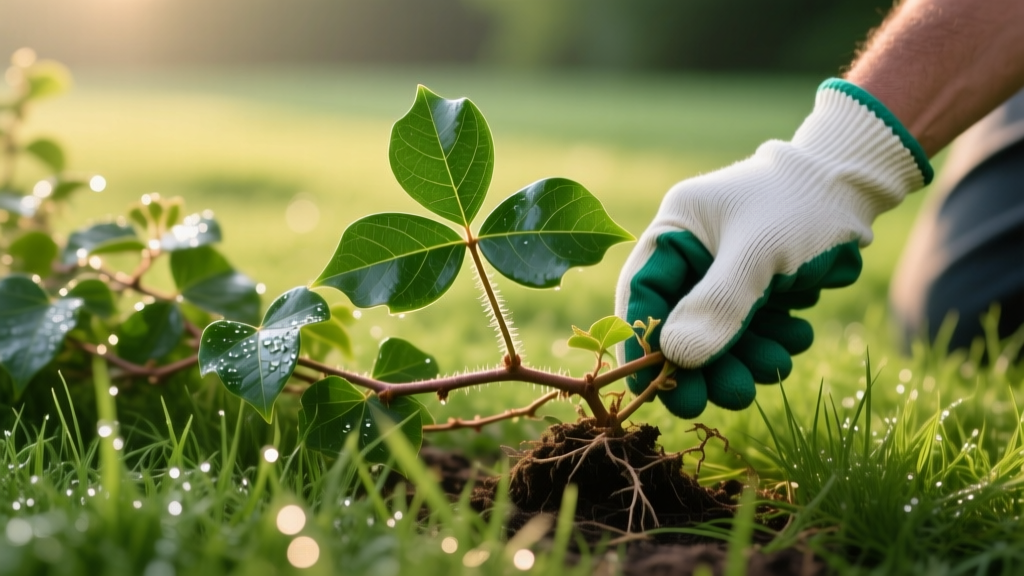
Poison Ivy in Grass: Pictures, Visual ID & Removal Steps
Visual Identification: Decoding Poison Ivy in Grass Pictures
While browsing poison ivy in grass pictures online provides a helpful baseline, real-world identification requires understanding how Toxicodendron radicans adapts to turf environments. In a dense lawn, poison ivy rarely grows as the upright, shrubby vine seen in forest edges. Instead, it exhibits a creeping, horizontal growth habit, weaving horizontally through the thatch layer and turf canopy. According to the Penn State Extension, the plant's defining characteristic remains its compound leaves of three, but in grass, these leaflets are often smaller, more deeply lobed, and lay flat against the soil to maximize sunlight exposure.
The primary danger of poison ivy in turfgrass is the presence of urushiol, the allergenic oil that causes severe contact dermatitis. The Centers for Disease Control and Prevention (CDC) notes that urushiol can remain active on dead vines, roots, and even lawn mower blades for up to five years. Therefore, visual identification must be flawless before any mechanical lawn maintenance begins.
Key Visual Markers in Turf
- Leaflet Structure: Three leaflets per cluster. The terminal (middle) leaflet has a longer petiole (stem) than the two lateral leaflets.
- Surface Texture: Spring and early summer leaves exhibit a distinct, waxy gloss. By late summer, they turn matte and eventually shift to vibrant shades of orange and red.
- Vine Hairs: If the vine has matured and attached to a tree trunk or fence post at the lawn's edge, look for dense, rust-colored aerial rootlets (often described as looking like a "hairy rope").
The Look-Alikes: Turf Weed Comparison Matrix
Misidentifying a benign lawn weed as poison ivy can lead to unnecessary herbicide applications, while misidentifying poison ivy as a benign weed can result in severe medical consequences. Use this diagnostic matrix when comparing your lawn against reference images.
| Feature | Poison Ivy (T. radicans) | Virginia Creeper | Boxelder Seedlings | White Clover |
|---|---|---|---|---|
| Leaflet Count | 3 | 5 | 3 (but opposite arrangement) | 3 |
| Leaf Arrangement | Alternate on stem | Palmate cluster | Opposite on stem | Basal rosette |
| Leaf Edge | Smooth to slightly lobed | Serrated (toothed) | Deeply lobed / toothed | Smooth, often with white 'V' mark |
| Growth Habit in Grass | Creeping horizontal vine | Creeping vine, less common in mowed turf | Upright seedling | Low-growing stoloniferous mat |
Step-by-Step Selective Eradication Protocol
Removing poison ivy from a lawn requires a fundamentally different approach than clearing it from a wooded lot. You cannot use non-selective herbicides like glyphosate (Roundup) without killing the surrounding turfgrass. Furthermore, mechanical pulling is highly discouraged due to the risk of aerosolized urushiol and root fragmentation. Follow this targeted protocol to eliminate the weed while preserving your grass.
Phase 1: PPE and Site Preparation
Before mixing any chemicals, establish a physical barrier against urushiol exposure. Standard gardening gloves are insufficient, as the oil can penetrate cotton and thin leather.
- Skin Barrier: Apply a pre-contact blocking lotion like IvyX Pre-Contact Skin Solution or Tecnu Detox to any exposed skin, including your face and neck.
- Hand Protection: Wear 6-mil to 8-mil thick nitrile gloves. Avoid latex, which can degrade when exposed to certain herbicide solvents.
- Body Protection: Don a disposable Tyvek coverall and waterproof boot covers. Tape the gloves to the sleeves of the suit using duct tape to prevent oil from wicking up your arms.
Phase 2: Targeted Herbicide Application
To kill poison ivy without harming your turf, you must use a selective broadleaf brush killer. The active ingredient Triclopyr is the gold standard for woody and vining brush control in turfgrass environments. Products like Ortho MAX Poison Ivy & Tough Brush Killer (which combines Triclopyr and 2,4-D) are highly effective. As of 2026, a 32 oz ready-to-spray bottle retails for approximately $14 to $18, while a 32 oz concentrate costs around $22 and yields up to 8 gallons of mixed solution.
Mixing & Application Specifications
- Concentration Rate: Mix 2.5 fluid ounces of Triclopyr/2,4-D concentrate per 1 gallon of water for spot treatments.
- Surfactant: Add 0.5% (approx. 2 teaspoons per gallon) of a non-ionic surfactant. Poison ivy leaves have a thick waxy cuticle; the surfactant breaks surface tension, ensuring the herbicide adheres to and penetrates the leaf.
- Nozzle Selection: Use a flat-fan nozzle on your pump sprayer set to a low pressure (20-30 PSI). This produces larger droplets, minimizing herbicide drift onto desirable broadleaf plants or neighboring properties.
- Timing: Apply in late summer or early fall. During this window, the plant is actively translocating carbohydrates (and the herbicide) down into its extensive rhizome root system, ensuring a complete kill rather than just top-growth burn-down.
Phase 3: Post-Spray Cleanup
Urushiol contamination of equipment is a primary vector for secondary exposure. Once spraying is complete, wash your nitrile-gloved hands with a heavy-duty degreasing soap (like Tecnu or Dawn dish soap) before removing the gloves. Wash your sprayer tank and wand with a 10% bleach solution or a commercial equipment cleaner to strip any residual urushiol or herbicide.
Post-Treatment Lawn Recovery & Maintenance
Once the poison ivy has browned and died back (usually 14 to 21 days post-application), the turf will have small, bare patches where the vine was choking out the grass. Do not rake or mow the dead vines immediately. Allow them to desiccate completely, then carefully bag them using a rake and heavy-duty trash bags—never compost them.
Restoring the Turf Canopy
Poison ivy thrives in thin, poorly maintained lawns where sunlight easily reaches the soil surface. To prevent re-establishment, you must thicken the turf canopy.
- Core Aeration: Perform core aeration in the fall to relieve soil compaction and prepare the seedbed.
- Overseeding: Broadcast a competitive, shade-tolerant turfgrass seed. For cool-season lawns, use a Tall Fescue blend (seeded at 6-8 lbs per 1,000 sq ft). For warm-season lawns, lay fresh Bermuda or Zoysia plugs in the bare areas.
- Pre-Emergent Defense: The following spring, apply a pre-emergent herbicide containing prodiamine (e.g., Barricade) at a rate of 3.3 lbs per acre to prevent any dormant poison ivy seeds in the soil bank from germinating.
FAQ: Urushiol Exposure & Turf Safety
Q: Can my lawn mower spread poison ivy to the rest of my yard?
A: Yes. The mower deck and blades can become coated in urushiol oil. While the oil won't harm the grass, it can transfer to your hands when you clean the deck, or aerosolize if you use a string trimmer on the vines. Always wear PPE when mowing areas where poison ivy was recently identified, and wash the mower deck with a degreaser afterward.
Q: Will Triclopyr harm my Kentucky Bluegrass or Bermudagrass?
A: No. Triclopyr is a selective systemic herbicide specifically designed to target broadleaf and woody plants while leaving monocot grasses (like turfgrasses) unharmed. You may see slight, temporary yellowing of the turf immediately after application, but it will recover within 7 to 10 days.

