
Pest Control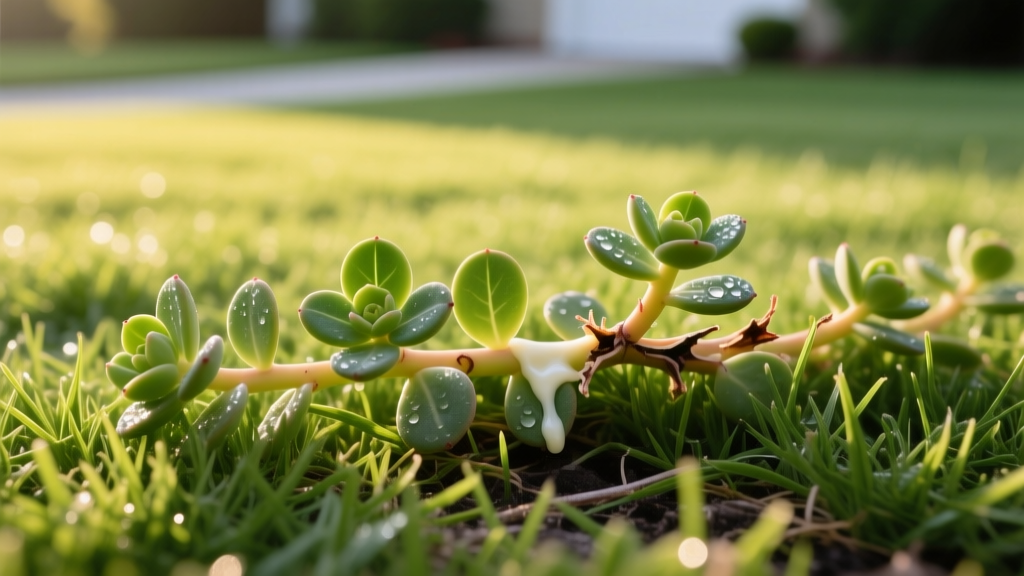
Poisonous Purslane Look Alike: How to ID and Kill Prostrate Spurge
Foraging for edible weeds or managing garden flora requires precise botanical identification. Purslane (Portulaca oleracea) is a nutrient-dense, edible succulent commonly found in landscaping beds and lawn edges. However, it shares its habitat with a highly toxic doppelgänger: spotted spurge (Euphorbia maculata). Misidentifying this poisonous purslane look alike can result in severe dermatitis, gastrointestinal distress, and compromised lawn health. This guide provides exact diagnostic protocols and professional-grade eradication strategies to eliminate spurge from your property safely.
The Toxicity Profile of the Poisonous Purslane Look Alike
While purslane is rich in omega-3 fatty acids and entirely safe for human consumption, spotted spurge and its close relative prostrate spurge (Euphorbia supina) produce a toxic, milky latex sap. This sap contains diterpene esters, which are potent skin and mucous membrane irritants.
⚠️ Toxicity Warning: Contact with spurge sap can cause contact dermatitis, blistering, and temporary blindness if it enters the eyes. Ingestion by humans, dogs, or cats leads to vomiting, diarrhea, and oral irritation. Always wear nitrile gloves and protective eyewear when handling suspected spurge.
According to the NC State Extension Plant Database, Euphorbia maculata is a summer annual weed that thrives in compacted, poor-quality soils, often forming dense mats that choke out desirable turfgrass. Because it germinates in late spring and persists through early fall, it directly overlaps with the peak foraging season for purslane, increasing the risk of accidental exposure.
Diagnostic Matrix: Purslane vs. Spurge
Relying on a quick visual glance is insufficient, as both plants exhibit a prostrate, mat-forming growth habit with small, oblong leaves. Use this comparative matrix to accurately distinguish the edible weed from the poisonous purslane look alike.
| Botanical Feature | Purslane (Portulaca oleracea) | Spotted Spurge (Euphorbia maculata) |
|---|---|---|
| Stem Texture & Color | Smooth, thick, fleshy; typically reddish-purple. | Hairy, wiry, thin; green to reddish-brown. |
| Leaf Arrangement | Alternate or clustered at stem tips; paddle-shaped. | Opposite pairs; oblong with a distinct red/purple spot in the center. |
| Sap (The Definitive Test) | Clear, watery, non-irritating. | Thick, white, milky latex; highly irritating. |
| Root System | Shallow, fibrous taproot (2-4 inches deep). | Deep, woody taproot (up to 18 inches in hardpan soil). |
| Flowers | Small, yellow, 5-petaled (open only in mid-morning sun). | Inconspicuous, tiny pink/white cup-like structures (cyathia) in leaf axils. |
The "Snap and Squeeze" Field Test
When visual identification is ambiguous due to environmental stress or plant maturity, perform the sap test. This is the most reliable method for identifying the poisonous purslane look alike in the field.
- Don Protective Gear: Put on 4-mil nitrile gloves and safety glasses. Never handle unknown prostrate weeds with bare hands.
- Select a Mature Stem: Choose a primary stem near the base of the plant's crown.
- Execute the Snap: Break the stem cleanly in half. Hold the broken ends over a white paper towel to maximize contrast.
- Observe the Exudate: Gently squeeze the stem. If a thick, opaque white liquid beads up immediately, you are dealing with spurge. If the liquid is clear or slightly mucilaginous, it is likely purslane.
- Dispose Safely: Seal the paper towel and plant matter in a plastic bag and discard it in the municipal trash, not your compost bin, as spurge seeds can survive standard composting temperatures.
Targeted Eradication Protocols for Spurge
Once you have confirmed the presence of spurge, immediate action is required. Spurge produces up to 1,000 seeds per plant, and seeds can remain viable in the soil seed bank for up to three years. Eradication requires a two-pronged chemical and cultural approach.
Pre-Emergent Strategies (Early Spring)
Preventing spurge from germinating is vastly more cost-effective than killing mature plants. Spurge seeds germinate when soil temperatures at a 2-inch depth consistently reach 55°F to 60°F.
- Active Ingredient: Prodiamine (e.g., Barricade 65 WDG).
- Application Rate: 0.5 to 1.0 lbs per 1,000 square feet, depending on your turfgrass species and local climate.
- Timing: Apply in early spring, approximately two weeks before the target soil temperature threshold is met. Water in with 0.5 inches of irrigation to activate the chemical barrier in the top inch of the soil profile.
- Cost Expectation: A 5 lb bag of Barricade 65 WDG costs between $130 and $160 in 2026, treating up to 10,000 square feet.
Post-Emergent Chemical Control (Active Growth Phase)
If spurge has already emerged and established a taproot, pre-emergents will be ineffective. You must use a selective post-emergent herbicide that targets broadleaf weeds without harming your turf.
- Active Ingredients: A four-way mixture containing 2,4-D, MCPP, dicamba, and carfentrazone-ethyl (e.g., SpeedZone Broadleaf Herbicide).
- Application Rate: Mix 1.5 fl oz of concentrate per gallon of water. Apply at a rate of 1 to 2 gallons per 1,000 square feet to ensure thorough foliar coverage.
- Adjuvant Requirement: Spurge leaves have a waxy cuticle. Add a non-ionic surfactant (like methylated seed oil) at 0.25% v/v to break the surface tension and drive the herbicide into the plant tissue.
- Spot Treatment for Hardscapes: For spurge growing in driveway cracks or landscape beds where turf safety is not a concern, use a 41% Glyphosate solution at a 2% mix rate (2.5 fl oz per gallon). According to the UC Statewide IPM Program, glyphosate is highly effective on mature Euphorbia species when applied to actively growing foliage.
Cultural Controls and Lawn Recovery
Chemical controls only address the symptom; poor turf density is the root cause. Spurge is an opportunistic invader that exploits bare, compacted soil. To prevent the poisonous purslane look alike from returning, implement these cultural practices:
Pro-Tip for Shade and Density: Raise your mower deck to a minimum cutting height of 3.0 inches. Taller grass blades shade the soil surface, dropping soil temperatures by up to 10°F and physically blocking the sunlight required for spurge seed germination.
- Core Aeration: Perform core aeration in the fall to relieve soil compaction. Spurge taproots thrive in hardpan soils where turfgrass roots cannot penetrate.
- Overseeding: Immediately following aeration, overseed with a shade-tolerant, dense turf blend (such as a mix of 70% Turf-Type Tall Fescue and 30% Kentucky Bluegrass) at a rate of 6 to 8 lbs per 1,000 square feet.
- Soil Testing: Spurge tolerates low-nitrogen, acidic soils better than most turfgrasses. Conduct a soil test and amend with lime to reach a pH of 6.2 to 6.8, optimizing nutrient uptake for your grass.
Frequently Asked Questions
Can I compost the poisonous purslane look alike after pulling it?
No. Spotted spurge produces thousands of tiny seeds that require sustained temperatures above 140°F to destroy. Most home compost bins only reach 110°F to 120°F. Composting spurge will simply redistribute viable seeds across your garden beds next season. Bag it and send it to the landfill.
Is purslane toxic to dogs?
No, true purslane (Portulaca oleracea) is non-toxic to dogs and cats. However, if your dog ingests spotted spurge while grazing in the yard, the milky sap can cause severe drooling, vomiting, and oral blistering. If you suspect spurge ingestion, contact the ASPCA Animal Poison Control Center immediately.
Does vinegar kill prostrate spurge?
Horticultural vinegar (20% to 30% acetic acid) will burn the top growth of spurge, causing it to wilt within hours. However, it is a contact-only herbicide with no systemic action. It will not kill the deep taproot, and the spurge will vigorously resprout from the crown within 7 to 10 days. For permanent eradication, systemic synthetic herbicides or complete mechanical root removal are required.

