
Pest Control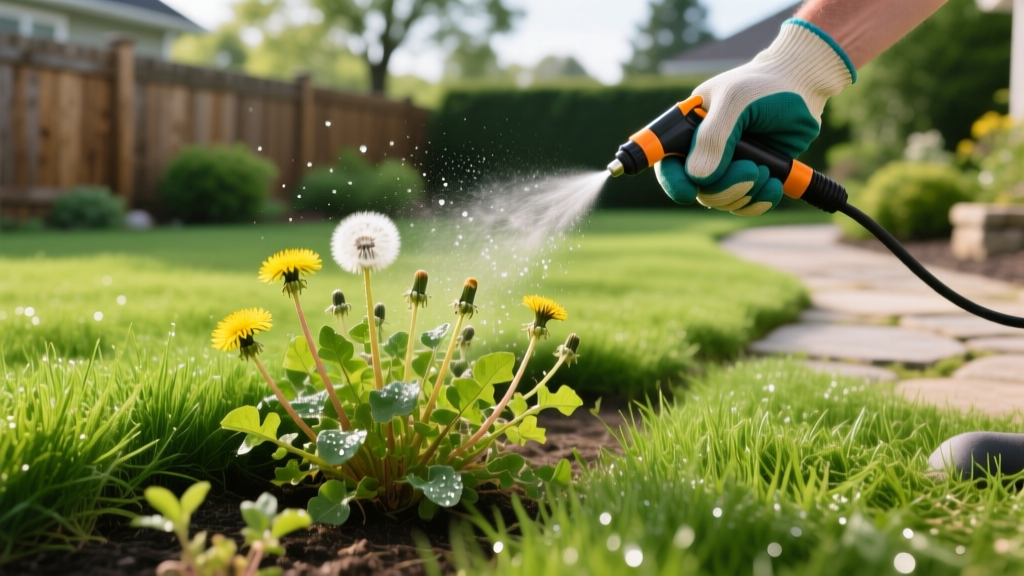
Targeted Spot-Treatment: Best Post Emerent Weed Killer Guide
Broadcast spraying an entire lawn to eliminate a few isolated weed patches is an inefficient use of chemicals, money, and time. Targeted spot-treatment with a specialized post emergent weed killer allows homeowners to eradicate specific invasive species while preserving the surrounding desirable turf and minimizing environmental runoff. This guide breaks down the exact chemical profiles, species-specific selection matrices, and professional-grade mixing protocols required to execute flawless spot-treatments.
The Chemistry of Selective Spot-Treatments
Choosing the correct post emergent weed killer requires understanding the active ingredient's mode of action. Systemic herbicides are absorbed through the foliage and translocated to the root system, making them essential for perennial weeds with deep taproots or complex rhizome networks. Contact herbicides only destroy the tissue they touch, which is generally ineffective for long-term control of established perennials.
Warning: Non-Selective Herbicide Risks
Non-selective post emergent weed killers containing Glyphosate or Glufosinate will destroy any plant tissue they contact. While effective for driveway cracks or isolated patches of Poa Annua in dormant warm-season grasses, using these for spot-treating broadleaf weeds in an active green lawn will result in permanent dead spots that require reseeding or sodding.
The 'Big Three' Selective Active Ingredients
- 2,4-D (Amine or Ester): The backbone of broadleaf weed control. It mimics plant growth hormones, causing unregulated cell division and eventual plant death. Highly effective on dandelions, clover, and plantain.
- Dicamba: Often paired with 2,4-D to broaden the spectrum of control. It is particularly effective on tough, woody-stemmed broadleaf weeds and ground ivy (creeping charlie).
- Quinclorac: The gold standard for post-emergent crabgrass control. It also provides excellent suppression of certain broadleaf weeds like clover and dandelion, making it a versatile 3-way mix component.
Species-Specific Post Emergent Weed Killer Matrix
Different weed species possess unique biological defenses, such as waxy leaf cuticles or specialized root structures, that require specific chemical countermeasures. The following matrix outlines the optimal active ingredients and current market formulations for targeted spot-treatments.
| Target Weed Species | Required Active Ingredient | Recommended Product Formulation | Approx. Cost (2026) |
|---|---|---|---|
| Dandelion & Broadleaf Plantain | 2,4-D + Dicamba + MCPP | Bayer Advanced All-In-One Concentrate | $22.00 / 32 oz |
| Yellow & Purple Nutsedge | Sulfentrazone or Halosulfuron-methyl | SedgeHammer+ (Halosulfuron) / Certainty | $18.50 / 13.5g packet |
| Smooth & Hairy Crabgrass | Quinclorac | Drive XLR8 / Ortho WeedClear for Lawns | $45.00 / 16 oz |
| Ground Ivy (Creeping Charlie) | Triclopyr + 2,4-D | Ferti-lome Weed Free Zone | $28.00 / 32 oz |
For authoritative guidance on identifying these species before application, consult the Penn State Extension Weed Control Guide or the University of Minnesota Extension turfgrass databases.
The Professional Spot-Treatment Mixing Protocol
Pouring concentrate directly into a sprayer and topping it with water is the primary reason amateur spot-treatments fail. Professional applicators follow a strict mixing order and utilize water conditioning agents to ensure the post emergent weed killer remains biologically active.
Step 1: Condition Hard Water (The AMS Advantage)
Municipities and private wells frequently supply hard water rich in calcium and magnesium ions. These positively charged ions bind to the negatively charged molecules of 2,4-D and Glyphosate, neutralizing the herbicide before it even hits the leaf surface. To prevent this 'tie-up', add Ammonium Sulfate (AMS) to the water first.
Measurement: Add 1.5 teaspoons of AMS per gallon of water. Agitate until fully dissolved before adding any herbicide.
Step 2: Add the Herbicide Concentrate
Once the water is conditioned, add the precise amount of post emergent weed killer required for your target species. For example, a standard 3-way broadleaf concentrate typically requires 1.5 to 2.0 fluid ounces per gallon of water to treat 1,000 square feet. Always read the specific product label for exact ratios.
Step 3: Incorporate a Non-Ionic Surfactant (NIS)
Weeds like nutsedge and mature dandelions possess a waxy cuticle that causes water-based herbicide droplets to bead up and roll off. A Non-Ionic Surfactant breaks the surface tension of the water, allowing the chemical to spread evenly across the leaf and penetrate the stomata.
- Standard NIS Rate: 0.25% to 0.5% v/v (approximately 1.5 teaspoons per gallon).
- Alternative (MSO): Methylated Seed Oil is required for specific herbicides like Tenacity (Mesotrione). Do not substitute NIS for MSO if the label dictates otherwise.
Common Spot-Treatment Failure Modes and Edge Cases
Even with the correct chemical, environmental variables and poor timing can render a post emergent weed killer entirely ineffective. Avoid these critical failure modes:
Pro-Tip: The 72-Hour Mowing Rule
Systemic herbicides require time to translocate from the leaves down to the root crown. Mowing the lawn within 48 to 72 hours of a spot-treatment physically removes the treated leaf surface, halting the translocation process and allowing the weed to recover. Always mow 2 days before application, and wait at least 3 days after.
Temperature Volatility and Dicamba Drift
When ambient temperatures exceed 85°F (29°C), ester-based herbicides and Dicamba are prone to volatilization. The chemical turns into a gas and drifts into neighboring garden beds, causing severe cupping and twisting damage to desirable ornamental shrubs and tomatoes. Rule: Restrict all spot-treatments containing Dicamba to early morning hours when temperatures are below 80°F and wind speeds are under 5 mph.
Rainfastness Miscalculations
Each active ingredient has a distinct 'rainfast' period—the time required for the chemical to penetrate the leaf cuticle sufficiently to withstand rainfall. While Glyphosate may require 4 to 6 hours, modern formulations of Sulfentrazone (used for nutsedge) can be rainfast in as little as 2 hours. Applying a spot-treatment when afternoon thunderstorms are forecasted without checking the specific rainfast window guarantees a wasted application.
Treating Mature Crabgrass
Quinclorac is highly effective on crabgrass, but its efficacy drops significantly once the weed reaches the 5-tiller stage (late summer). If you are spot-treating large, mature crabgrass plants in August, a single application will only stunt the plant. You must plan for a second application 14 to 21 days after the first, or switch to a non-selective spot-treatment if the weed is isolated in a warm-season lawn that can tolerate temporary browning.
Equipment Calibration for Precision Targeting
To minimize chemical usage, do not use a broadcast fan-nozzle for spot-treatments. Equip your 1-gallon or 2-gallon pump sprayer with a cone-jet or pinpoint nozzle. This produces a tight, direct stream that allows you to paint the herbicide directly onto the center rosette of a dandelion or the specific blades of a nutsedge cluster without overspraying the surrounding Kentucky Bluegrass or Tall Fescue. This precision reduces chemical expenditure by up to 80% compared to blanket applications and drastically lowers the risk of turf phytotoxicity.

