
Pest Control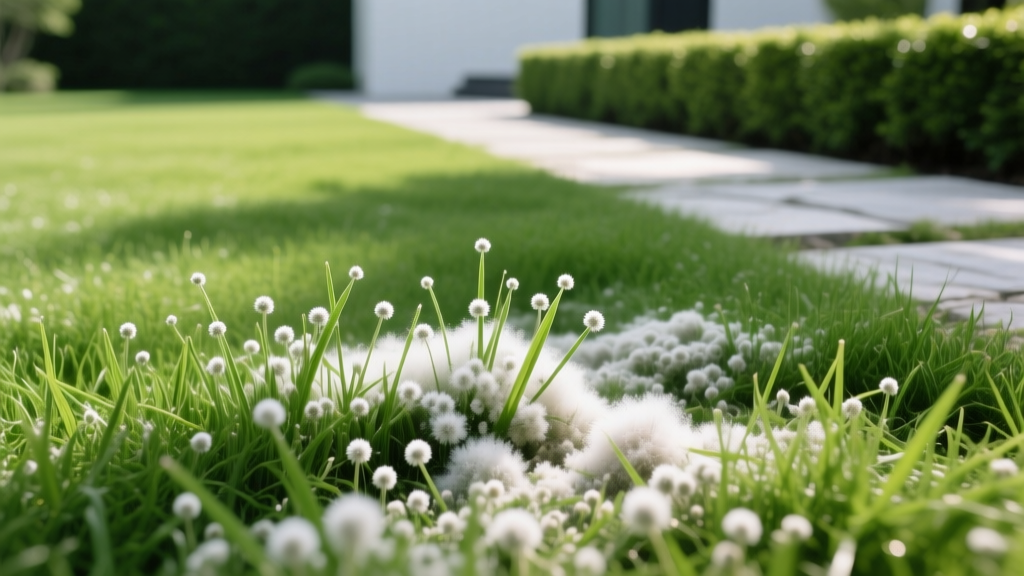
Powder Fungus on Lawns: Symptom Diagnosis and Rescue
Understanding Powder Fungus in Turfgrass
Colloquially known as powder fungus, this turf disease is scientifically classified as powdery mildew, primarily caused by the obligate parasite Blumeria graminis. Unlike many lawn diseases that require free moisture on the leaf blade to germinate, powder fungus thrives in high relative humidity (above 85%) but actually struggles when leaves are continuously wet. It is an aggressive pathogen in shaded, poorly ventilated areas, heavily targeting Kentucky bluegrass (Poa pratensis) and fine fescues.
If left untreated, the fungal mycelium blocks photosynthesis, causing the turf to thin out, turn chlorotic (yellow), and eventually die back, leaving bare soil vulnerable to weed invasion. According to the UMass Amherst Extension Turf Program, severe infections can reduce turf density by up to 40% in a single season if environmental conditions remain favorable for the pathogen.
Symptom Diagnosis: Is It Powder Fungus?
Accurate diagnosis is critical before applying any fungicide. Misidentifying the disease leads to wasted chemical applications and further turf stress. Powder fungus presents with distinct visual markers that separate it from other common lawn diseases.
Visual Identification Checklist
- Early Stage: Isolated, small white or light gray spots resembling talcum powder scattered across the upper leaf blades.
- Mid Stage: The spots coalesce, covering large sections of the leaf blade with a dense, felt-like white mycelium mat.
- Late Stage: Infected leaves turn yellow, then brown, and die from the tip down. You may notice tiny, dark brown-to-black fruiting bodies (cleistothecia) embedded in the white mat.
- Location: Almost exclusively found in deep shade, along fence lines, or beneath dense tree canopies where air circulation is stagnant.
Differential Diagnosis Matrix
| Disease | Visual Symptoms | Primary Trigger | Location on Turf |
|---|---|---|---|
| Powder Fungus | White/gray powdery coating on individual blades | High humidity, deep shade, poor airflow | Upper leaf blades in shaded zones |
| Pink Snow Mold | Circular patches with pinkish webbing at margins | Prolonged snow cover or cold, wet winters | Entire turf patches, usually in spring |
| Dollar Spot | Silver-dollar-sized bleached spots with hourglass lesions | Warm days, cool nights, low nitrogen | Full sun and partial shade areas |
The Root Causes: Environmental Triggers
Powder fungus is an opportunistic pathogen. It rarely attacks healthy, vigorously growing turf in full sun. The primary catalysts include:
- Canopy Shade: Trees blocking direct sunlight reduce the UV radiation that naturally suppresses fungal spores.
- Stagnant Air: Solid fences, dense shrub borders, and low-hanging tree limbs trap humid air at the soil level.
- Excess Nitrogen: High levels of quick-release nitrogen force rapid, succulent leaf growth. These thin cell walls are easily penetrated by fungal haustoria (root-like structures).
Immediate Rescue Fixes: Step-by-Step Eradication
Once powder fungus is confirmed, immediate intervention is required to halt spore production and save the existing turf canopy. Follow this triage protocol.
Step 1: Mechanical and Cultural Triage
Before spraying, alter the microclimate. Raise your mower deck to 3.5 or 4 inches. Scalping shaded turf removes the limited leaf surface area the grass needs to photosynthesize. Bag your clippings immediately to physically remove millions of fungal spores from the site. Prune lower tree branches to a minimum height of 8 feet to allow cross-breezes to dry the turf canopy.
Step 2: Organic Rescue with Potassium Bicarbonate
For early-stage infections or organic lawn care programs, potassium bicarbonate is highly effective. It works on contact by rapidly raising the pH of the leaf surface, creating an alkaline environment where Blumeria graminis cannot survive.
- Product: GreenCure or generic Potassium Bicarbonate (food grade).
- Mix Rate: 1 tablespoon (approx. 14g) per 1 gallon of water per 1,000 square feet.
- Adjuvant: Add 1/2 teaspoon of non-ionic surfactant (or a few drops of mild liquid dish soap) to ensure the solution spreads evenly across the waxy leaf cuticle.
- Frequency: Apply every 7 to 10 days until symptoms cease.
WARNING: The Baking Soda Myth
Do not substitute potassium bicarbonate with sodium bicarbonate (standard baking soda). While baking soda alters leaf pH, the sodium ions accumulate in the soil and cause severe salt burn on turfgrass roots, especially in shaded areas where evaporation is slow. Always use potassium-based formulas for lawn applications.
Step 3: Conventional Chemical Rescue
If the infection has reached the mid-to-late stage (extensive yellowing and matting), organic contact sprays will not cure the plant tissue already invaded by the fungus. You must use a systemic DMI (Demethylation Inhibitor) fungicide that is absorbed into the plant's vascular system.
- Active Ingredient: Propiconazole 14.3%.
- Brand Examples: Banner MAXX II (commercial), Martin's Honor Guard II (consumer).
- Mix Rate: 2 fluid ounces per 1,000 square feet, diluted in 2 gallons of water for optimal coverage.
- Cost: Approximately $45 for a 16 oz bottle, yielding a cost of $5.60 per 1,000 sq. ft. application.
- Re-Entry Interval (REI): Wait until the spray has completely dried (usually 2-4 hours) before allowing pets or children on the lawn, per EPA pesticide safety guidelines.
Fungicide Comparison Matrix
Select your chemical strategy based on the severity of the outbreak and your lawn care philosophy.
| Active Ingredient | Type | Mode of Action | Best For | Cost / 1,000 sq ft |
|---|---|---|---|---|
| Potassium Bicarbonate | Organic | Contact (pH alteration) | Early prevention, mild cases | $1.50 - $2.00 |
| Sulfur (Dust/Wettable) | Organic | Contact (spore inhibition) | Cool weather applications | $3.00 - $4.00 |
| Myclobutanil | Conventional | Systemic (DMI) | Moderate infections | $4.50 - $6.00 |
| Propiconazole 14.3% | Conventional | Systemic (DMI) | Severe, late-stage rescue | $5.50 - $7.00 |
Critical Temperature Warning for Sulfur
If you opt for sulfur-based fungicides like Bonide Sulfur Plant Fungicide, never apply when ambient temperatures exceed 85°F (29°C). Sulfur becomes highly phytotoxic in heat, causing severe leaf burn that will look worse than the original fungal infection. The Royal Horticultural Society (RHS) strictly advises against using sulfur during summer heat waves.
Long-Term Prevention Protocol
Eradicating powder fungus is only half the battle. Because the spores overwinter in thatch and plant debris, the disease will return the following season if the underlying environmental flaws are not corrected.
1. Strategic Overseeding
Kentucky bluegrass is highly susceptible to Blumeria graminis. If your shaded areas suffer from chronic powder fungus, stop fighting the environment and change the turf. Core aerate the area in early fall and overseed with highly shade-tolerant, mildew-resistant cultivars. Creeping red fescue varieties like 'Intrigue' or 'Shoreline' possess excellent natural resistance to powdery mildew and thrive in the low-light conditions where Kentucky bluegrass fails.
2. Nitrogen Management
Switch from quick-release synthetic fertilizers (like urea or ammonium sulfate) to slow-release, organic-based nitrogen sources. Milorganite or feather meal provide a steady, low-dose nutrient stream that promotes dense, thick cell walls without the rapid, vulnerable flush of growth that invites fungal penetration.
3. Irrigation Timing
While powder fungus does not require free water to germinate, watering in the evening raises the nighttime relative humidity to 100%, creating a massive incubation chamber for spores. Restrict all irrigation to the early morning hours (between 4:00 AM and 8:00 AM) so the turf canopy dries rapidly once the sun rises.
"Turfgrass in deep shade is already operating at a caloric deficit due to reduced photosynthesis. When you add the metabolic drain of fighting a powder fungus infection, the grass simply starves. Cultural fixes—like raising the mowing height and pruning canopies—are just as vital as the fungicide itself."
By combining precise symptom identification with targeted organic or systemic chemical interventions, you can rescue your shaded turf from powder fungus and restore a dense, healthy lawn canopy.

