
Pest Control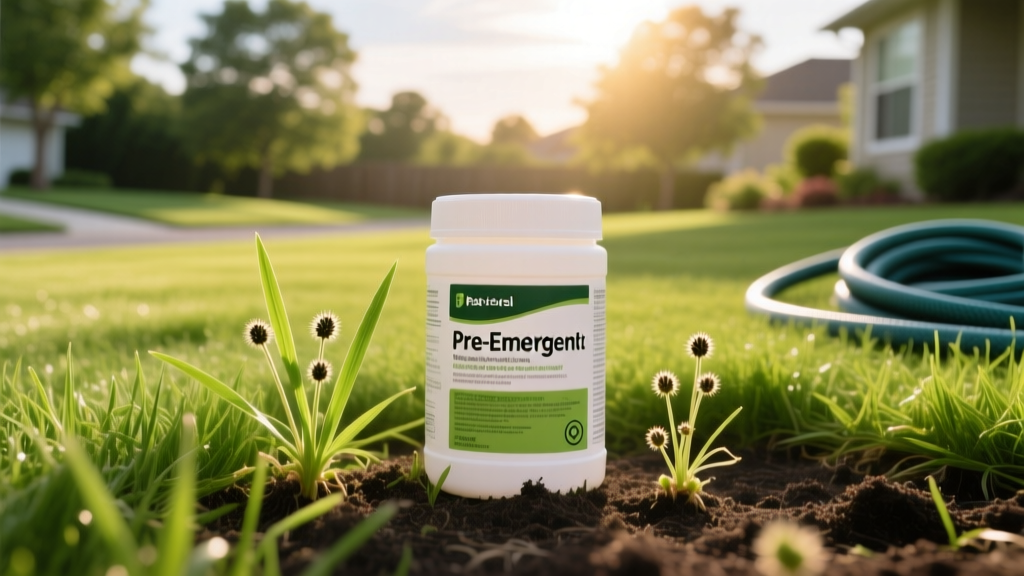
Best Pre-Emergent Herbicide for Grass Burrs and Soil Nutrition
The Soil-Weed Connection: Why Grass Burrs Invade
Grass burrs (primarily Cenchrus echinatus and Cenchrus spinifex) are not just a nuisance; they are a biological indicator of underlying soil and nutritional deficiencies. These annual weeds thrive in low-fertility, sandy, or heavily compacted soils where desirable turfgrass struggles to establish a dense canopy. When soil nutrition is neglected, the turf thins out, allowing sunlight to penetrate the soil surface and trigger grass burr seed germination.
Relying solely on chemical controls without addressing the root nutritional causes is a losing battle. A comprehensive strategy requires deploying a high-quality pre-emergent herbicide for grass burrs to establish a chemical barrier, simultaneously paired with a targeted soil nutrition program to thicken the turf canopy. According to research from the Texas A&M AgriLife Extension, integrating proper nitrogen management with pre-emergent applications reduces summer annual weed pressure by up to 85% compared to herbicide use alone.
Soil Test Prerequisite: Before applying any fertilizer or pre-emergent, conduct a soil test. Grass burrs frequently invade lawns with a pH above 7.0 or deficient in phosphorus. Aim for a soil pH between 6.0 and 6.5 to maximize nutrient uptake and turf competitiveness.
Active Ingredient Matrix: Choosing the Right Pre-Emergent
Not all pre-emergents perform equally against grass burrs, and their interaction with soil organic matter varies. The three primary active ingredients used in professional and premium consumer lawn care are Prodiamine, Dithiopyr, and Pendimethalin. Below is a comparative matrix to help you select the right chemical based on your soil type and budget.
| Active Ingredient | Common Brand Names | Application Rate (per 1k sq ft) | Soil Residual & Traits | Est. Cost (2026) |
|---|---|---|---|---|
| Prodiamine | Barricade 65 WDG, The Andersons Prodiamine | 1.0 - 2.3 lbs (product) | 3-5 months. Binds tightly to soil organic matter. Excellent for sandy soils. | $0.04 - $0.06 |
| Dithiopyr | Dimension 2EW | 0.5 - 0.75 fl oz | 3-4 months. Offers early post-emergent control of young grass burrs (up to 2-leaf stage). | $0.08 - $0.12 |
| Pendimethalin | Pendulum AquaCap, Pre-M | 1.5 - 2.5 fl oz | 2-3 months. Shorter residual, susceptible to UV degradation if not watered in quickly. | $0.05 - $0.07 |
For lawns with a history of severe grass burr infestations, Prodiamine is generally the superior choice due to its long residual and low water solubility, meaning it won't easily leach past the root zone in sandy soils. If you are slightly late with your application and suspect some burrs have already germinated, Dithiopyr provides a critical safety net with its early post-emergent activity.
Integrating Fertilizer and Pre-Emergent Applications
The timing of your pre-emergent herbicide for grass burrs must align perfectly with soil temperatures, not calendar dates. Grass burr seeds germinate when the soil temperature at a 2-inch depth reaches 52°F to 55°F for three to five consecutive days. This window typically coincides with the first spring flush of turfgrass growth, making it the ideal time to initiate your soil nutrition program.
Step-by-Step Spring Protocol
To maximize both weed prevention and turf nutrition without causing chemical antagonism, follow this sequenced application protocol:
- Day 1: Core Aeration (If Needed). If your soil is compacted, aerate before applying the pre-emergent. Aerating after application will break the chemical barrier and allow grass burr seeds to bypass the shield.
- Day 2: Apply Pre-Emergent. Calibrate your spreader to the exact rate specified on the product label. Apply the granular or liquid pre-emergent evenly across the lawn.
- Day 2: Water-In the Barrier. Apply exactly 0.25 to 0.5 inches of irrigation immediately after application. This moves the active ingredient off the leaf blades and into the top 1-2 inches of soil where the weed seed zone exists.
- Day 7: Apply Slow-Release Fertilizer. Wait 5 to 7 days after watering in the pre-emergent before applying your spring fertilizer. This prevents the physical granules of the fertilizer from disrupting the newly formed chemical barrier in the soil.
Fertilizer Selection for Burr-Prone Lawns
Applying the wrong fertilizer can inadvertently trigger a grass burr outbreak. Fast-release, high-nitrogen fertilizers (like standard urea or ammonium sulfate) push rapid, weak top growth. This depletes the turf's root carbohydrate reserves and causes the canopy to thin out later in the summer, exposing the soil to the exact sunlight conditions grass burrs need to thrive.
Instead, select a slow-release nitrogen source such as polymer-coated urea (PCU), methylene urea, or sulfur-coated urea. These technologies feed the lawn steadily over 8 to 12 weeks, promoting deep root growth and lateral density. According to the Clemson University Home & Garden Information Center, maintaining a dense turf canopy through balanced, slow-release nutrition is the most effective long-term cultural control for annual grassy weeds.
Warning on Phosphorus: Do not apply phosphorus-heavy 'starter fertilizers' in the spring unless a soil test explicitly indicates a deficiency. Excess phosphorus can run off into waterways and does not contribute to the turf density required to outcompete grass burrs. Look for an N-P-K ratio like 24-0-6 or 28-0-3 with 50% or more slow-release nitrogen.
Troubleshooting Barrier Failures
Even with the best pre-emergent herbicide for grass burrs, failures can occur. Understanding the edge cases and failure modes will save you from a late-summer invasion of spiky burs.
- Excessive Thatch: If your lawn has a thatch layer thicker than 0.5 inches, the pre-emergent will bind to the dead organic matter rather than reaching the soil surface. The chemical barrier will fail, and the thatch will act as a perfect, moist seedbed for grass burrs. Dethatch in late summer or early fall, never in the spring right before pre-emergent season.
- Under-Watering: Failing to apply the required 0.5 inches of water within 48 hours leaves the active ingredient on the soil surface, where it is rapidly degraded by UV radiation and soil microbes. Always check your local weather forecast to ensure natural rainfall won't wash the product away, but do not rely on it entirely; use your irrigation system to guarantee precise moisture levels.
- Heavy Spring Rains: In regions with extreme spring precipitation, Prodiamine and Pendimethalin can occasionally leach or degrade faster than expected. If you experience record-breaking rainfall in April and May, consider a split-application strategy: apply half the annual rate in early spring, and the second half 60 days later to refresh the barrier before the late-summer grass burr germination flush.
By treating grass burrs as a symptom of soil vulnerability rather than just a pest problem, you shift from reactive spraying to proactive lawn management. Pairing a scientifically timed pre-emergent application with a rigorous, slow-release soil nutrition program ensures your turf remains dense, healthy, and entirely hostile to weed invasion.

