
Pest Control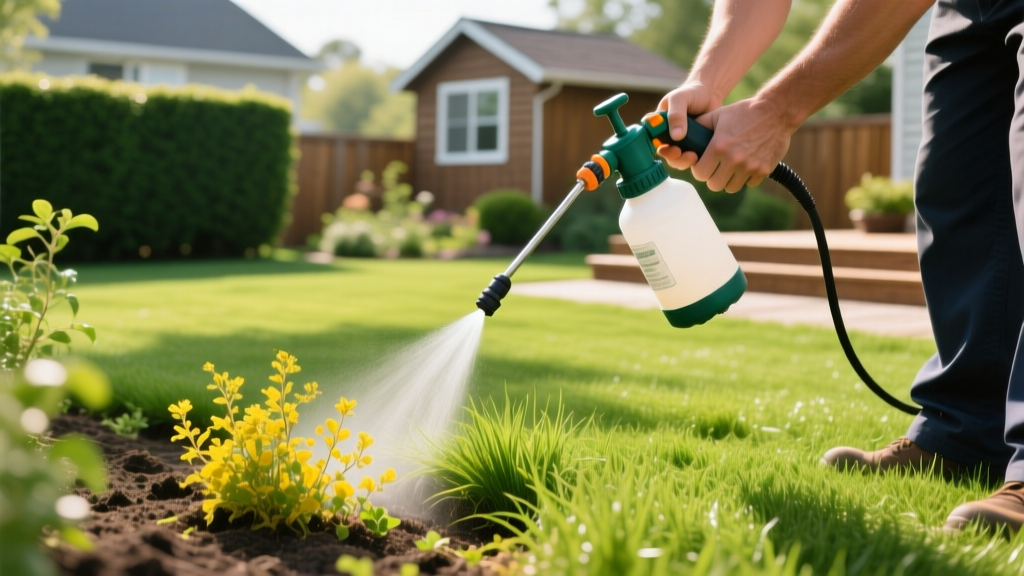
Pre-Emergent and Weed Killer: Spot-Treatment Tactics
The Biological Flaw: Why Spot-Treating Needs a Dual Approach
Relying solely on post-emergent sprays to manage invasive lawn weeds is a biological losing battle. When you spot-treat a mature weed, you are only addressing the visible symptom, not the underlying seed bank or subterranean reproductive structures. A highly effective weed species spot-treatment protocol requires a synchronized application of a pre-emergent and weed killer (post-emergent) strategy. Pre-emergent herbicides inhibit cell division in the apical meristem of germinating seeds, effectively sterilizing the soil surface. Post-emergent weed killers disrupt vital physiological processes—such as photosynthesis or amino acid synthesis—in existing vegetation.
🌡️ The 55°F Soil Temperature Rule
Pre-emergent applications are entirely dependent on soil temperature, not calendar dates. For summer annuals like crabgrass, the biological trigger for germination occurs when soil temperatures at a 2-inch depth reach 50°F to 55°F for three consecutive mornings. Apply your pre-emergent barrier just before this threshold is crossed. Use a digital soil probe thermometer rather than relying on ambient air temperature forecasts.
Species Profile 1: Crabgrass (Digitaria sanguinalis)
Smooth and hairy crabgrass are prolific summer annuals. A single plant can produce up to 150,000 seeds, which remain viable in the soil seed bank for up to three years. Eradicating crabgrass requires establishing a chemical barrier before germination, followed by targeted spot-treatments for inevitable breakthroughs.
The Pre-Emergent Anchor: Prodiamine
For a robust pre-emergent barrier, Prodiamine 65 WDG (active ingredient: prodiamine) is the industry standard for professional and advanced residential use. Unlike liquid formulations that can leach quickly, the water-dispersible granule (WDG) formulation binds tightly to soil organic matter, creating a stable vapor barrier.
- Application Rate: 0.4 oz per 1,000 square feet for a split-application program (totaling 0.8 oz annually for extended control).
- Cost Efficiency: A 5 oz bottle costs approximately $45 and treats up to 12,500 square feet, equating to $0.0036 per square foot.
- Watering Requirement: Must be watered in with 0.25 to 0.5 inches of irrigation within 14 days to activate the chemical barrier in the top 1 inch of soil.
The Post-Emergent Spot Strike: Quinclorac
When crabgrass breaches the pre-emergent barrier or emerges in thin turf areas, spot-treatment is required. Quinclorac (brand example: Drive XLR8) is a synthetic auxin herbicide that causes uncontrolled, fatal growth in broadleaf and specific grassy weeds.
- Mixing Rate: 0.367 fluid ounces per 1,000 square feet.
- Crucial Additive: Quinclorac requires a Methylated Seed Oil (MSO) surfactant at a rate of 2 teaspoons per gallon of water to penetrate the waxy cuticle of mature crabgrass blades.
- Timing: Spot-treat when crabgrass is in the 1- to 3-leaf stage. Mature crabgrass (5+ tillers) will require two applications spaced 14 days apart.
| Active Ingredient | Brand Example | Target Stage | Rate per 1,000 sq ft | Est. Cost |
|---|---|---|---|---|
| Prodiamine | Barricade 65 WDG | Pre-emergent (Seed) | 0.4 oz | $3.60 |
| Dithiopyr | Dimension 2EW | Pre / Early Post | 0.5 fl oz | $4.10 |
| Quinclorac | Drive XLR8 | Post-emergent (Leaf) | 0.367 fl oz + MSO | $2.85 |
Species Profile 2: Yellow Nutsedge (Cyperus esculentus)
Yellow nutsedge is a perennial sedge, not a true grass, and it presents a completely different biological challenge. It reproduces primarily through subterranean tubers (nutlets) rather than seeds. According to the UC ANR Pest Notes on Nutsedge, a single tuber can produce over 1,900 shoots in a single growing season, making spot-treatment highly complex.
Pre-Emergent Limitations
Standard pre-emergent herbicides like prodiamine or pendimethalin are largely ineffective against nutsedge. Because the plant emerges from established tubers buried 2 to 6 inches deep in the soil profile, the surface-level chemical barrier created by pre-emergents is entirely bypassed. Do not waste expensive pre-emergent products expecting nutsedge control.
Spot-Treating the Tubers: Halosulfuron-methyl
To spot-treat nutsedge, you must use a systemic herbicide that translocates down into the tubers. Halosulfuron-methyl (brand example: SedgeHammer) is an ALS-inhibitor that halts the production of essential amino acids, slowly starving the plant and its subterranean nutlets over 2 to 3 weeks.
- Mixing Rate: 0.5 grams (one provided scoop) per 1 gallon of water, which treats approximately 1,000 square feet.
- Surfactant Requirement: A Non-Ionic Surfactant (NIS) is mandatory. Use 2 teaspoons per gallon to reduce water surface tension and ensure the chemical coats the waxy, upright sedge leaves.
- Application Error to Avoid: Never pull or mow nutsedge immediately before spraying. The plant needs maximum leaf surface area to absorb the herbicide and translocate it to the tubers. Wait until the sedge is visibly growing and at least 4 inches tall.
- Cost: A 13.5-gram box of SedgeHammer costs around $25, yielding roughly 27 gallons of spot-treatment solution.
Step-by-Step Spot-Treatment Execution Protocol
Precision is critical when combining a pre-emergent and weed killer strategy. Follow this calibration and application sequence to prevent turf damage and ensure efficacy.
- Calibrate Your Pump Sprayer: Fill a 1-gallon or 2-gallon pump sprayer with plain water. Mark off a 1,000 square foot area on your driveway (e.g., 20x50 feet). Spray the water evenly over the concrete at your normal walking pace. Measure how much water was used. If you used 1.5 gallons to cover 1,000 sq ft, you must mix your herbicide dose into 1.5 gallons of water for the actual application.
- Mix the Post-Emergent Solution: Fill the sprayer halfway with water. Add the required liquid or dry post-emergent herbicide (e.g., Quinclorac or Halosulfuron-methyl). Agitate the tank. Add the required surfactant (MSO or NIS) last to prevent excessive foaming, then fill the tank to the calibrated volume.
- Execute the Spot Spray: Use a shielded spray nozzle or a low-pressure fan tip (20-30 PSI) to target only the weed clusters. Avoid spraying desirable turfgrass unnecessarily, especially when temperatures exceed 85°F, to prevent phytotoxicity (chemical burn).
- Observe the Re-Entry and Rainfast Periods: Most post-emergents require 2 to 4 hours to become rainfast. Keep pets and children off the treated area until the foliage is completely dry, as mandated by the EPA Pesticide Labels guidelines.
- Apply the Pre-Emergent Barrier: Once the spot-treatment has dried and the weeds are showing signs of chlorosis (yellowing) 7-10 days later, apply your pre-emergent granules (e.g., Prodiamine) to the surrounding soil to prevent the next flush of seeds from germinating in the newly opened canopy space.
Frequently Asked Questions
Can I mix pre-emergent and post-emergent weed killer in the same tank?
No. Pre-emergents are typically granular and require soil incorporation and watering-in, while post-emergents are liquid foliar sprays that must remain on the leaf surface to be absorbed. Mixing them in a liquid tank sprayer will result in the pre-emergent failing to reach the soil profile and the post-emergent being washed off the leaves during the required watering-in process.
Why did my crabgrass turn purple after I sprayed Quinclorac?
Purple discoloration is a positive indicator of herbicide efficacy. Quinclorac mimics plant hormones, causing rapid, unsustainable cell division. The purple hue is a stress response and a sign that the plant's vascular system is collapsing. Do not re-spray; allow the plant to die back completely over the next 10 to 14 days.
Will pre-emergent stop my newly planted grass seed from growing?
Yes. Pre-emergent herbicides do not distinguish between weed seeds and desirable turfgrass seeds. According to University of California Statewide IPM Program data, you must wait until new grass has been mowed at least two to three times (typically 60 to 90 days after germination) before applying a pre-emergent barrier, or you will kill your new lawn.

