
Pest Control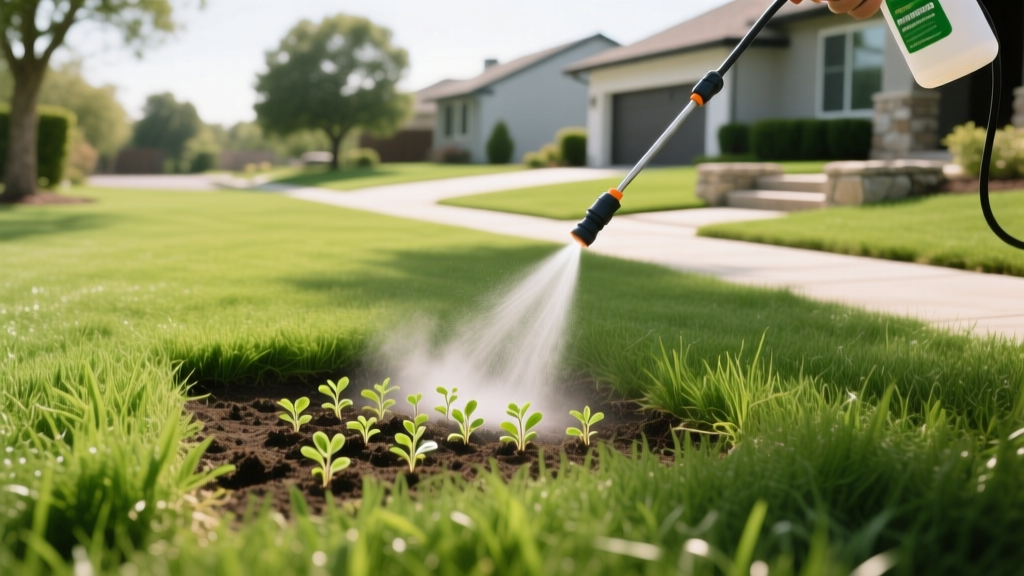
Pre Emergent Weed Killers for Targeted Spot-Treatment Zones
The Micro-Climate Approach to Pre Emergent Weed Killers
Applying pre emergent weed killers as a spot-treatment rather than a full-lawn broadcast is a strategic shift gaining traction among precision-focused turf managers and environmentally conscious homeowners. While traditional pre-emergent strategies rely on blanket applications to establish a uniform chemical barrier across the entire root zone, spot-treating targets specific micro-climates and historical infestation zones. This approach reduces chemical usage by up to 60%, lowers material costs, and minimizes the risk of inhibiting desirable turfgrass root development in low-risk areas.
The fundamental paradox of "spot-treating" with a pre-emergent is that these herbicides prevent seed germination; you cannot see the weeds you are targeting. Therefore, successful spot-treatment requires mapping your property based on soil thermodynamics, historical weed pressure, and hardscape heat radiation. According to turfgrass scientists at NC State TurfFiles, weeds like crabgrass germinate when soil temperatures at a two-inch depth reach 50°F to 55°F for consecutive days. South-facing driveway edges, concrete patios, and asphalt borders absorb and radiate solar heat, causing the soil in these zones to hit germination thresholds up to three weeks earlier than the shaded center of your lawn.
Active Ingredient Selection Matrix for Targeted Zones
Choosing the correct active ingredient depends entirely on the specific weed species dominating your target zone and the required residual lifespan. Not all pre emergent weed killers perform equally in high-stress, compacted, or shaded micro-climates.
| Active Ingredient | Common Trade Name | Residual Life | Primary Target Weeds | Cost per 1,000 sq ft | Spot-Treat Suitability |
|---|---|---|---|---|---|
| Prodiamine (65 WDG) | Barricade | 4 - 6 Months | Crabgrass, Goosegrass, Foxtail | $2.25 - $2.80 | Excellent (High stability, low water solubility) |
| Dithiopyr (2 EW) | Dimension | 3 - 4 Months | Crabgrass, Poa Annua, Spurge | $3.50 - $4.20 | Superior (Offers early post-emergent crabgrass control) |
| Pendimethalin (3.3 EC) | Pendulum | 2 - 3 Months | Crabgrass, Chickweed, Henbit | $1.50 - $1.90 | Moderate (Requires precise watering-in, UV sensitive) |
For high-heat hardscape borders where crabgrass is the primary threat, Prodiamine offers the most cost-effective and stable barrier. However, if you are spot-treating a zone where you suspect crabgrass seeds have already begun to germinate (the 1-tiller stage), Dithiopyr is the only pre-emergent that provides early post-emergent control, effectively stopping young seedlings that have breached the soil surface.
Species-Specific Spot-Treatment Protocols
Crabgrass (Digitaria spp.) in Driveway and Hardscape Edges
Hardscapes create a thermal battery effect. Begin monitoring soil temperatures in these zones in early spring. Once the two-inch soil depth reads 50°F for three consecutive mornings, apply a liquid Prodiamine solution. For a 2-gallon handheld sprayer covering roughly 1,000 square feet, mix 0.185 ounces (approx. 1.1 teaspoons) of Prodiamine 65 WDG. To ensure even distribution in narrow strip zones, use a flat-fan nozzle (such as a TeeJet 8002VS) calibrated to 40 PSI, walking at a steady pace of 3 feet per second.
Poa Annua in Shaded Garden Borders and Tree Lines
Poa Annua (annual bluegrass) is a winter annual, meaning its germination window is entirely different from summer annuals. Spot-treating shaded landscape beds and tree lines for Poa Annua requires a late-summer application. Trigger your application when nighttime air temperatures consistently drop below 65°F and soil temperatures fall to 70°F (usually late August to mid-September, depending on your hardiness zone). Apply Dithiopyr at a rate of 0.5 ounces per 1,000 square feet. As noted by the University of Georgia Extension, timing this application before the first flush of autumn rain is critical to establishing the chemical barrier before Poa Annua seeds swell.
Goosegrass (Eleusine indica) in Compacted Play Areas
Goosegrass thrives in heavily compacted, high-traffic zones where turfgrass is thin, such as pathways between swing sets or along fence lines. It germinates later than crabgrass, requiring soil temperatures of 60°F to 65°F. Because goosegrass is notoriously difficult to control and often exhibits resistance to standard pre-emergents, a split-application protocol is required. Apply a half-rate of Pendimethalin (0.75 oz per 1,000 sq ft) when soil hits 60°F, followed by a second half-rate application six weeks later to extend the residual barrier through the peak summer germination window.
Precision Calibration for Small Zone Applications
The most common failure in spot-treating with pre emergent weed killers is poor calibration. Handheld sprayers are notoriously inconsistent if not properly measured. Use the "catch cup" method to calibrate your equipment for small zones:
- Measure the Target Zone: Calculate the exact square footage of the driveway edge or garden border (Length × Width). Do not guess.
- The Water Test: Fill your sprayer with plain water. Pump to your target pressure (usually 30-40 PSI). Spray a known 100-square-foot section of concrete or a tarp, timing how many seconds it takes to empty a specific volume.
- Calculate the Mix: If your product label calls for 1 gallon of carrier water per 1,000 square feet, and your target zone is 250 square feet, you need exactly 1 quart (32 oz) of mixed solution. Scale your active ingredient down proportionally (e.g., if the full rate is 0.5 oz per gallon, use 0.125 oz for your 1-quart mix).
- Dye Indicator: Add 0.5 teaspoons of blue turf marker dye to your tank. This provides visual confirmation of your overlap and coverage, preventing dangerous double-dosing in narrow strips.
Critical Failure Modes and Edge Cases
Warning: The Thatch and Watering-In Trap
Pre emergent weed killers must reach the soil surface to create the inhibition zone. If your spot-treatment zone has a thatch layer thicker than 0.5 inches, the herbicide will bind to the organic matter and degrade via UV exposure before reaching the soil. Always dethatch target zones prior to application. Furthermore, the EPA Safe Pest Control guidelines emphasize that all pre-emergents require mechanical incorporation via water. You must apply 0.25 to 0.5 inches of irrigation (or time your application 24 hours before a steady rain event) within 48 hours of spraying. Failure to water the product into the top inch of soil will result in a 100% failure rate, regardless of the active ingredient used.
Overseeding Conflict: Never apply pre emergent weed killers to zones where you plan to overseed desirable turfgrass within the next 12 to 16 weeks. Prodiamine and Dithiopyr do not discriminate between weed seeds and expensive fescue or ryegrass seeds. If a spot-treatment zone requires turf renovation, rely on mechanical removal and post-emergent glyphosate alternatives instead.

