
Pest Control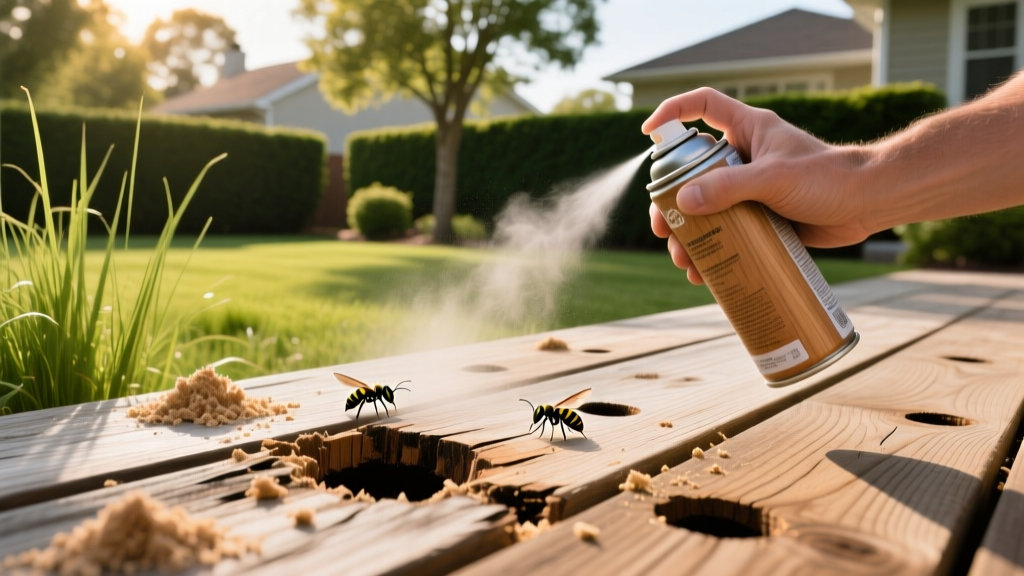
How to Prevent Carpenter Bees: Wood Treatment & Yard Defense
The Biology of the Threat: Why Carpenter Bees Target Your Yard
Carpenter bees (Xylocopa species) are solitary insects that do not consume wood, but rather excavate it to create nesting galleries. The Eastern carpenter bee (Xylocopa virginica), the most common yard-invading species in North America, specifically targets unpainted, weathered softwoods like cedar, redwood, cypress, and pine. They bypass painted surfaces and hardwoods because their mandibles cannot easily penetrate dense grain or synthetic chemical barriers.
A single female carpenter bee drills a perfectly round, half-inch diameter entry hole, then turns at a right angle to tunnel along the wood grain. Over successive years, multiple generations reuse and expand these galleries, leading to severe structural weakening of eaves, fascia boards, deck joists, and fence posts. Furthermore, the accumulation of bee feces and wood shavings creates unsightly yellow-brown staining on the wood below the entry point.
According to the University of Kentucky Department of Entomology, the most effective long-term strategy against carpenter bees is not eradication, but making the wood substrate physically and chemically unappealing for excavation before the spring emergence period.
Wood Treatment Matrix: What Actually Deters Excavation?
Not all wood finishes provide equal protection. Bees rely on tactile and olfactory cues to find suitable nesting sites. The following matrix breaks down the efficacy, cost, and maintenance requirements of common wood treatments used in yard defense.
| Treatment Type | Active Mechanism | Avg Cost per Sq Ft | Reapplication Interval | Efficacy Rating |
|---|---|---|---|---|
| Solid Acrylic/Oil Paint | Blocks visual grain cues; creates thick physical barrier | $0.15 - $0.25 | 5 - 7 years | Excellent |
| Oil-Based Polyurethane | Hardens surface; masks wood scent | $0.20 - $0.35 | 2 - 3 years | Very Good |
| Semi-Transparent Stain | Minimal physical barrier; relies on chemical additives | $0.10 - $0.20 | 1 - 2 years | Poor to Fair |
| Citrus/Almond Oil Sprays | Olfactory deterrent; masks natural wood pheromones | $0.05 - $0.10 | 2 - 4 weeks | Moderate (Temporary) |
| Pressure-Treated (CCA/ACQ) | Chemical resistance; dense fiber structure | N/A (Material cost) | Lifetime | Excellent |
For existing structures, applying a high-build solid paint (such as Zinsser Perma-White or Sherwin-Williams Emerald Exterior) is the most permanent DIY solution. If you must maintain the natural wood look, a minimum of three coats of marine-grade spar urethane is required to build a shell thick enough to deter mandible penetration.
Step-by-Step Physical & Chemical Yard Defense
Preventing carpenter bees requires a phased approach timed to their biological lifecycle. Implement these steps to secure your yard structures.
Step 1: Pre-Emergence Sealing (Late February to Early March)
Carpenter bees emerge from overwintering when sustained daytime temperatures reach 55°F to 60°F. Before this threshold is met, inspect all fascia boards, deck railings, and window trim. Use a high-quality exterior wood filler (like Minwax High Performance Wood Filler) to plug any existing half-inch holes. Sand the filler flush once cured, and immediately prime and paint the patched area. Leaving filler unpainted will attract bees due to the contrasting texture.
Step 2: Active Nest Treatment (Mid-April to May)
If you missed the pre-emergence window and observe active drilling (evidenced by coarse sawdust piles beneath wood members), you must treat the gallery before sealing it. According to NC State Extension, aerosol sprays are largely ineffective because they cannot penetrate the deep, right-angled tunnels.
- Product Selection: Use a desiccant dust formulated with silica gel and pyrethrin, such as Drione Dust or Delta Dust.
- Application: Apply the dust directly into the entry hole using a hand duster at dusk or night when the female bee is inside and less aggressive.
- Sealing: Wait 48 hours to ensure the bee has contacted the lethal dust, then plug the hole tightly with a wooden dowel or cork coated in exterior wood glue.
Step 3: The Truth About Decoy Traps
Commercial carpenter bee traps (wooden boxes with pre-drilled angled holes leading to a plastic bottle) are widely sold but heavily misunderstood. Entomological studies show these traps rarely attract scouting females looking for new nesting sites. They are only marginally effective when placed directly adjacent to an already active nest to catch returning foragers. Relying on traps as a primary preventive measure will result in structural damage.
Landscaping & Yard Modifications to Reduce Foraging Appeal
Carpenter bees require nectar and pollen to provision their brood cells. By modifying the plantings immediately adjacent to your vulnerable wood structures, you can create a psychological buffer zone that discourages them from lingering near your home.
The 20-Foot Buffer Zone Strategy
Early spring blooming plants that produce high volumes of nectar act as magnets for emerging carpenter bees. Avoid planting the following species within 20 feet of unpainted eaves, pergolas, or wooden fences:
- Wisteria (Wisteria sinensis)
- Trumpet Honeysuckle (Lonicera sempervirens)
- Redbud (Cercis canadensis)
- Passionflower (Passiflora incarnata)
Instead, plant these high-nectar species near the back of your property or in isolated garden beds far from wooden structures. This draws the foraging bees away from the architectural wood they might otherwise investigate for nesting while feeding.
Eliminating Scent Trails
Carpenter bees leave chemical pheromone trails near successful nesting sites to attract future generations. Wash the siding and wood trim below known historical nesting spots using a solution of one part white vinegar to three parts water, or a commercial enzymatic cleaner. This breaks down the fecal staining and neutralizes the pheromone markers that guide scouting females back to the exact same board year after year.
When to Call a Pro: Cost vs. DIY Breakdown
Financial Decision Framework
DIY Route ($65 - $140 Total): Best for single-story homes with accessible eaves and isolated fence posts. Costs include a pump sprayer, polyurethane sealant, Drione dust, and wood filler. Requires 4-6 hours of labor and ladder safety proficiency.
Professional Pest Control ($250 - $600+): Necessary for multi-story homes, extensive fascia damage, or when bees have nested inside soffits and attic vents. Professionals use commercial-grade micro-encapsulated pyrethroids (like Onslaught FastCap) applied via extension poles, ensuring complete coverage of high, unreachable overhangs without the risk of ladder falls.
As noted by Penn State Extension, if wood members have been tunneled extensively over multiple seasons, the structural integrity is compromised. In these cases, pest control must be followed by carpentry repair; injecting dust into a hollowed-out 4x4 beam will kill the bees, but it will not restore the load-bearing capacity of the wood. Always probe heavily tunneled wood with a screwdriver; if it penetrates easily, the board must be replaced.

